

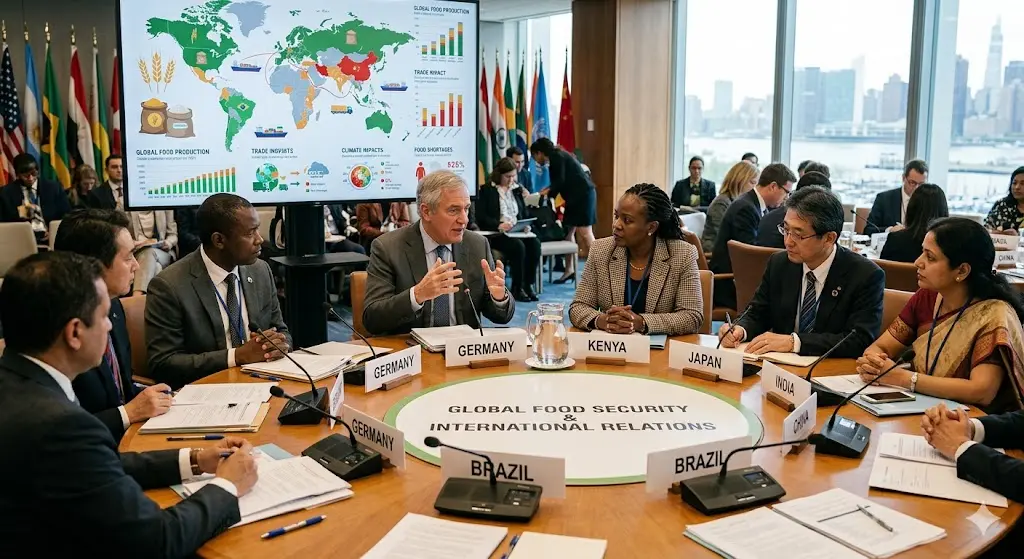
Why food security is influencing international relations has become one of the biggest political and economic questions of the decade. Governments are no longer treating food supply as only an agricultural issue. It now affects diplomacy, trade agreements, migration policy, military planning, and global stability.
Here’s the thing. Countries that can secure stable food supplies often gain political influence, while nations facing shortages may experience social unrest, economic pressure, and weakened international bargaining power. That shift is changing how governments interact in 2026.
Food security influences international relations because stable food supplies affect economic strength, political stability, trade partnerships, and national security. Governments increasingly use food trade, agricultural technology, and supply chain agreements as tools for diplomacy and geopolitical influence.
What Is Food Security and Why Does It Matter?
Food security: reliable access to safe, affordable, and nutritious food for individuals and populations over the long term.
That sounds straightforward. Reality is messier.
Food security depends on climate conditions, transportation systems, energy prices, water access, political stability, trade agreements, and agricultural production. When one area weakens, the entire system can feel pressure pretty quickly.
What most people overlook is how food shortages can destabilize governments faster than many economic problems. Citizens may tolerate slow growth for a while, but rising food costs often trigger immediate frustration.
I’ve seen analysts focus heavily on military power while underestimating how strongly food access shapes political relationships. Honestly, food supply chains may influence diplomacy more quietly than defense strategies in some regions.
Why Food Security Matters in International Relations in 2026
By 2026, food security has become tightly connected with global politics because supply chains are more fragile than many governments expected.
Climate disruptions, regional conflicts, transportation bottlenecks, and rising fertilizer costs continue affecting agricultural production worldwide. Countries now compete more aggressively for stable food imports, farmland investments, and water resources.
A realistic example would involve a grain-exporting country restricting exports during a domestic shortage. Import-dependent nations could face inflation spikes, political pressure, and strained diplomatic relationships almost overnight.
That’s not hypothetical anymore. Similar situations have already affected international trade discussions in recent years.
Another growing issue involves strategic agriculture partnerships.
Countries increasingly invest in overseas farmland, agricultural technology, and supply chain infrastructure to secure long-term food access. Those investments often carry political influence alongside economic benefits.
Expert Tip
Governments that diversify food import sources usually handle supply disruptions better than nations heavily dependent on a single trading partner.
How Food Security Shapes International Relations Step by Step
1. Food Trade Influences Diplomatic Relationships
Countries exporting large amounts of grain, rice, wheat, or agricultural products often gain stronger negotiating power in global trade discussions.
Food-exporting nations can build partnerships through long-term supply agreements, especially during shortages or inflation periods.
That influence matters more than many people realize.
2. Climate Change Is Increasing Political Pressure
Extreme weather affects crop production worldwide.
Floods, droughts, heatwaves, and changing rainfall patterns reduce agricultural stability in many regions. Governments facing declining harvests often seek international support, trade adjustments, or emergency imports.
Climate pressure is turning agriculture into a foreign policy issue instead of just a farming issue.
3. Migration Patterns Are Linked to Food Access
Food insecurity can increase migration pressure.
When farming communities struggle economically or face repeated crop failures, people often relocate internally or across borders searching for stability and work opportunities.
That movement affects international negotiations and border policies.
4. Agricultural Technology Is Becoming Geopolitical
Countries investing heavily in food technology, water-efficient farming, and agricultural innovation may gain long-term economic advantages.
Honestly, future geopolitical competition might involve farming technology almost as much as energy resources.
That sounds strange at first. But food systems drive national stability.
5. Supply Chains Affect National Security
Modern food systems depend heavily on transportation networks, fuel supplies, storage systems, and international trade routes.
If supply chains fail, food prices rise quickly. Political tensions usually follow.
Governments increasingly treat food logistics as part of national security planning.
Expert Tip
Food security policies work best when governments balance local agricultural investment with stable international trade partnerships instead of relying entirely on imports.
The Biggest Misconception About Food Security
More Food Production Doesn’t Always Solve Food Insecurity
This catches people off guard sometimes.
Many assume countries simply need to produce more food. But food insecurity often involves distribution problems, affordability issues, political instability, or infrastructure failures rather than absolute shortages.
I’ve seen regions produce large agricultural exports while local communities still struggle with affordable food access.
That contradiction frustrates policymakers constantly.
Food systems depend on transportation, pricing, storage, trade access, and governance just as much as production itself.
How Governments Can Improve Food Security Globally
Countries trying to strengthen food security usually focus on both domestic resilience and international cooperation.
1. Diversify Food Imports
Relying heavily on one trading partner increases vulnerability during political disputes or supply disruptions.
2. Invest in Agricultural Infrastructure
Storage facilities, transportation systems, irrigation networks, and farming technology improve long-term food stability.
3. Support Local Farming Communities
Domestic agriculture remains important even in globally connected economies. Strong local production reduces dependency pressure.
4. Strengthen International Cooperation
Regional food agreements and emergency supply partnerships help stabilize markets during shortages.
5. Improve Supply Chain Resilience
Governments increasingly prioritize logistics systems, shipping reliability, and transportation infrastructure to prevent disruptions.
Why Food Security Is Becoming a Political Power Tool
This is where international relations become especially complicated.
Food-exporting nations can use agricultural supply agreements to strengthen alliances, influence trade negotiations, or increase geopolitical leverage. Countries dependent on imports may face pressure during shortages or diplomatic conflicts.
What most guides miss is that food diplomacy often operates quietly behind larger political headlines.
Agricultural cooperation can improve relationships between countries even when tensions exist elsewhere. At the same time, export restrictions or supply disruptions may increase political strain surprisingly fast.
That balance shapes many international negotiations now.
A Personal Hot Take on Global Food Politics
I think food security will become one of the defining political issues of the next decade.
Honestly, many governments still underestimate how emotionally and politically sensitive food prices are for citizens. Rising energy costs matter. Housing costs matter too. But food prices hit almost every household immediately and repeatedly.
At least from what I’ve seen, populations usually react faster to food instability than to abstract economic indicators.
That reality makes food policy deeply political whether governments admit it or not.
People Most Asked About Food Security and International Relations
Why does food security affect international relations?
Food security affects trade, economic stability, migration, diplomatic partnerships, and national security, making it a major geopolitical issue.
How does climate change impact food security?
Climate disruptions reduce crop reliability, increase production costs, and create supply chain pressure that affects global food markets.
Why are governments investing in overseas agriculture?
Countries invest abroad to secure stable food supplies, reduce import risks, and strengthen long-term agricultural partnerships.
Can food shortages cause political instability?
Yes. Rising food prices and shortages often increase public frustration, protests, economic stress, and government pressure.
How does technology improve food security?
Agricultural technology improves crop efficiency, water management, storage systems, and farming productivity.
Are food supply chains vulnerable?
Very much so. Transportation delays, regional conflicts, fuel costs, and weather disruptions can affect global food systems quickly.
Why is food considered a national security issue?
Stable food access supports economic stability, public order, and social confidence. Major shortages may weaken governments and increase political tension.
Final Thoughts
Why food security is influencing international relations comes down to one simple reality: stable food systems support political stability, economic resilience, and national confidence. Governments increasingly recognize that agriculture, supply chains, and food trade now shape diplomacy as much as traditional economic agreements.
Countries investing in resilient food systems, diversified trade partnerships, and agricultural innovation will probably gain stronger long-term stability in an unpredictable global economy. Others may struggle with inflation pressure, political instability, and growing dependence on external suppliers.
Businesses, startups, agencies, and SEO professionals aiming to improve brand visibility and organic traffic can benefit from trusted business press release services and reliable local citation services. These platforms support high authority backlinks, stronger SEO ranking, instant publishing, and broader media coverage for sustainable online growth.