

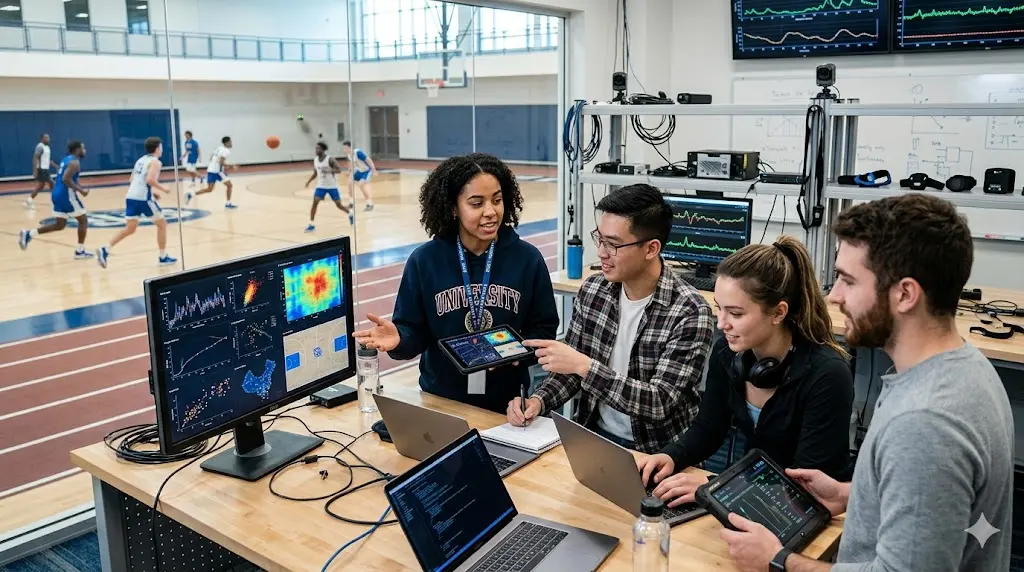
Sports analytics is transforming higher education worldwide because it combines data science, technology, business intelligence, and athletic performance into one practical field. Universities are using analytics to improve student learning, research opportunities, career readiness, and institutional decision-making, making graduates more competitive in a data-driven economy.
Why Sports Analytics Is Transforming Higher Education Worldwide is a question many educators, students, and industry leaders are asking in 2026. Sports analytics has moved far beyond professional teams and elite competitions. Today, colleges and universities are integrating data-driven sports programs into business schools, computer science departments, health sciences, and athletic management courses.
As technology becomes central to nearly every industry, higher education institutions are recognizing that sports analytics offers a unique way to teach critical thinking, statistical analysis, and real-world problem-solving. Students aren't just learning theories anymore—they're working with data that mirrors the challenges they'll face in future careers.
What Is Sports Analytics?
Sports Analytics: The process of collecting, analyzing, and interpreting sports-related data to improve performance, decision-making, strategy, health outcomes, and business operations.
Sports analytics combines statistics, machine learning, data visualization, performance tracking, and predictive modeling. While many people associate it with professional sports teams, universities now use sports analytics as an educational framework across multiple disciplines.
Students studying sports analytics often learn:
Data interpretation techniques
Predictive modeling methods
Statistical research applications
Performance evaluation systems
Sports business intelligence
Athlete development analysis
Here's the thing: sports analytics isn't really about sports alone. It's about learning how data can solve complex problems. That's why universities worldwide are investing heavily in this field.
Why Sports Analytics Matters in 2026
The demand for data-driven professionals continues to grow across industries. Sports analytics provides a practical environment where students can apply technical skills to real-world situations.
Universities are increasingly competing to offer programs that lead directly to employment opportunities. Sports analytics fits that need perfectly because it connects academic theory with industry application.
Several factors explain why sports analytics matters more than ever in 2026.
Growing Demand for Data Professionals
Organizations everywhere rely on data. From healthcare systems to financial institutions, employers need graduates who can analyze information and make evidence-based decisions.
Sports analytics programs help students develop these capabilities through engaging and measurable projects.
Expansion of Sports Technology
Wearable devices, tracking systems, performance monitoring tools, and artificial intelligence platforms generate enormous amounts of data. Universities are creating specialized courses to help students understand how to work with these technologies.
Many students find sports datasets more engaging than traditional business datasets, which often increases learning outcomes.
Strong Career Opportunities
Graduates with sports analytics experience can pursue careers in:
Data science
Sports management
Business intelligence
Performance analysis
Research consulting
Technology development
What most people overlook is that many graduates never work in sports. The analytical skills transfer remarkably well into other industries.
Enhanced Research Capabilities
Universities are using sports analytics to support interdisciplinary research involving medicine, psychology, biomechanics, economics, and artificial intelligence.
This creates opportunities for students to participate in meaningful research projects earlier in their academic careers.
Expert Tip: When evaluating sports analytics programs, don't focus only on athletic applications. Look for programs that teach transferable data science and analytical skills that can be applied across industries.
How to Implement Sports Analytics Learning in Higher Education
Universities looking to integrate sports analytics into their educational systems can follow a structured approach.
1: Build a Strong Data Foundation
Students need to understand statistics, mathematics, and data management principles before tackling advanced analytics projects.
Courses should cover:
Statistical analysis
Probability concepts
Database management
Data visualization
Without these fundamentals, advanced analytics becomes difficult to understand.
2: Introduce Real Sports Data
Once students understand basic concepts, they should work with real datasets.
This practical experience helps learners understand how messy and unpredictable real-world information can be.
A classroom exercise involving player performance data often teaches more than several weeks of theoretical lectures.
3: Integrate Technology Tools
Modern sports analytics relies on technology platforms and software applications.
Students should gain experience using:
Data visualization tools
Statistical software
Machine learning platforms
Performance tracking systems
Exposure to these tools improves workplace readiness.
4: Encourage Interdisciplinary Collaboration
Sports analytics works best when different disciplines work together.
Business students may analyze financial performance. Computer science students may develop predictive models. Health science students may study injury prevention.
That collaboration mirrors actual industry environments.
5: Connect Students With Industry Projects
Practical projects provide valuable experience and improve employment outcomes.
Students benefit from working on:
Team performance analysis
Fan engagement studies
Revenue forecasting models
Athlete health monitoring systems
Industry partnerships often create opportunities for internships and future employment.
A Common Misconception About Sports Analytics
Sports Analytics Is Not Just About Winning Games
Many people assume sports analytics exists solely to improve athletic performance.
That's only part of the story.
In reality, universities use sports analytics to teach broader concepts such as decision science, predictive modeling, resource allocation, and strategic planning.
A student analyzing ticket sales trends is learning valuable business analytics skills. Another student studying injury data is developing healthcare research expertise.
The sports context simply makes these lessons more engaging.
This is probably the most misunderstood aspect of the field.
How Universities Worldwide Are Adapting
Higher education institutions across North America, Europe, Asia, and other regions are expanding sports analytics programs.
Several trends are driving this shift.
Data-Centric Curriculum Design
Universities increasingly structure programs around data literacy rather than traditional subject boundaries.
Sports analytics naturally supports this educational model.
Industry Partnerships
Educational institutions are collaborating with sports organizations, technology companies, and research centers to provide students with practical experiences.
These partnerships help bridge the gap between academic learning and workplace expectations.
Online Learning Expansion
Sports analytics programs are increasingly available through online and hybrid learning formats.
Students can access datasets, software platforms, and virtual projects from anywhere in the world.
This accessibility is accelerating global adoption.
Expert Tip: Students interested in sports analytics should prioritize programs offering hands-on projects rather than programs focused exclusively on theory. Employers typically value demonstrated analytical experience more than coursework alone.
Real-World Example: A University Data Lab
Imagine a university creating a sports analytics laboratory.
Students collect data from campus athletic programs, analyze player performance, develop predictive injury models, and create visual dashboards for coaches.
Business students evaluate revenue opportunities.
Computer science students build machine learning systems.
Health science students study recovery patterns.
One project generates value across multiple academic departments.
I've seen similar interdisciplinary approaches produce stronger learning outcomes because students understand how different fields contribute to solving complex problems.
The Unexpected Benefit of Sports Analytics Education
Here's a slightly controversial opinion.
Sports analytics may be improving communication skills just as much as technical skills.
Why?
Because data alone doesn't create value. Students must explain findings clearly to coaches, executives, researchers, and stakeholders who may not understand advanced statistics.
Many graduates discover that presenting analytical insights becomes just as important as generating them.
That communication component often separates successful professionals from average ones.
Expert Tips: What Actually Works
In my experience, the strongest sports analytics programs share three characteristics.
First, they emphasize practical application over memorization.
Second, they encourage collaboration across departments.
Third, they expose students to industry-standard technology and datasets.
Many universities spend too much time teaching formulas without showing students how those formulas influence real decisions.
Students learn faster when they can see the direct impact of their analysis.
Another thing worth mentioning: not every student needs advanced programming skills. Some roles focus more on strategy, communication, visualization, and business intelligence.
The field is broader than many people realize.
Expert Tip: Build a portfolio of analytics projects while studying. Employers often care more about demonstrated problem-solving ability than academic transcripts alone.
People Most Asked About Sports Analytics
Why is sports analytics becoming popular in universities?
Sports analytics combines data science, technology, business, and performance management in a practical learning environment. Universities see it as an effective way to prepare students for data-driven careers.
What careers can sports analytics graduates pursue?
Graduates can work in sports organizations, technology companies, healthcare institutions, consulting firms, research centers, and corporate analytics departments.
Does sports analytics require advanced mathematics?
A strong understanding of statistics helps, but many roles focus on visualization, communication, business analysis, and decision support rather than advanced mathematical modeling.
How does sports analytics improve student learning?
Students gain hands-on experience with real datasets, practical problem-solving scenarios, and interdisciplinary collaboration that mirrors workplace environments.
Is sports analytics only useful for athletes?
No. Sports analytics develops analytical thinking, data interpretation, and decision-making skills that apply across numerous industries.
Why are employers interested in sports analytics graduates?
Employers value candidates who can collect data, identify patterns, communicate insights, and support strategic decisions using evidence rather than assumptions.
Can sports analytics support research?
Yes. Universities use sports analytics in fields such as biomechanics, health sciences, psychology, economics, and artificial intelligence research.
Final Thoughts
Why Sports Analytics Is Transforming Higher Education Worldwide comes down to one simple reality: data skills are becoming essential across nearly every profession. Sports analytics provides a compelling and practical way for students to develop those skills while working on engaging real-world problems. As universities continue expanding data-focused education, sports analytics will likely remain one of the most effective bridges between academic learning and career readiness.
Businesses, agencies, startups, and SEO professionals can boost brand visibility and organic traffic through press release distribution services while strengthening SEO ranking with professional digital marketing services. Gain high authority backlinks, wider media coverage, and instant publishing opportunities that help your brand reach targeted audiences faster and build long-term online authority.