

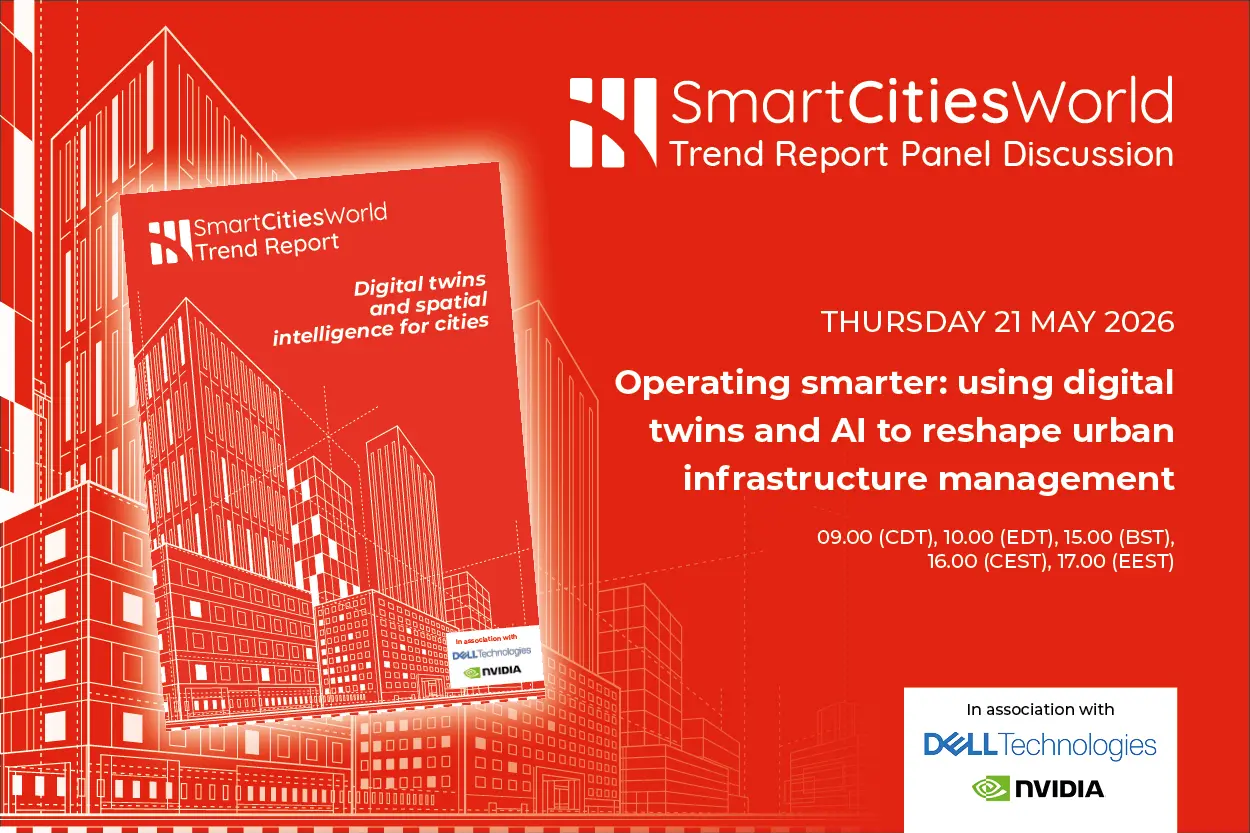
City leaders and technology experts are converging on a new paradigm for urban management: one that uses digital twins and artificial intelligence to move beyond reactive maintenance toward a strategic, risk-based approach to infrastructure resilience. In a recent virtual panel discussion, part of a major 2026 global smart cities summit, practitioners shared how these tools are helping cities anticipate failures, optimize assets, and deliver better services to citizens. The conversation spanned energy systems, transport, lighting, and climate action, revealing a sector that is rapidly maturing from pilot projects to large-scale deployments.
Digital Twins and AI: A Foundation for Resilient Infrastructure
The core promise of digital twins is the ability to create living, data-rich replicas of physical assets—bridges, water networks, power grids, even entire districts. Paired with AI, these models can simulate stress scenarios, predict maintenance needs, and guide investment decisions. The panel stressed that moving to a risk-based approach means prioritizing interventions based on data-driven analysis of vulnerability and consequence, rather than simply reacting to failures or following fixed schedules.
Cities that have adopted this mindset are already seeing benefits. For example, virtual replicas of water systems can detect pressure anomalies that signal leaks before they burst, while AI-powered analytics on traffic data can adjust signal timings to reduce congestion without costly new infrastructure. The potential for cost savings and service improvement is immense, but panelists warned that success depends on robust data governance, cross-departmental collaboration, and clear leadership from city halls.
Shaping Energy Systems Through Local Authority Leadership
Another key topic was the role of local authorities in shaping energy systems. The discussion explored how councils can drive the transition to renewables, flexibility services, energy storage, and smarter networks. With urban areas responsible for a large share of global emissions, municipal leadership is crucial. Panelists highlighted examples where cities have used procurement power, planning regulations, and partnerships with utilities to accelerate the deployment of solar, wind, and battery storage. Local energy flexibility—where buildings shift consumption to off-peak times—is emerging as a cost-effective way to reduce strain on grids while lowering bills for communities.
Smarter networks, enabled by digital twins, allow city operators to visualize energy flows in real time and simulate the impact of new technologies. This creates a feedback loop between planning and operations, enabling more confident decisions. The message was clear: cities are not just passive consumers of national energy policy; they are active shapers of their energy futures.
Sunderland’s Smart City Programme Delivers Measurable Impact
New research from Sunderland shows that a long-term connectivity investment, combined with civic leadership and trusted partnerships, is turning digital ambition into real-world benefits. The city’s smart programme is generating measurable economic, social, and public-service outcomes. Local officials credit the success to a clear vision, sustained funding, and engagement with businesses and residents alike.
Sunderland is repositioning itself as a leading smart city by leveraging digital infrastructure and low-carbon innovation to build a resilient, future-focused economy. The city has invested heavily in full-fiber connectivity, intelligent street lighting, and data platforms that underpin services from waste management to public transport. According to the research, the economic impact includes new business creation, job growth, and increased footfall in the city center, while social benefits span improved digital inclusion and better access to public services.
Glasgow’s Climate Leadership Legacy
Susan Aitken, Leader of Glasgow City Council, has been a prominent voice in local climate action. As she prepares to step down after nine years at the helm, colleagues and observers credit her leadership, courage, and ability to mobilize community action. Under her tenure, Glasgow became a global superpower of local climate action, hosting major international events and embedding sustainability into every aspect of municipal governance.
Aitken’s legacy includes ambitious targets for carbon neutrality, significant investment in district heating, and a city-wide climate adaptation strategy. She often emphasized that climate action must be inclusive, delivering benefits to disadvantaged communities while reducing emissions. Her approach demonstrated that with strong political commitment, even post-industrial cities can become leaders in green transition.
Dublin’s Digital Twin Projects and Mobility Innovation
Dublin is innovating to improve experiences and services for its communities through a series of digital twin projects, traffic reduction measures, and economic growth initiatives. The city’s digital twin is being used to model development proposals, simulate pedestrian flows, and assess the impact of new housing on infrastructure capacity.
In the mobility arena, Dublin has introduced bus priority corridors, bike-sharing schemes, and improvements to the cycling network, contributing to a decline in private car usage. These measures aim to reduce congestion and air pollution while making the city more attractive for residents, workers, and visitors. The economic growth strategy ties into these digital and sustainable investments, attracting tech companies and startups to the city.
Securing the Future of Smart Lighting
The evolution of street lighting is a perfect example of how digital technologies can turn a basic asset into a multifunctional urban platform. A two-part series on smart lighting explored how cities are approaching these systems today, from cybersecurity risks to future-proof design.
The final episode focused on the growing connectivity of smart lighting networks, which creates potential vulnerabilities that cities must address. As lights become linked to central management platforms, they can be targets for cyberattacks. Cities are therefore prioritizing security-by-design, regular updates, and encryption standards.
The second episode delved into the technology and considerations behind turning existing streetlight networks into secure, interoperable, and future-proof infrastructure. This includes adopting open standards, enabling remote monitoring and control, and integrating sensors for air quality, traffic counting, or autonomous vehicle navigation.
AI in Transport: Data, Workforce, and Governance
Transport agencies are turning to AI to improve services, from predictive maintenance to real-time passenger information. Katherine Flesh, a technology leader at Microsoft, argues that the greatest opportunities depend on strong data foundations, workforce readiness, and responsible governance. AI models are only as good as the data they receive; agencies must ensure data is accurate, complete, and accessible across departments.
Workforce readiness involves training staff not just in AI tools but in understanding how to interpret algorithms and handle exceptions. Responsible governance means setting clear accountability, ensuring transparency, and avoiding bias in automated decisions. Flesh noted that while AI can drive efficiency, it must be deployed within ethical and legal frameworks that protect citizens’ rights.
Building Healthier, More Sustainable Cities
Ecomondo, a leading international trade fair on green technologies, has been discussing priorities that shape healthier, more sustainable cities. These include circular economy practices, waste reduction, green infrastructure, and urban regeneration. Such events provide a valuable platform for sharing practical solutions and building new connections across different sectors and geographies.
Local authorities, businesses, and researchers are increasingly collaborating to test new approaches in urban laboratories. The exchange of ideas at such events helps scale pilots into mainstream practice, from community composting programs to large-scale retrofits of public buildings.
Unlocking Value from Buildings, Data, and AI
Another panel at the summit explored how cities can unlock value from buildings, data, and AI. The concept of a ‘digital twin’ extends to buildings, enabling facility managers to optimize energy use, tenant comfort, and maintenance schedules. When combined with AI and data analytics, buildings become smarter, reducing operating costs and carbon footprints.
Cities, often the owners of large real estate portfolios, are beginning to use these tools to set performance targets and benchmark progress. The panel discussed practical steps to overcome barriers, such as data fragmentation, legacy systems, and the need for new procurement models.
Transforming Transport Operations and Services
A dedicated webinar on demand trend reporting examined how AI and data are transforming transport operations and services. Topics included demand-responsive transit, predictive maintenance of vehicles and infrastructure, and personalized traveler information. By applying machine learning to historical travel patterns, operators can adjust supply to match demand, reducing crowdedness and wait times.
The webinar also highlighted the importance of partnerships between public agencies and technology suppliers, as well as the need to communicate benefits clearly to the public to build trust and adoption.
Editorial Newsletters and Community Engagement
For those who follow these developments, a daily or weekly editorial newsletter serves as a convenient way to stay updated. It brings together the latest news, interviews with city leaders, special reports, and guest opinions into a single email. These newsletters play a vital role in connecting professionals and fostering an ongoing conversation about what works in urban innovation.
As cities continue to experiment with digital twins, AI, and data-driven management, the need for shared knowledge becomes ever more critical. The stories from Glasgow, Sunderland, Dublin, and others demonstrate that meaningful progress is achievable when technology is anchored in deliberate public purpose.
Source: Smart Cities World News