

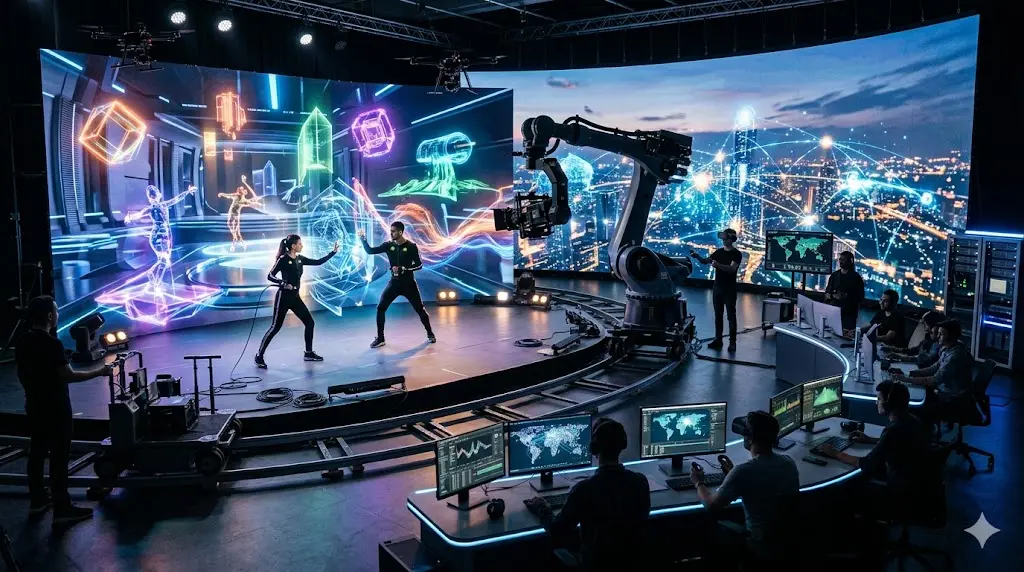
Automation is reshaping how entertainment is created, distributed, personalized, and consumed across the world. Research shows that automated tools are helping companies produce content faster, analyze audience preferences more accurately, and reduce operational costs while opening new creative opportunities.
Research on automation and the future of global entertainment suggests that intelligent systems are becoming a major force behind content production, audience targeting, streaming recommendations, gaming experiences, and digital media operations. Companies that balance automation with human creativity are likely to gain stronger audience engagement and long-term growth.
Research on automation and the future of global entertainment has become one of the most discussed topics among media executives, technology leaders, content creators, and investors. From automated video editing to recommendation engines and virtual production environments, automation is changing nearly every corner of the entertainment sector.
Here's the thing: audiences rarely see the systems working behind the scenes. Yet many of the shows, games, music recommendations, and streaming experiences people enjoy today are influenced by automated technologies. As global competition intensifies, entertainment businesses are investing heavily in tools that can improve efficiency while delivering more personalized experiences.
What Is Research on Automation and the Future of Global Entertainment?
Entertainment Automation: The use of software, intelligent systems, machine learning, and automated workflows to assist or perform tasks involved in content creation, distribution, audience engagement, and business operations.
Research in this area examines how automation affects production costs, audience satisfaction, creative workflows, revenue generation, and market expansion. It explores both opportunities and challenges.
Automation can be found in:
Content recommendation systems
Automated video editing
Digital advertising optimization
Audience analytics
Virtual production environments
Game development support tools
Streaming platform management
Customer service chat systems
What most people overlook is that automation isn't replacing every creative role. In many cases, it's enhancing human productivity rather than eliminating it.
Why Research on Automation and the Future of Global Entertainment Matters in 2026
The entertainment industry in 2026 is operating under intense pressure. Consumer attention is fragmented across countless platforms. Production costs continue to rise. Competition is global rather than local.
Automation helps address these challenges in several ways.
Faster Content Production
Studios can automate repetitive editing tasks, metadata tagging, subtitle generation, and quality checks. This reduces production timelines and allows teams to focus on storytelling and creative direction.
Better Audience Understanding
Entertainment companies now process enormous amounts of viewing data. Automated systems identify patterns that would be nearly impossible for humans to detect manually.
As a result, businesses can create more relevant content and improve audience retention.
Global Distribution Efficiency
Automation simplifies multilingual content adaptation, regional scheduling, and digital asset management. A film released in one market can quickly be prepared for dozens of others.
Cost Optimization
In my experience, one of the biggest drivers of automation adoption isn't technology itself—it's economics. Entertainment companies constantly seek ways to control costs while maintaining quality.
Automation often helps achieve both goals.
Enhanced Personalization
Streaming services increasingly rely on automated recommendation engines. These systems learn viewer preferences and continuously refine suggestions.
Oddly enough, audiences may spend less time searching for content when automation is working effectively.
How to Implement Automation in Entertainment Operations: Step by Step
Organizations exploring automation can follow a structured approach.
1. Identify Repetitive Processes
Begin by examining workflows that consume significant time and resources.
Examples include:
Content tagging
Scheduling
Metadata management
Audience reporting
Advertisement placement
These activities are often strong candidates for automation.
2. Analyze Business Objectives
Not every automation project delivers equal value.
Determine whether the goal is:
Faster production
Lower costs
Better engagement
Improved audience insights
Revenue growth
Clear objectives improve implementation outcomes.
3. Select Appropriate Technologies
Choose tools that align with organizational needs.
A streaming platform may prioritize recommendation systems, while a film studio may focus on automated post-production workflows.
4. Train Employees
Automation works best when employees understand how to collaborate with technology.
Successful companies invest in training rather than expecting instant adaptation.
5. Measure Performance
Track measurable outcomes such as:
Production speed
Audience engagement
Customer retention
Revenue performance
Operational efficiency
Consistent measurement reveals whether automation is generating value.
6. Refine and Expand
Automation should evolve continuously.
Businesses that review performance regularly often discover new opportunities for improvement.
Common Misconception: Automation Eliminates Creativity
One of the biggest myths surrounding entertainment automation is that machines will completely replace creative professionals.
Research suggests a different reality.
Creative direction, emotional storytelling, humor, cultural awareness, and artistic intuition remain heavily dependent on human expertise. Automation excels at processing data and handling repetitive tasks, but it struggles with authentic human experiences.
Let me be direct.
Audiences don't connect with content because it was produced efficiently. They connect because it feels meaningful.
Automation may help create content faster, but creativity still determines whether people care.
What Research Findings Reveal About Audience Behavior
Global studies consistently indicate several emerging patterns.
Viewers Expect Personalization
Consumers increasingly assume that platforms understand their preferences.
If recommendations feel irrelevant, engagement often declines.
Speed Matters
Audiences expect instant access to content.
Automation supports faster delivery and smoother user experiences.
Convenience Drives Loyalty
People frequently choose platforms that reduce effort.
Automated search, recommendations, and content discovery contribute significantly to customer satisfaction.
Trust Remains Essential
While consumers appreciate personalization, many also worry about data collection practices.
Companies must balance automation capabilities with transparency and privacy protections.
Real-World Example: Streaming Expansion
Imagine a streaming platform entering ten new international markets.
Without automation, content localization, subtitle creation, metadata tagging, and audience segmentation could require substantial manual effort.
With automated systems in place, the company can scale much faster while maintaining operational consistency.
This doesn't eliminate human involvement. Editors, translators, and market specialists still play important roles. Automation simply helps them work more efficiently.
Real-World Example: Gaming Industry Innovation
A global gaming company uses automation to analyze player behavior.
The system identifies levels where players frequently quit, areas generating frustration, and features driving engagement.
Developers then use those insights to improve gameplay.
In this scenario, automation supports creativity rather than replacing it.
Expert Tips: What Actually Works
Here's what most guides miss.
Many organizations focus on acquiring advanced technology before improving workflows. That's often backward.
Technology amplifies existing processes. If those processes are inefficient, automation can magnify the problems.
Expert Tip: Start with workflow optimization before introducing large-scale automation systems.
Another observation I've seen repeatedly is that audience trust becomes more valuable as automation expands.
Companies that explain how recommendations work and how data is used often build stronger long-term relationships with consumers.
Expert Tip: Transparency can become a competitive advantage, especially when automation influences content discovery.
A slightly controversial take is that more automation doesn't automatically mean better entertainment.
Some of the most successful content still emerges from human creativity, experimentation, and risk-taking. Automation works best when it supports those strengths rather than attempting to replace them.
Expert Tip: Use automation to handle repetitive work while reserving strategic and creative decisions for people.
What Does the Future Hold?
Research points toward several developments that may define the next decade.
Intelligent Content Development
Audience analytics may increasingly influence early production decisions.
Studios could evaluate potential demand before major investments are made.
Automated Localization
Global expansion will likely accelerate through automated translation and adaptation systems.
Virtual Production Growth
Entertainment companies are expected to continue adopting automated production environments that reduce costs and increase flexibility.
Dynamic Advertising
Advertising experiences may become increasingly personalized based on audience preferences and viewing behavior.
Interactive Entertainment
Automation could support more adaptive experiences where content changes based on user engagement patterns.
People Most Asked About Research on Automation and the Future of Global Entertainment
How is automation changing entertainment?
Automation improves efficiency in content creation, distribution, audience analysis, and personalization. It helps companies operate at scale while enhancing user experiences.
Will automation replace creative professionals?
In most cases, no. Automation handles repetitive tasks effectively, but human creativity remains central to storytelling, artistic direction, and emotional engagement.
Why do streaming platforms use automation?
Streaming platforms rely on automation to recommend content, analyze audience behavior, improve retention, and manage large content libraries efficiently.
Is automation improving audience experiences?
Generally, yes. Personalized recommendations, faster content delivery, and easier content discovery often increase user satisfaction.
What industries within entertainment benefit most?
Streaming services, gaming companies, film studios, music platforms, and digital media businesses all benefit from automation in different ways.
Are there risks associated with automation?
Potential risks include privacy concerns, algorithm bias, overreliance on technology, and reduced transparency if systems are not managed carefully.
What skills remain valuable in an automated entertainment industry?
Creative thinking, storytelling, strategic planning, emotional intelligence, leadership, and audience understanding continue to be highly valuable.
What should entertainment companies prioritize?
Organizations should focus on balancing efficiency with creativity, maintaining audience trust, and using automation to support rather than dominate decision-making.
If you're looking to increase brand visibility, organic traffic, and SEO ranking, our network combines online press release distribution with professional digital marketing agency solutions to help businesses, agencies, startups, and bloggers achieve wider media coverage. Gain high authority backlinks, instant publishing opportunities, and stronger search performance through trusted promotion strategies designed for long-term growth.