

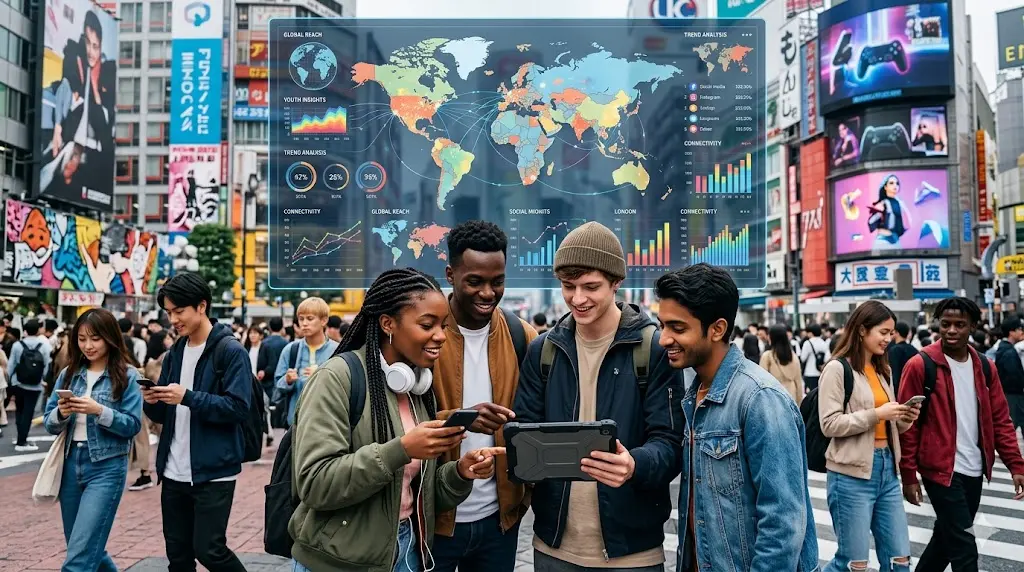
Youth culture is shaping consumer behavior, media consumption, education trends, career choices, and social movements across the world. Global audience research related to youth culture shows that younger generations are not just adapting to change—they are often creating it. Understanding their values, habits, and digital behaviors has become essential for organizations, brands, educators, and policymakers.
Global audience research related to youth culture reveals that young people are driving trends in technology, entertainment, sustainability, entrepreneurship, and digital communication. Their influence extends across industries, making youth insights one of the most valuable forms of audience research in 2026.
Global audience research related to youth culture has become one of the most discussed areas of modern market intelligence. Young consumers are influencing everything from entertainment preferences to purchasing decisions and even workplace expectations. If you've paid attention to major cultural shifts over the last few years, you've probably noticed that younger audiences often adopt new behaviors long before older generations.
Here's the thing: youth culture isn't just about fashion, music, or social media anymore. It's increasingly connected to technology adoption, personal identity, financial decisions, education choices, and global activism. Understanding these changes helps businesses and institutions prepare for what comes next.
What Is Global Audience Research Related to Youth Culture?
Global Audience Research Related to Youth Culture: The study of attitudes, behaviors, preferences, values, and consumption habits among young people across different countries and regions.
This type of research examines how younger generations think, communicate, spend money, interact online, and respond to social issues. Researchers gather insights through surveys, behavioral analytics, interviews, focus groups, and digital engagement studies.
What makes youth research particularly valuable is its predictive nature. Many behaviors that begin among younger demographics eventually spread to broader populations.
For example, short-form video consumption was initially associated with younger audiences. Today, nearly every age group engages with similar content formats.
Why Global Audience Research Related to Youth Culture Matters in 2026
The year 2026 represents a period where younger generations hold increasing economic and cultural influence.
Several factors explain why youth culture research matters more than ever.
Digital-First Lifestyles
Many young people have grown up with smartphones, streaming services, social commerce, and AI-powered tools. Their expectations differ significantly from previous generations.
They often prioritize convenience, personalization, and immediate access to information.
Rising Purchasing Power
Youth audiences are becoming major economic contributors. Beyond their direct spending, they influence household purchasing decisions across multiple industries.
From electronics to travel choices, their opinions frequently shape family decisions.
Global Cultural Exchange
Social platforms allow trends to spread internationally within hours. A movement, fashion trend, or entertainment format can quickly move from one country to another.
What most people overlook is that youth culture today is increasingly global while still maintaining strong local identities.
Sustainability Expectations
Research consistently shows that younger audiences pay attention to environmental and ethical practices.
Brands and organizations ignoring these concerns may struggle to maintain relevance among future consumers.
New Career Perspectives
Younger generations often prioritize flexibility, purpose-driven work, and personal development alongside income.
These changing priorities are influencing workforce strategies worldwide.
Expert Tip: When analyzing youth audience data, don't focus solely on age. Interests, digital behaviors, and community affiliations often provide stronger predictive insights than demographics alone.
What Are the Major Research Findings About Youth Culture Worldwide?
Audience research reveals several recurring themes across regions.
Authenticity Matters More Than Perfection
Young audiences frequently respond better to transparency than highly polished messaging.
Brands, creators, and institutions that communicate honestly tend to build stronger engagement.
Community Drives Engagement
Many young people seek belonging through online and offline communities.
Shared interests often matter more than geographic boundaries.
Experiences Outperform Possessions
A notable shift has emerged toward spending on experiences, learning opportunities, travel, and digital engagement rather than purely material ownership.
Mental Well-Being Is a Priority
Conversations around mental health have become more normalized among younger demographics.
This influences content preferences, workplace expectations, educational environments, and purchasing decisions.
Creator Influence Continues Growing
Traditional celebrity influence remains significant, but many young consumers place considerable trust in content creators who share relatable experiences.
This has transformed advertising, entertainment, and consumer communication strategies.
How to Conduct Global Audience Research Related to Youth Culture
Organizations seeking meaningful youth insights should follow a structured process.
1. Define Clear Research Goals
Start by identifying exactly what you want to understand.
Are you studying purchasing behavior, media habits, educational preferences, or social values?
Clear objectives improve research quality.
2. Use Multiple Research Methods
Combining surveys, interviews, social listening, and behavioral analytics provides more complete insights.
Relying on a single method may produce incomplete conclusions.
3. Include Diverse Regions
Youth culture varies significantly across countries.
Research should include participants from multiple geographic and cultural backgrounds whenever possible.
4. Analyze Digital Behavior
Online activity often reveals trends before they appear in traditional surveys.
Social engagement patterns can highlight emerging interests and concerns.
5. Monitor Trends Continuously
Youth preferences evolve rapidly.
Ongoing research is generally more effective than one-time studies.
6. Translate Findings Into Action
Insights become valuable only when they influence decision-making.
Research should support product development, communication strategies, educational programs, or policy initiatives.
Expert Tip: Small behavioral shifts among younger audiences often signal larger future trends. Watch emerging patterns closely rather than focusing only on current mainstream behavior.
Common Mistake: Assuming All Young People Think Alike
One of the biggest misconceptions in youth research is treating young audiences as a single group.
That's rarely accurate.
A university student in one country may have completely different priorities than a young entrepreneur elsewhere. Economic conditions, cultural backgrounds, education levels, and technological access create substantial differences.
Ironically, the more connected the world becomes, the more important local context can be.
Organizations that recognize these differences usually develop more effective strategies.
How Youth Culture Is Transforming Global Industries
Entertainment
Streaming, gaming, creator content, and interactive media continue evolving due to youth preferences.
Many entertainment innovations emerge from younger audiences before reaching broader markets.
Education
Digital learning, micro-credentials, and skill-focused training are becoming increasingly popular.
Traditional educational models are adapting accordingly.
Retail
Social commerce and personalized recommendations are changing how younger consumers discover products.
Shopping increasingly combines entertainment and purchasing experiences.
Technology
Young users often become early adopters of emerging technologies.
Their feedback frequently shapes future product development.
Travel
Younger travelers often prioritize experiences, authenticity, and flexibility over traditional tourism models.
This is influencing hospitality and destination marketing strategies globally.
Real-World Example: Global Streaming Habits
Imagine a media company researching youth viewing behavior across North America, Europe, Asia, and Latin America.
Initial assumptions suggest that content preferences differ dramatically between regions.
Research reveals something interesting.
While local content remains popular, younger audiences also share many common interests, including short-form storytelling, creator-led content, interactive experiences, and personalized recommendations.
This finding helps the company develop a balanced global content strategy while maintaining regional relevance.
A Personal Observation About Youth Research
In my experience, many organizations spend too much time studying what young audiences are doing today and not enough time understanding why they're doing it.
Behavior is visible.
Motivation is where the real insight lives.
I've seen businesses successfully predict future trends simply because they focused on underlying values rather than temporary behaviors. That's often where the strongest research opportunities exist.
Expert Tip: Ask "why" multiple times during research analysis. Surface-level findings explain current behavior. Deeper motivations often reveal future behavior.
The Unexpected Finding Many Researchers Miss
Many people assume youth culture is becoming increasingly fragmented.
There's some truth to that.
Yet research often shows simultaneous fragmentation and convergence.
Young people may belong to highly specialized communities while also participating in global cultural conversations.
A teenager interested in gaming, sustainability, entrepreneurship, and music can engage with niche groups while sharing common experiences with peers worldwide.
This dual reality creates both challenges and opportunities for researchers.
What Will Shape Youth Culture Research in the Future?
Several developments are expected to influence future studies.
Artificial Intelligence
AI tools will improve audience analysis, personalization, and predictive modeling.
Virtual Experiences
Immersive digital environments may create new forms of community and entertainment.
Global Connectivity
International cultural exchange will likely continue accelerating.
Economic Conditions
Financial realities will influence educational choices, career planning, and consumer behavior.
Identity Expression
Young audiences increasingly value individuality while seeking meaningful communities.
These factors will remain important research priorities throughout the coming years.
Expert Tips: What Actually Works
When researching youth culture, successful organizations typically focus on listening rather than assuming.
Let me be direct.
Many failed campaigns begin with executives deciding what young people should care about instead of discovering what they actually care about.
Here's what most guides miss: trends are often symptoms, not causes.
A viral platform, popular creator, or emerging fashion movement usually reflects deeper social, technological, or economic shifts. Understanding those shifts provides far more value than simply tracking surface-level trends.
Research teams that combine quantitative data with qualitative insights generally produce stronger results because numbers explain what happened while conversations explain why it happened.
Expert Tip: Build long-term youth research panels whenever possible. Consistent engagement often reveals behavioral changes that short-term studies miss.
People Most Asked About Global Audience Research Related to Youth Culture
What is youth culture research?
Youth culture research studies how young people think, behave, communicate, consume media, and make decisions. It helps organizations understand emerging social and economic trends.
Why is youth culture important for businesses?
Young consumers influence purchasing decisions, technology adoption, entertainment preferences, and future market demand. Understanding them helps businesses stay relevant.
How is social media affecting youth culture?
Social media accelerates trend adoption, community formation, content creation, and global cultural exchange. It has become a central part of youth communication.
What industries benefit most from youth audience research?
Entertainment, education, technology, retail, travel, and financial services frequently rely on youth insights to guide strategy and innovation.
Are global youth audiences becoming more similar?
Research suggests some behaviors are becoming more global due to digital connectivity, but local cultural influences remain highly important.
What research methods work best for studying youth culture?
A combination of surveys, interviews, social listening, behavioral analytics, and community observation usually produces the most accurate insights.
How often should youth culture research be updated?
Because trends evolve quickly, ongoing monitoring is generally recommended. Annual research alone may miss important changes.
What is the biggest challenge in youth audience research?
Avoiding stereotypes is often the greatest challenge. Young people represent diverse perspectives, experiences, and priorities across regions.
Global audience research related to youth culture continues to provide valuable insights into the future of consumer behavior, technology adoption, education, entertainment, and social change. As younger generations gain greater economic and cultural influence, organizations that understand their motivations—not just their behaviors—will be better positioned to anticipate emerging trends. The strongest research combines global perspectives with local understanding, creating a clearer picture of where youth culture is heading next.
Boost your brand visibility with global newswire services and targeted SEO services designed to deliver high authority backlinks, stronger SEO ranking, and measurable organic traffic. Whether you're a startup, agency, blogger, or growing business, our solutions combine instant publishing, media coverage, and performance-driven promotion to help you reach wider audiences and build lasting online authority.