

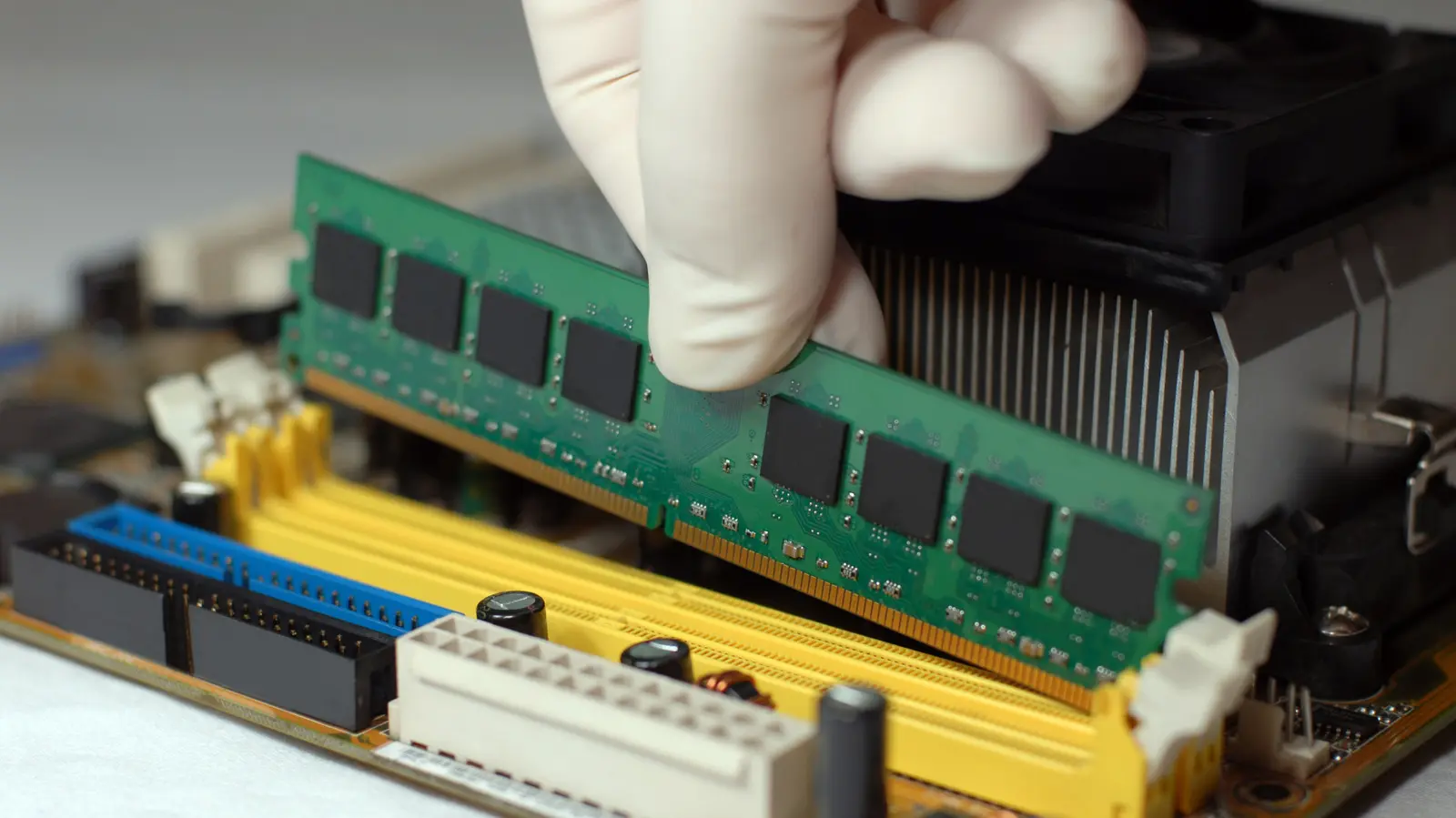
If you are using any electronic gadget today, it almost certainly contains a memory chip. Typically labeled as RAM (Random Access Memory) or DRAM (Dynamic RAM), these components are essential for the performance of everything from smartphones and laptops to servers and gaming consoles. Given the ubiquity of electronic devices, one might assume that DRAM modules are readily available and reasonably priced. However, the reality is starkly different: memory chips are incredibly difficult to manufacture, and as of mid-2026, the world is facing a severe DRAM shortage. The root cause of this shortage lies in the concentrated market structure of memory production, dominated by just three companies: Samsung, SK Hynix, and Micron Technology.
Together, Samsung and SK Hynix—both South Korean giants—account for roughly two-thirds of the global memory market. Their scale of operations is mind-boggling, with massive fabrication plants (fabs) producing billions of chips annually. Micron, based in the United States, is a smaller but still significant player, often considered the third pillar of the memory industry. On June 25, 2026, these three companies were named in a class action lawsuit accusing them of willfully restricting the supply of DRAM modules to inflate prices. The lawsuit is a direct response to the steep increase in RAM prices that users have experienced since mid-2025. The plaintiffs argue that the companies have shifted their attention toward manufacturing a more complex and profitable form of DRAM called HBM (High Bandwidth Memory), thereby creating an artificial shortage in the consumer market and driving up prices.
What Exactly Does the Lawsuit Allege?
The lawsuit, filed by 17 plaintiffs, contends that Samsung, SK Hynix, and Micron made coordinated efforts to reduce production of mainstream consumer-focused RAM. The primary motivation cited is the lucrative shift toward HBM, which is used in high-performance computing, artificial intelligence, and data centers. HBM modules are more complex to produce and command significantly higher prices, making them far more profitable than standard DRAM. The lawsuit claims that this pivot led to a massive reduction in the supply of conventional memory modules, with Micron even fully exiting the consumer-focused RAM segment in 2025. As a result, consumers and businesses alike have faced skyrocketing prices for RAM—the lawsuit notes that memory prices shot up by nearly 700% in just four years.
While the claim of collusion has yet to be proven in court, historical context provides valuable perspective. A similar lawsuit filed against these same companies in 2020 collapsed because the plaintiffs failed to convince the court that the companies had conspired to raise prices. However, going further back, there have been instances of memory makers pleading guilty to exactly the kind of behavior alleged now. In the early 2000s, a DRAM price-fixing scandal resulted in Samsung paying a $300 million fine, Hynix paying $185 million, and other players like Infineon and Elpida being fined $160 million and $84 million respectively. Several senior executives even served prison time. Notably, Micron avoided prosecution entirely by cooperating with the Department of Justice under its leniency program. This history suggests that the memory industry has a track record of anti-competitive practices, though proving collusion in court remains challenging.
Why Can't Other Players Enter the Market?
Given the alleged supply restrictions, one might wonder why new or smaller companies cannot simply step in to fill the void. The answer lies in the staggering technological and financial barriers to entry. Establishing a DRAM manufacturing facility at scale requires an investment of $15 billion to $20 billion for a single fab—before any customers are guaranteed. Moreover, these fabs require constant upgrades to keep pace with shrinking fabrication nodes and increasing complexity. The process involves extreme ultraviolet (EUV) lithography, advanced materials, and precision engineering that only a handful of companies in the world have mastered. Beyond the capital costs, there are geopolitical and supply chain challenges, including access to specialized equipment (e.g., from ASML) and raw materials like silicon wafers, chemicals, and rare gases. Additionally, DRAM production benefits from massive economies of scale, meaning that even if a new player could afford the initial investment, they would struggle to compete on cost with established giants that have refined their processes over decades. Simply put, the DRAM market is a natural oligopoly, and the barriers to entry are so high that only companies with extraordinary financial strength and technological expertise can even consider entering.
The Role of High Bandwidth Memory (HBM)
The shift toward HBM is driven by the insatiable demand for high-performance computing, particularly in AI training and inference. HBM stacks multiple DRAM dies vertically, connected through through-silicon vias (TSVs), enabling much higher bandwidth and lower power consumption than traditional DRAM. This makes HBM ideal for applications like graphics cards, supercomputers, and AI accelerators. However, HBM production requires additional steps, including die stacking and micro-bumping, which reduces the overall output of standard DRAM from the same fabs. Companies like Samsung, SK Hynix, and Micron allocate significant portions of their manufacturing capacity to HBM to capitalize on high margins. According to industry reports, HBM prices can be three to five times higher than equivalent capacity of standard DDR5 DRAM. This economic incentive is at the core of the lawsuit's argument: that the big three deliberately starved the consumer market to maximize profits from enterprise customers. While this strategy makes business sense individually, the lawsuit alleges it was done in coordination, violating antitrust laws that prohibit collusive output restrictions.
Impact on Consumers and Businesses
The consequences of the DRAM shortage have been widespread. Consumers have seen RAM prices for their PCs and laptops double or triple over the past year. For example, a 32GB DDR5 kit that cost $100 in early 2025 now sells for over $300. Businesses reliant on memory-intensive workloads—such as cloud computing, video editing, and scientific simulations—face increased operational costs. Server manufacturers have reported extended lead times for memory modules, delaying data center expansions. Small and medium enterprises that lack the capital to secure long-term supply contracts are particularly vulnerable. Moreover, the shortage has fueled a secondary market where scalpers and resellers charge exorbitant premiums. The lawsuit seeks not only monetary damages but also injunctions to prevent further supply restrictions, though the legal process may take years to resolve.
Another indirect effect is the stifling of innovation in the broader tech ecosystem. Startups and hardware designers often rely on readily available memory to prototype new devices. With limited DRAM supply, companies may delay product launches or switch to suboptimal components, potentially slowing the pace of technological advancement. The memory shortage also exacerbates geopolitical tensions over semiconductor supply chains, as South Korea's dominance in memory gives it significant leverage in trade negotiations. Policymakers in the U.S. and Europe have begun exploring initiatives to diversify memory manufacturing, but the timeline for any new fab is at least five years, and the costs are prohibitive. In the meantime, consumers and businesses must contend with a market that appears increasingly distorted by the actions of a few powerful players.
Historical Precedents and Legal Outlook
The 2026 lawsuit is not the first legal challenge to the memory oligopoly's pricing practices. The DRAM price-fixing conspiracy of the late 1990s and early 2000s led to total fines exceeding $1 billion and prison sentences for executives. However, more recent efforts to prove collusion have failed, as seen in the 2020 case that was dismissed. The key challenge for plaintiffs is showing that the companies' decisions to prioritize HBM were not independent business judgments but rather the result of explicit coordination. Courts typically require evidence of communication or parallel conduct that lacks a legitimate business justification. The plaintiffs may point to public statements by executives about focusing on HBM, industry analyst reports, and the sudden simultaneous reduction in mainstream DRAM output as circumstantial evidence. But without a "smoking gun" like emails or meeting notes, the case faces an uphill battle. Meanwhile, the three companies have denied the allegations, arguing that market forces and technological transitions naturally led to the shift in focus.
Interestingly, the lawsuit also raises questions about the role of government intervention. Some experts argue that antitrust enforcement in the semiconductor industry has been too lenient, allowing a few firms to dominate essential components. Others caution against heavy-handed regulation that could disrupt innovation or lead to supply chain fragmentation. The outcome of this lawsuit could set a precedent for how memory markets are governed in the future. If the plaintiffs prevail, Samsung, SK Hynix, and Micron might be forced to increase DRAM production or face court-mandated supply targets. If the case collapses again, it may embolden the companies to continue prioritizing margins over volume, perpetuating a cycle of shortages and price spikes.
Source: SlashGear News