

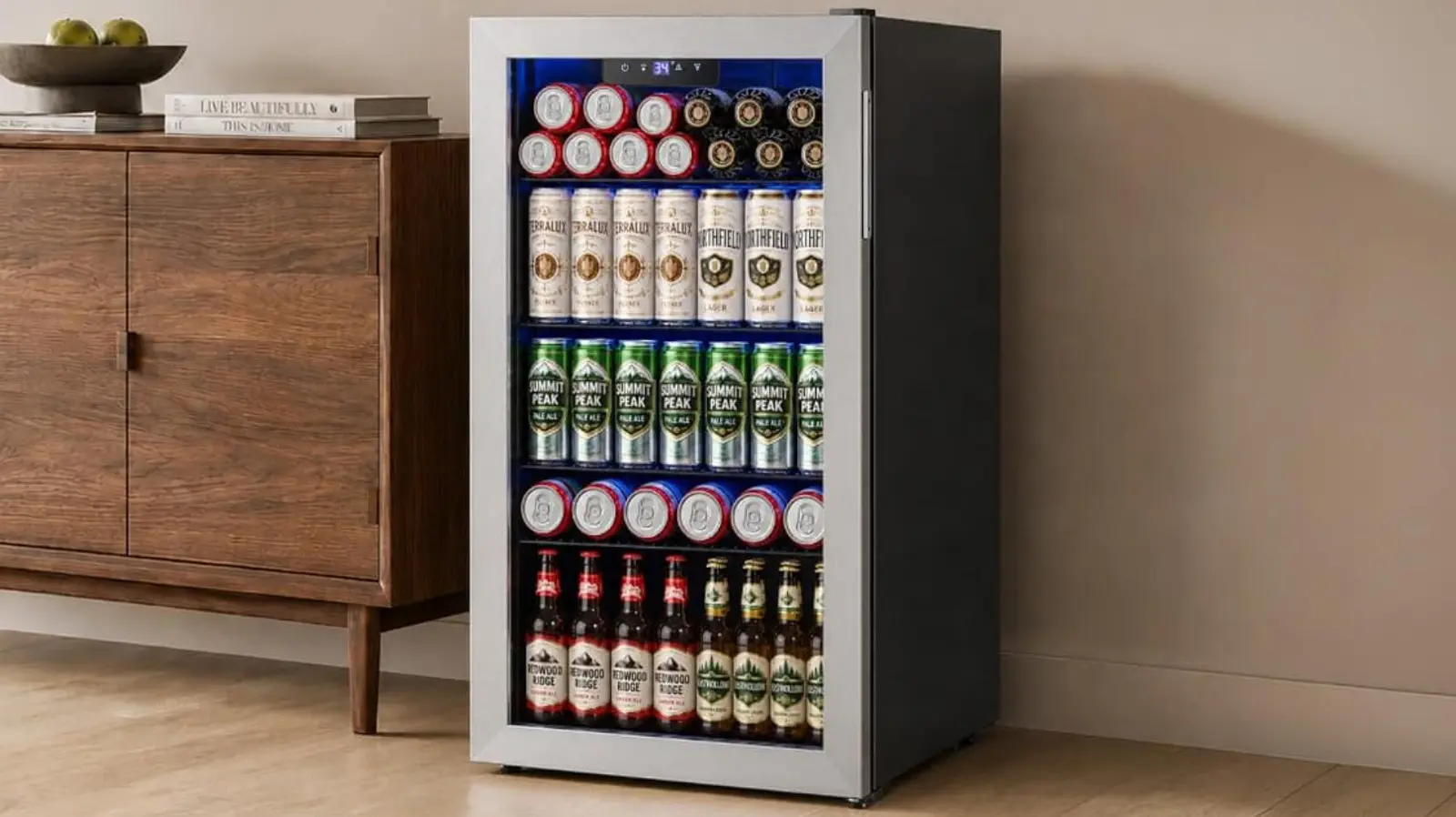
Beverage coolers have become a popular addition to home bars, media rooms, and offices. These compact appliances are designed specifically to chill drinks, making them convenient for entertaining or for keeping a stash of sodas, sparkling water, and beer within arm's reach. However, many people wonder whether a beverage cooler can double as a small refrigerator. The short answer is that it depends on the unit's temperature range and how you plan to use it. While a beverage cooler can keep drinks refreshingly cold, it is not automatically safe for storing perishable food such as dairy, meat, and leftovers. To understand whether a beverage cooler can be used as a refrigerator, it is important to look at food safety standards, temperature controls, humidity management, and the intended purpose of each appliance.
Understanding the FDA 40-Degree Rule
The U.S. Food and Drug Administration (FDA) provides clear guidelines for safe food storage. Refrigerators should maintain an internal temperature of 40 degrees Fahrenheit (4 degrees Celsius) or below. This threshold is critical because it slows the growth of bacteria that can cause foodborne illness. When perishable foods are kept above 40 degrees Fahrenheit, bacteria can multiply rapidly, increasing the risk of spoilage and food poisoning. The FDA defines the temperature range between 40 and 140 degrees Fahrenheit as the "Danger Zone." Within this range, bacteria can double in number in as little as 20 minutes. That is why food safety experts emphasize the importance of keeping cold food cold and hot food hot.
Beverage coolers, also known as drink refrigerators or beverage centers, are not all created equal. Some models feature adjustable thermostats that allow you to set the temperature to 40 degrees or lower. If a beverage cooler can reliably reach and maintain that temperature, it technically can be used to store perishable foods for a short period. However, many beverage coolers are designed to operate at temperatures slightly higher than a standard refrigerator, often around 45 to 50 degrees Fahrenheit, because that range is considered ideal for drinks. At those temperatures, perishable foods should not be stored.
Even if your beverage cooler has a broad temperature range, it may not be sufficient for long-term food storage. Beverage coolers typically lack the insulation, air circulation, and moisture control found in full-size refrigerators. These factors affect how evenly the temperature is distributed and how well food retains its freshness. Some beverage coolers also lack the ability to maintain consistent temperatures when they are opened frequently, which could cause the internal temperature to spike into the danger zone.
Can a Beverage Cooler Safely Store Food?
The answer depends on three key factors: the lowest temperature setting, the consistency of that temperature, and the type of food you intend to store. If the beverage cooler has a digital thermostat or a precise dial that can be set to 34 to 38 degrees Fahrenheit, and if it holds that temperature steadily, it can be used for short-term storage of perishable items. For example, you could safely keep a carton of milk or some deli meat in the beverage cooler for a day or two, provided the temperature remains at or below 40 degrees Fahrenheit.
However, even a capable beverage cooler should not be viewed as a replacement for a full-size refrigerator. Most beverage coolers have limited storage capacity, with shelving designed to hold cans and bottles rather than large containers or platters. They also rarely include crisper drawers or humidity controls, which are important for keeping fruits and vegetables fresh. Without proper humidity, produce can wilt or become slimy. Meat and dairy products also benefit from the consistent cold airflow of a dedicated refrigerator.
Another concern is that beverage coolers often lack the door bins and adjustable shelves that make it easy to organize a variety of food items. The interior is often configured for uniform bottle and can sizes. If you try to store irregularly shaped containers or bulky leftovers, you may block airflow, leading to uneven cooling and warm spots. This can create pockets of higher temperature where bacteria could thrive.
For these reasons, food safety experts recommend using a beverage cooler only for beverages or for non-perishable snacks that do not require refrigeration. If you need additional cold storage for food, a mini refrigerator is a safer investment.
Differences Between Beverage Coolers and Mini Refrigerators
Mini refrigerators are essentially smaller versions of full-size refrigerators. They are designed to store a variety of food items at safe temperatures, usually between 35 and 40 degrees Fahrenheit. Many mini fridges also include small freezer compartments, which can be useful for storing ice cream, frozen meals, or ice cubes. Because they are built with food storage in mind, mini refrigerators typically have adjustable shelves, door bins, and drawers that accommodate different types of food.
Beverage coolers, on the other hand, prioritize drink storage. They usually have glass doors, which make it easy to see the contents without opening the unit, and they are often designed to blend with home bar furniture. The shelving is spaced to fit standard soda cans, beer bottles, or wine bottles. While some beverage coolers have adjustable shelves, the overall design is less flexible than a mini fridge.
Another key difference is temperature control. Mini refrigerators are calibrated to stay within the safe food storage range. Beverage coolers often have temperature controls that go higher than 40 degrees, especially if they are marketed for red wine storage, which is best around 55 degrees. If you choose to store food in a beverage cooler, you must verify that the temperature can be adjusted below 40 degrees and that it remains stable even when the ambient room temperature changes.
Cost and energy efficiency also vary. Beverage coolers can be less expensive than mini fridges of similar capacity, but they may not be energy-efficient if they are operating at lower temperatures than their design intent. Additionally, glass doors in beverage coolers can let in heat every time you view the contents, which means the compressor has to work harder to maintain the temperature. Mini fridges typically have solid doors, providing better insulation.
If you already own a beverage cooler and want to use it for food, you can take a few precautions. Place a thermometer inside to monitor the actual temperature, not just the dial setting. Keep the unit filled with beverages or food to help stabilize the temperature, but do not overfill it, as that can block airflow. Open the door only when necessary and close it quickly. Avoid storing raw meat or other foods that require very strict temperature control for long periods.
Exploring Different Types of Cooling Solutions
Beyond beverage coolers and mini fridges, there are several other cooling devices that serve different purposes. Portable electric coolers are one such option. These units use a powered cooling system to chill food and drinks. Some models plug into a standard wall outlet, while others have built-in rechargeable batteries or can be connected to a car's power port. Electric coolers are useful for camping trips, tailgating events, road trips, and other situations where mobility is important. Some high-end models even feature smartphone apps that let you monitor and adjust the temperature remotely.
Electric coolers are not meant to be permanent refrigerators. They are best used as temporary cooling solutions for short trips and outdoor activities. When used with a good power source, they can keep perishable items safe for a day or two, but they are not designed to maintain a constant temperature over months. They also tend to be more energy-hungry than well-built mini fridges if left running all the time.
Traditional ice coolers are another category. These coolers do not require electricity; instead, they rely on ice to keep contents cold. They come in many styles, including soft-sided coolers with lightweight foam insulation, hard-sided coolers with thick walls for longer ice retention, and backpack coolers that allow hands-free carrying. Traditional coolers are fully portable and ideal for picnics, beach days, and outdoor recreation. The main drawback is that you need to supply ice and replace it as it melts. Without enough ice, the internal temperature can quickly rise into the danger zone, making food unsafe.
Soft-sided coolers generally offer less insulation and are best for short excursions. Hard-sided coolers, especially premium brands, can keep ice for several days, making them suitable for longer trips. However, a traditional cooler is not a substitute for a refrigerator. It is a temporary solution only.
Key Facts to Remember
When deciding whether a beverage cooler can be used as a refrigerator, keep these key facts in mind. First, the FDA states that perishable food must be stored at 40 degrees Fahrenheit or below. Second, the "Danger Zone" between 40 and 140 degrees Fahrenheit allows bacteria to grow quickly. Third, some beverage coolers can reach safe temperatures, but many cannot. Fourth, even if a beverage cooler reaches the correct temperature, it may not maintain it consistently or offer the humidity control needed for long-term food storage. Fifth, mini refrigerators are a better choice for food because they are specifically designed for that purpose. Sixth, electric coolers and traditional ice coolers are portable options, but they are not permanent replacements for a refrigerator.
Before using any cooling appliance for food storage, check the manufacturer's specifications and temperature range. Use a separate thermometer to verify the actual internal temperature. Never rely on the dial or digital display alone. If you are unsure about the safety of a food item, throw it out rather than risk foodborne illness.
Beverage coolers serve an important role in homes and entertainment areas. They keep drinks conveniently chilled and can reduce the clutter in the main refrigerator. However, they are not all-purpose refrigerators. Understanding the limitations and following food safety guidelines will help you make the best use of your appliance without compromising your health.
In the end, the choice between a beverage cooler and a refrigerator comes down to your needs. If you only want cold drinks, a beverage cooler is a great investment. If you need extra space for food, choose a mini fridge or use a full-size refrigerator. And if you are traveling or spending time outdoors, consider an electric cooler or a traditional ice cooler. Each type of cooling solution has its strengths and weaknesses, and knowing those differences can help you select the right one.
Source: SlashGear News