

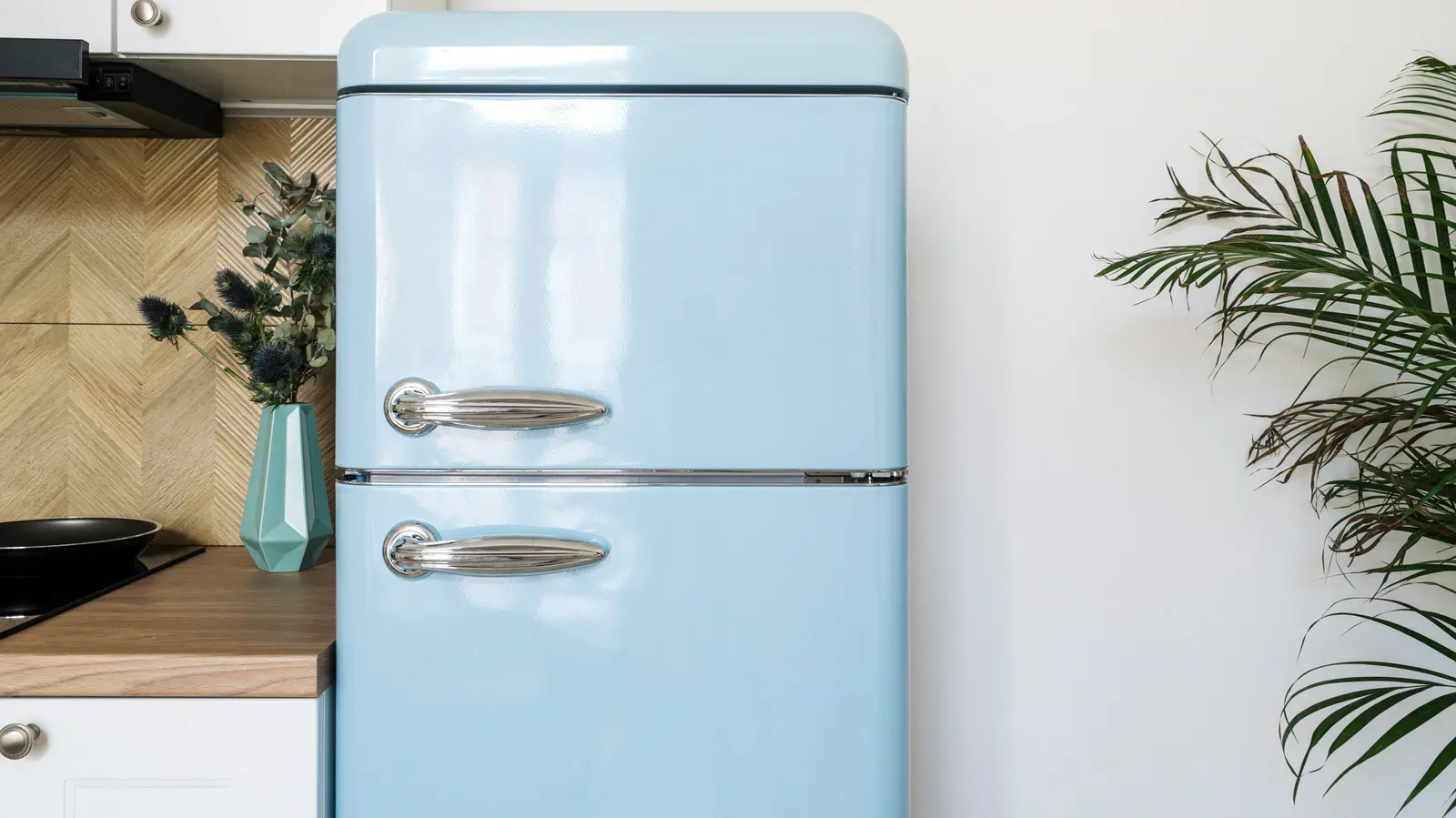
Refrigerators are one of the steadiest energy draws in your home. While they fall well behind HVAC systems and water heaters, refrigerators and freezers still account for roughly eight percent of residential electricity consumption, according to the U.S. Energy Information Administration. Knowing how much electricity a refrigerator uses helps you understand energy costs, but that doesn't necessarily tell you how much power it uses. Electricity is a form of energy, and there is a clear distinction between energy and power. Understanding this difference is the first step in answering the common question: How many amps does a refrigerator typically use?
Power vs. Energy: Why Amps Matter
Power is the rate at which energy is consumed. For a refrigerator, power is often expressed in watts and amps. Energy, on the other hand, is the total amount of electricity used over time, measured in watt-hours or kilowatt-hours (kWh). A refrigerator with a higher wattage rating will consume more energy each hour, but its total energy use also depends on how long the compressor runs. Because compressors cycle on and off, a refrigerator's instantaneous amp draw is not constant. That is why manufacturers list both running amps and start amps, and why your household electric bill is based on kWh rather than amps alone.
When people ask about a refrigerator's amperage, they usually want to know the running current, which is the typical amount of amps drawn while the compressor is operating. However, the starting current, or locked rotor amps (LRA), can be several times higher. This surge lasts only a fraction of a second but is critical for sizing circuits and generators. If you choose a generator based only on running amps, you may find that the refrigerator cannot start when the power goes out.
Typical Amp Ratings for Home Refrigerators
In the United States, standard residential refrigerators operate on a single-phase 120-volt circuit. The average top freezer refrigerator model is typically rated for 3 to 6 amps at 120V, not including the inrush current for the compressor to start. Side-by-side and French door models often draw slightly more, commonly in the range of 3 to 8 amps. Mini-fridges, which are much smaller, typically use 1 to 2 amps. Commercial units, on the other hand, often run at 208 to 230 volts and may draw significantly more current, especially if they have larger compressors or remote condensing units.
These figures are only averages. A modern ENERGY STAR-rated refrigerator can draw less than older models, even with more features. Conversely, a large side-by-side with an ice maker and water dispenser in a hot garage may draw more than a compact refrigerator in an air-conditioned kitchen. The actual amp draw depends on many variables, so it is always best to check the nameplate on the back of the refrigerator or inside the compressor compartment.
Factors That Determine a Refrigerator's Amperage
Many factors affect how much power a refrigerator uses, including its size in cubic feet, its features, and its compressor type. Refrigerators are often segmented by class: mini-fridges, top- or bottom-freezer models, side-by-sides, French door, commercial reach-in, or garage-ready units. That overview can give you a rough idea of power requirements, but even then, nothing is set in stone. A modern side-by-side inside a kitchen may use less power than an older and smaller non-garage-ready fridge sitting in a hot garage.
The compressor type and size have the biggest bearing on power draw. There are several potential compressors a refrigerator could use, including the proven reciprocating compressor that has been around for decades, as well as linear and inverter-type compressors designed for higher mechanical efficiency. A reciprocating compressor uses pistons driven by a crankshaft, creating a steady but somewhat inefficient flow of refrigerant. Linear compressors use a spring-driven piston that can vary its stroke length, allowing the refrigerator to adjust cooling output more precisely. Inverter compressors use variable-frequency drives to control the compressor motor speed, reducing power consumption when the cooling load is low. These modern designs can cut amp draw by as much as 25% compared with older models.
A compressor's cooling capacity, measured in BTU/h, and the horsepower rating of the motor also play a major role. Larger compressors move more refrigerant and provide more cooling, but they require more electrical current. To determine the exact relationship, you need to look at the compressor nameplate, as many manufacturers do not share these technical specifications in product brochures. The nameplate typically lists voltage, full-load amps, and locked rotor amps. That information is essential if you are calculating circuit loads or generator capacity.
Usage Habits and Environmental Conditions
How you use your refrigerator matters just as much as its mechanical design. Ambient temperature, proper ventilation, the distance from walls, the frequency of door openings, and routine maintenance all affect how hard the compressor has to work to maintain the set temperature. If the room is hot, the compressor cycles more often and runs longer, increasing the average amp draw. If the condenser coils are dusty, heat transfers poorly, forcing the compressor to work harder. If the door gasket is worn, cold air escapes, and the compressor has to run more frequently to keep the interior cool. All of these factors can raise the running current and overall energy consumption.
Placement also matters. A refrigerator installed in a tight alcove with no clearance around the side or back coils will overheat. The compressor will then run longer and draw more amps. Manufacturers typically require at least one inch of clearance on each side and two inches at the back, but you should read the manual for your specific model. Similarly, placing a refrigerator in an unconditioned garage or a sunny spot near a window can increase its amp draw. A garage-ready model has enhanced insulation and a wider operating temperature range, making it better suited for extreme environments. If you use a standard refrigerator in a hot garage, expect the compressor to run almost continuously on summer days, drawing up to twice its rated running amps.
Electrical Circuit Requirements and Safety
In the U.S., most refrigerators are designed to run on a dedicated 15-amp or 20-amp, 120-volt branch circuit. Electricians and the National Electrical Code generally recommend having a separate circuit for the refrigerator so a tripping breaker or a faulty appliance does not affect other kitchen devices. Although a refrigerator's running amps may be only 3 to 6, the starting surge can stress a shared circuit, especially if other appliances are running. When a compressor starts, it can draw six or seven times its running current for a brief moment. If another motor on the same circuit is also starting, the combined surge can trip a breaker.
It is technically possible to run a refrigerator and a freezer on the same circuit, but it is not advisable. Each has a locked rotor amp rating that spikes at startup. If both compressors happen to cycle on at the same time, the breaker will almost certainly trip, cutting power to both appliances. A fault in one unit could also take down the other, potentially causing food spoilage. For safety and reliability, dedicated circuits are always the better choice.
Before plugging in a refrigerator, check the outlet and wiring to ensure they meet code. A 15-amp circuit needs 14-gauge wire, while a 20-amp circuit requires 12-gauge wire. The circuit breaker should be sized to match the wire and the receptacle. Never replace a 15-amp breaker with a 20-amp breaker on 14-gauge wire, as that can cause overheating and a fire hazard. If you are unsure about the condition of your electrical system, consult a licensed electrician.
How to Measure Your Refrigerator's Amps
If you want to know the exact amp draw of your refrigerator, you can measure it with a digital clamp meter. This device wraps around one of the power cord wires and measures the current flow without disconnecting anything. The clamp meter should be set to the AC amps function. To get a good reading, place the clamp around the hot wire, which is the black wire inside the cord. If you cannot access the wires, you can use a plug-in power meter between the outlet and the refrigerator. These devices display voltage, amps, watts, and cumulative kWh over time.
When measuring, keep in mind that the compressor cycles on and off. A single measurement taken during a cycle will not give you the average draw. To get a useful average, leave the meter in place for at least 24 hours. This captures the normal compressor cycles as well as the defrost heater, which draws additional amps during the defrost cycle. The defrost heater is usually resistance heating and can add several amps, but it runs for only short periods.
You can also calculate the amperage from the wattage if the manufacturer lists it. Divide the wattage by the voltage to get the running amps. For example, a refrigerator that consumes 600 watts on a 120-volt circuit is drawing 5 amps. Conversely, if the nameplate lists amps, multiply the voltage by the amps to get the running wattage. This simple formula is useful for comparing products and planning backup power.
Generator Sizing for Refrigerators
If you plan to run a refrigerator on a generator during a power outage, you need to account for both running watts and starting watts. The running wattage is the amount needed to keep the compressor operating normally. The starting wattage is the extra surge needed for a moment when the compressor kicks on. For a typical household refrigerator, running watts range from 300 to 800, depending on size and efficiency. Starting watts can be 1,200 to 2,000 or more. Generators are rated with both figures, often printed on the box as running watts and maximum or surge watts.
A small 1,200-watt generator with 1,500 starting watts might run a compact refrigerator but little else. For a full-size refrigerator, it is safer to choose a generator with at least 2,000 running watts. Going up to 2,500 or 3,500 run watts gives you more headroom and allows you to power a few lights or a phone charger at the same time. Inverter generators are especially popular for this purpose because they provide clean power with stable frequency and are quieter than conventional units.
To determine the exact size, add the running watts of everything you want to power at the same time. Then add the highest starting watts among those appliances to that total. That final number is the minimum generator running wattage you should look for. If you plan to run the refrigerator and a sump pump, for instance, sum the running watts and then add the starting surge of whichever motor starts last. This conservative approach ensures the generator can handle the spikes without overloading.
Energy Consumption and Cost Considerations
Amperage is only one piece of the energy puzzle. To estimate the operating cost of a refrigerator, you need to know its annual energy consumption in kilowatt-hours. Most new refrigerators have a yellow EnergyGuide label that estimates annual kWh usage. For example, a typical 20-cubic-foot top freezer model might use 400 to 600 kWh per year. At an average electricity rate of $0.16 per kWh, that translates to $64 to $96 per year. Side-by-side units with ice makers and water dispensers often use more energy, sometimes 700 kWh or more per year. Replacing an older refrigerator that was made in the 1990s with a modern ENERGY STAR model can reduce energy use by 30% to 50%, saving a significant amount of money every month.
Although the compressor is the largest electrical load, the refrigerator also has lights, fans, and a defrost heater. These components draw additional amps when they operate, but they run much less frequently than the compressor. The condenser fan and evaporator fans are small brushless motors that draw less than 1 amp each. The interior lights often use 1 to 2 amps when the door is open. The defrost heater is the heaviest secondary load and can draw 4 to 8 amps, but it runs for only ten to twenty minutes every eight to twelve hours, depending on the model.
Key Facts
- Most residential refrigerators draw 3 to 8 running amps at 120V.
- Starting amps can be six to seven times higher than running amps.
- Mini-fridges typically draw 1 to 2 amps.
- Manufacturers recommend a dedicated 15A or 20A circuit for a refrigerator.
- Larger side-by-side models and those with ice makers usually draw more power.
- Inverter or linear compressors use less power than traditional reciprocating compressors.
- Measure your fridge's actual draw with a clamp meter or plug-in power meter over 24 hours.
- For generator backup, choose a model with at least 2,000 running watts for a full-size refrigerator.
- Modern refrigerators use 400 to 700 kWh per year, costing $64 to $112 depending on local rates.
- Proper ventilation and regular maintenance reduce amp draw and energy costs.
Understanding the typical amperage of a refrigerator helps you design safer electrical circuits, choose the right backup generator, and estimate monthly energy costs. Refrigerators are an essential appliance, and their power requirements vary widely based on design, usage, and environment. By checking the nameplate, measuring current with the right tools, and following circuit recommendations, you can ensure your refrigerator runs reliably and efficiently for years to come.
Source: SlashGear News