

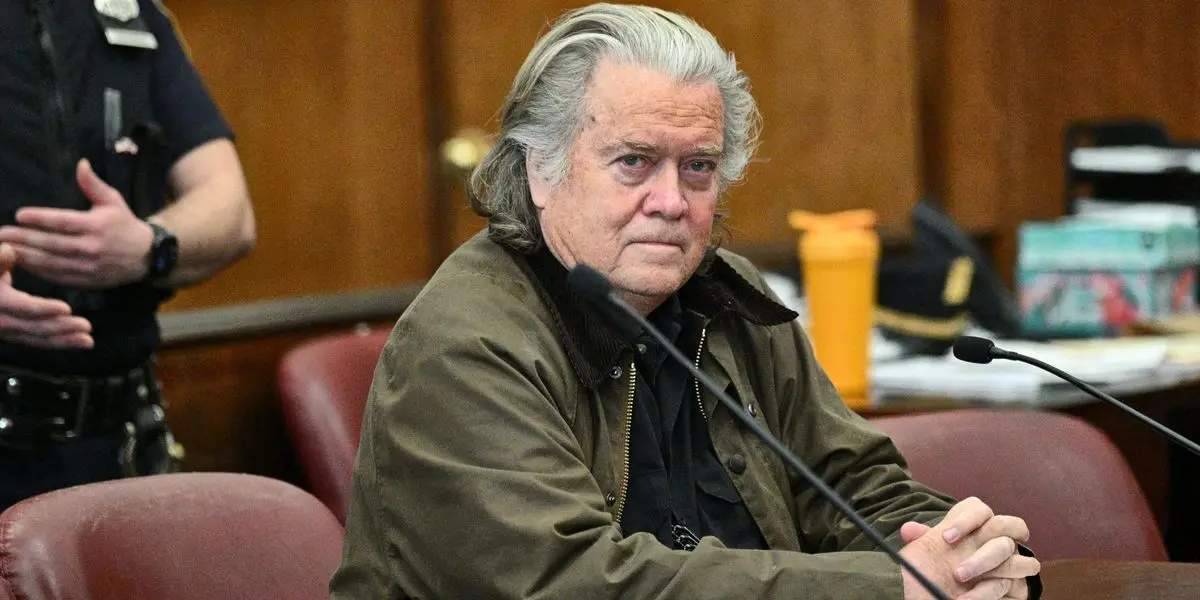
New court filings have exposed Steve Bannon as a secret player in a White House 'extortion' scheme, revealing previously undisclosed communications and actions that suggest the former Trump strategist played a more central role than previously known. The documents, unsealed as part of a broader investigation, detail how Bannon allegedly worked behind the scenes to pressure administration officials and leverage threats for political and financial gain.
The filings, which span hundreds of pages, include emails, text messages, and sworn testimony from witnesses who claim Bannon coordinated with allies to extract concessions from White House staff. One key piece of evidence is a series of encrypted messages where Bannon reportedly discussed using sensitive information to compel certain actions. This scheme, described by prosecutors as 'a calculated effort to exploit power for personal benefit,' marks a new chapter in Bannon's tumultuous relationship with the law.
Background on Steve Bannon
Stephen K. Bannon, a former Navy officer and Goldman Sachs banker, rose to prominence as the executive chairman of Breitbart News, a far-right media outlet. He served as Chief Strategist to President Donald Trump from January to August 2017, during which he was known for his populist, nationalist agenda. After leaving the White House, Bannon remained a influential figure in conservative circles, often using his podcast and platform to shape political discourse. However, his career has been marred by legal controversies, including his 2020 arrest for alleged fraud in a border wall fundraising scheme, for which he was later pardoned by Trump. In 2022, Bannon was convicted of contempt of Congress for refusing to comply with a subpoena from the January 6 committee, receiving a four-month prison sentence that is currently on appeal.
The New Filings: A Closer Look
The latest filings, submitted in a federal court in Washington D.C., stem from an ongoing investigation into influence peddling within the executive branch. According to the documents, Bannon's involvement in the extortion scheme dates back to early 2021, shortly after Trump left office. The scheme allegedly targeted mid-level White House officials, threatening to expose personal information or obstruct career prospects unless they took specific actions beneficial to Bannon and his associates. One witness, a former deputy assistant to the president, testified that Bannon's emissaries made explicit threats: 'Do what we ask, or face public humiliation.'
The filings also describe a 'shadow network' of operatives who reported directly to Bannon, circumventing traditional channels of authority. This network allegedly used encrypted apps and burner phones to coordinate efforts, making it difficult for investigators to track. Among the demands were the deletion of certain records, the promotion of specific cabinet members, and the allocation of federal contracts to companies linked to Bannon allies. While the full extent of the scheme remains under investigation, the documents suggest that Bannon was motivated by a desire to maintain influence over Republican policy and to settle personal scores.
Political and Legal Ramifications
The exposure of Bannon's role has sent shockwaves through political circles, with both Democrats and some Republicans calling for a full congressional inquiry. Legal experts argue that the allegations, if proven, could constitute multiple felonies, including conspiracy, extortion, and obstruction of justice. Bannon's lawyer has dismissed the filings as 'a recycled set of accusations from disgruntled former employees,' but the weight of the evidence appears substantial. The case also raises questions about the broader culture of the Trump White House, where allegations of impropriety were common. Critics point to this as another example of the administration's disregard for ethical norms.
For Bannon, the new charges come at a time when he is already fighting multiple legal battles. His conviction for contempt of Congress is under appeal, and he faces a potential retrial if the appeal fails. Additionally, a separate civil lawsuit from Democratic lawmakers alleges Bannon helped incite the January 6 attack. Combined, these cases paint a picture of a man who has consistently operated on the fringes of the law. Yet Bannon remains defiant, using his media platform to portray himself as a victim of political persecution.
Historical Context: Extortion in American Politics
Extortion schemes in the White House are not unprecedented, though they are rare. The most famous example involves President Richard Nixon's Watergate scandal, where officials used their power to cover up a break-in. Nixon's resignation came after evidence of a 'slush fund' and hush-money payments were revealed. More recently, the Clinton administration faced allegations of using campaign contributions to influence policy, though those did not rise to the level of criminal extortion. The Bannon case, however, is distinct in its explicit use of threats and leverage against serving officials. It underscores the dangers of informal power structures that can bypass accountability mechanisms.
The new filings also highlight the role of whistleblowers within the Trump administration. Several former staffers have come forward with information, risking their careers to expose what they describe as a 'culture of fear.' Their testimony has been crucial to the investigation, providing firsthand accounts of Bannon's tactics. One such whistleblower, a former national security aide, recounted being told, 'You're either with us or against us, and if you're against us, we'll destroy you.' This coercive approach echoes the 'take no prisoners' style Bannon advocated in his political strategy.
Bannon's Defense and Public Reaction
Bannon has vehemently denied the allegations, characterizing the filings as a 'political witch hunt' orchestrated by his opponents. During a recent broadcast of his 'War Room' show, he claimed, 'This is nothing but a desperate attempt to silence a voice that threatens the establishment.' His supporters have echoed this sentiment, arguing that the investigation is a vendetta by the Biden administration. However, legal analysts note that the evidence is based on hard data, not just testimony. The emails and messages presented in the filings appear to be authentic, and several have been verified by forensic experts.
Public reaction has been mixed. Among Republicans, opinion is divided: some see Bannon as a martyr for the populist cause, while others view him as a liability. Democrats have seized on the revelations to argue for stricter ethics laws and stronger oversight of executive branch activities. Polls indicate that a majority of Americans believe further investigation is warranted. The story has dominated news cycles, with cable news channels running extensive analyses of the filings. In the age of partisan media, the narrative splits along predictable lines, but the factual basis of the allegations remains difficult to refute.
Implications for Future Policy
If the allegations hold up in court, they could lead to significant reforms in how the White House manages internal communications and ethical compliance. Experts suggest that the next administration should implement stronger protections for whistleblowers and require more transparent reporting of contacts between outside operatives and officials. The case also highlights the need for better oversight of nonprofit organizations that can be used as vehicles for influence-peddling. Bannon's network involved several such groups, which allegedly funneled money and resources to advance the scheme. Legislation currently pending in Congress aims to close these loopholes, but its passage remains uncertain in a divided government.
At a broader level, the Bannon case serves as a cautionary tale about the vulnerabilities of democratic institutions. When informal power structures operate outside legal frameworks, they can undermine the rule of law. The founding fathers were acutely aware of this danger, which is why they designed a system of checks and balances. Yet, as the new filings demonstrate, those safeguards can be circumvented by determined individuals. Bannon's alleged actions represent a challenge not just to specific laws, but to the very principles of accountability and transparency that underpin constitutional governance. The coming months will reveal whether the judicial system can effectively respond to such threats, or whether further erosion of trust in government is inevitable.
Source: Raw Story News