

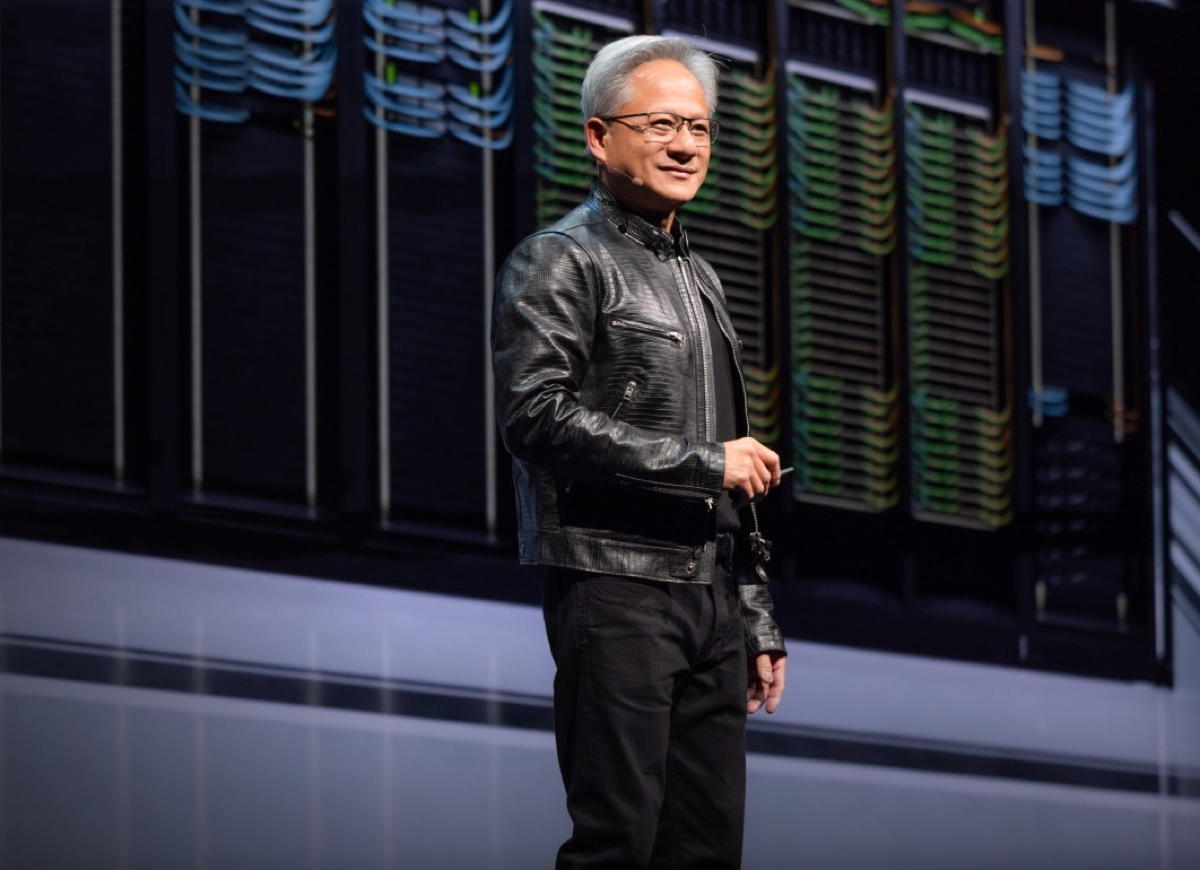
Nvidia chief executive Jensen Huang said the company will “probably” not invest $100 billion (£75bn) in OpenAI, following a much smaller $30bn investment as part of a funding round last week, giving the reason as the AI start-up’s likely IPO sometime this year. The statement, delivered at a Morgan Stanley conference, has sent ripples through the tech investment community, raising questions about the future of the most prominent partnership in the generative AI revolution.
“I think the opportunity to invest $100 billion in OpenAI is probably not in the cards,” Huang said. He added that because of the expected IPO, “this might be the last time we’ll have the opportunity to invest in a consequential company like this”. The remarks come after months of speculation about the deepening ties between Nvidia and OpenAI, two titans that have driven the generative AI boom. Investors have closely watched their relationship, as Nvidia supplies the high-performance chips that power OpenAI’s models, and OpenAI in turn has been a key customer and a catalyst for Nvidia’s valuation surge.
The $30bn Investment and Its Context
OpenAI, the creator of ChatGPT, has raised over $10 billion from Microsoft alone since 2019, but recent rounds have seen Nvidia step in as a strategic investor. In January 2025, Nvidia participated in a $30 billion funding round for OpenAI, valuing the company at around $100 billion. That round was led by existing backers and included new investors like SoftBank and Thrive Capital. Huang’s comments now suggest that this may be the final large-scale investment Nvidia makes in OpenAI, given the IPO timeline.
The $30 billion figure is itself enormous, dwarfing most venture rounds in history. To put it in perspective, the entire global venture capital investment in AI in 2023 was roughly $42 billion, according to PitchBook. Nvidia’s contribution, though not disclosed, is believed to be a substantial portion of the round. Yet Huang’s dismissal of a $100 billion investment highlights the unique nature of AI mega-deals and the shifting dynamics of the tech industry.
Why $100bn Is ‘Probably Not in the Cards’
Huang did not provide a detailed rationale for ruling out a $100 billion investment, but analysts point to several factors. First, an IPO would allow OpenAI to raise capital from public markets, reducing its reliance on private investors. Second, Nvidia itself is a public company with its own fiduciary duties; a $100 billion stake in a single private company would be unprecedented and likely face scrutiny from shareholders and regulators. Third, the economics of the AI boom are changing rapidly. The initial euphoria has given way to the harsh realities of building and operating massive data centers, which require enormous amounts of power, water, and cooling. Nvidia’s valuation, which has soared to over $2 trillion, is partly based on its ability to maintain high margins, and tying up capital in a single investment could be risky.
Huang also mentioned that Nvidia’s recent $10 billion investment in Anthropic, another leading AI startup, was probably “the last” in that company due to Anthropic’s expected IPO. This suggests a pattern: Nvidia is making strategic investments in promising AI firms while those firms are still private, but it does not intend to become a permanent majority owner. Instead, Nvidia appears to be using these investments to lock in chip purchases and strategic partnerships, rather than seeking long-term financial returns from equity stakes.
Historical Background: Nvidia and OpenAI
Nvidia’s relationship with OpenAI dates back to the startup’s founding in 2015. At that time, Nvidia was primarily known as a GPU manufacturer for gaming and professional visualization. The company’s CUDA platform, which allows developers to use GPUs for general-purpose computing, had already attracted researchers in deep learning. OpenAI was among the earliest adopters of Nvidia’s hardware for training large neural networks. In 2018, OpenAI used 2,048 Nvidia GPUs to train its first Generative Pre-trained Transformer (GPT-1), and by 2020, the company was using 10,000 GPUs for GPT-3. The collaboration deepened in 2023 with the launch of ChatGPT, which ran on an Nvidia-powered supercomputer in Microsoft’s Azure cloud. By 2024, OpenAI had become one of Nvidia’s largest customers, spending billions annually on chips and cloud services.
The September 2024 announcement that Nvidia would invest up to $100 billion in OpenAI over several years was seen as a natural extension of this relationship. That plan, however, was never finalized. Reports in January 2025 indicated that the two sides had paused negotiations over the terms of the investment, particularly around the valuation and the rights tied to chip purchases. The stalled talks led to the smaller $30 billion round, which Huang now frames as likely the final private investment.
The Changing Economics of AI and Data Centers
The AI boom has prompted a massive buildout of data centers. Companies like Microsoft, Amazon, Google, and Meta have committed tens of billions of dollars to new facilities, many of which are powered by Nvidia’s H100 and H200 chips. However, the environmental and economic costs are becoming impossible to ignore. A typical large data center consumes as much electricity as a small city, and the water required for cooling is putting pressure on local supplies in drought-prone regions. In some areas, residents have protested new data center constructions, citing rising energy bills and noise pollution.
Nvidia itself has faced criticism for its role in this trend. The company’s chip stock has increased in price, making AI hardware a high-cost barrier for new entrants. Meanwhile, the profitability of AI startups remains uncertain. According to a recent report by Stanford’s Human-Centered AI Institute, more than 80% of AI startups are still unprofitable, and the average time to break even has increased to seven years. Given these headwinds, it may be prudent for Nvidia to limit its exposure to any single startup, no matter how successful.
Huang’s comments also reflect a broader shift in venture capital. The era of “blitzscaling” – investing massive amounts in fast-growing startups without regard for near-term profitability – appears to be ending. Investors are now demanding clearer paths to revenue and cash flow. OpenAI, despite its massive user base, has reportedly not yet turned a profit, and its costs continue to rise as it develops more powerful models like GPT-5. An IPO would subject the company to public market scrutiny, which could force it to prioritize profitability over growth.
Implications for the AI Industry
The news that Nvidia is unlikely to invest $100 billion in OpenAI may have several knock-on effects. First, it could signal to other investors that the era of massive private AI funding rounds is over. Second, it may accelerate OpenAI’s timeline for going public, as the company will need to raise capital from public markets to fund its operations. Third, it could strengthen the hands of competitors like Anthropic, which have already secured investments from Nvidia and other strategic partners.
Anthropic, founded by former OpenAI employees, has positioned itself as a safer, more responsible alternative to OpenAI. Its investment from Nvidia, along with backing from Google and others, gives it financial runway to develop its own foundation models. Huang’s hint that Nvidia’s $10 billion investment in Anthropic might also be the last suggests that the company sees both OpenAI and Anthropic as temporary partners on the path to independence, rather than long-term holdings.
The broader implications for Nvidia are also noteworthy. The company’s market capitalization has grown in tandem with its involvement in AI, but its stock recently experienced volatility as investors questioned whether AI spending could sustain its current pace. Huang’s cautious remarks about OpenAI may be an attempt to temper expectations and focus Nvidia’s narrative on its core chip business rather than expensive equity stakes.
What Comes Next
OpenAI has not commented publicly on Huang’s statements. The company is believed to be preparing for an IPO in the second half of 2025, with an expected valuation of $200 billion or more. If the IPO proceeds, OpenAI would become one of the largest technology listings in history, and Nvidia’s $30 billion stake would likely be converted into public shares. That could provide Nvidia with a substantial return if the IPO goes well, but it also means that Nvidia will no longer have the same strategic influence over OpenAI’s decisions.
In the meantime, data center construction continues at a breakneck pace. In the United States alone, over $50 billion in new data center projects were announced in the first quarter of 2025, according to CBRE. These facilities are primarily designed to support AI workloads, and Nvidia chips are the default choice for most deployments. However, competitors like AMD and Intel are making inroads, and custom chips from Google and Amazon are also gaining traction. Nvidia’s dominance in the AI chip market is not guaranteed, and the company’s long-term success will depend on its ability to innovate and maintain its software ecosystem, rather than on its investment portfolio.
The pushback against data centers has also become a political issue. In Virginia, the largest data center market in the world, residents have formed advocacy groups to demand stricter regulations on water usage and noise. Similar movements are emerging in Arizona, Oregon, and Ireland. Huang acknowledged these concerns at the conference, noting that Nvidia is working with partners to develop more efficient cooling systems and renewable energy sources for data centers. He stressed that the environmental impact of AI infrastructure is a challenge that the entire industry must address collectively.
As the AI landscape evolves, the relationship between Nvidia and OpenAI will continue to be a central narrative. Huang’s latest remarks suggest that the partnership is entering a new phase, one defined by public market realities rather than private deal-making. Whether this shift benefits or hinders the development of artificial general intelligence remains to be seen, but it is clear that the financial and environmental pressures are mounting.
Source: Silicon UK News