

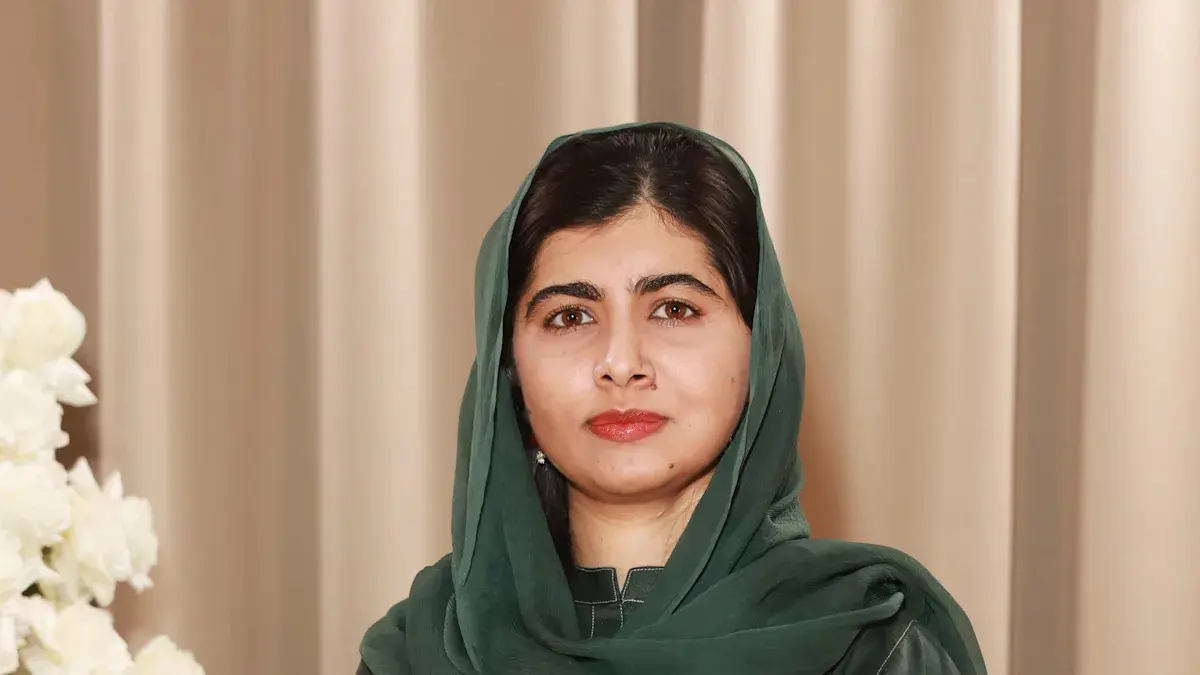
Nobel Peace Prize laureate Malala Yousafzai has issued a powerful demand for a full cease-fire in the escalating Israel-Hamas war, using her global platform to amplify the suffering of civilians caught in the crossfire. In a November 24 post on X (formerly Twitter), Yousafzai welcomed the commencement of a temporary truce but insisted that the international community must push for a permanent end to hostilities. "Tonight, I feel relief for the women, children, and young people reunited with their families, and for the pause in the bombardment of Gaza," she wrote. "We must keep speaking out for [children in Gaza]—for a full ceasefire and more humanitarian aid. The needless suffering must end."
Yousafzai's intervention is consistent with her lifelong advocacy for children's rights and education, which began after she was shot by the Taliban in 2012 for speaking out against the ban on girls' schooling in Pakistan's Swat Valley. At age 26, she remains one of the world's most prominent voices for peace and education, having survived an assassination attempt and gone on to become the youngest Nobel laureate in history. Her call for a cease-fire comes as the death toll in Gaza surpasses 14,000, with thousands of children among the casualties—a grim statistic that resonates deeply with Yousafzai's own experiences of violence and displacement.
The activist first addressed the Israel-Hamas conflict shortly after the October 7 attacks, which triggered the latest round of fighting. In October, she announced a donation of $300,000 to three charities working to assist Palestinians in Gaza and the West Bank: UNRWA, the Palestine Children's Relief Fund, and Medical Aid for Palestinians. Along with the financial contribution, she urged the public to sign a petition demanding that Israel stop targeting schools and that both sides release child hostages. "We must keep speaking out," she reiterated in her November post, emphasizing the need for sustained international pressure to prevent further civilian harm.
Background on the Conflict
The Israel-Hamas war erupted after Hamas launched a surprise attack on southern Israel on October 7, 2023, killing around 1,200 people and taking over 200 hostages. Israel responded with a massive military campaign in Gaza, including airstrikes and a ground invasion, resulting in widespread destruction and a humanitarian crisis. According to the Hamas-run health ministry, more than 14,000 Palestinians have been killed, many of them women and children. The temporary cease-fire brokered in late November allowed for the exchange of hostages and prisoners, and facilitated the entry of humanitarian aid, but it was not a permanent solution. Yousafzai's call for a full cease-fire underscores the urgent need for a political resolution that prioritizes civilian protection and long-term stability.
Who Is Malala Yousafzai?
Malala Yousafzai was born on July 12, 1997, in Mingora, Pakistan, in the scenic Swat Valley. From a young age, she demonstrated a fierce commitment to education, inspired by her father Ziauddin, a school founder. When the Taliban took control of Swat and began banning girls from attending school, Malala spoke out publicly, even writing a blog for the BBC under a pseudonym. Her activism made her a target, and on October 9, 2012, a Taliban gunman shot her in the head as she rode a school bus. She miraculously survived and was airlifted to the United Kingdom for extensive medical treatment, including multiple surgeries to reconstruct her skull and restore facial function.
After recovering, Malala continued her advocacy on a global stage. On her 16th birthday in 2013, she delivered a landmark speech at the United Nations, famously declaring, "The extremists were afraid of books and pens. The power of education frightens them." In 2014, she was awarded the Nobel Peace Prize alongside Indian child rights activist Kailash Satyarthi, becoming the youngest person ever to receive the honor. She used the prize money to further her work through the Malala Fund, a nonprofit that invests in local education activists across countries like Afghanistan, Nigeria, and Pakistan.
Advocacy and Achievements
Malala's influence extends far beyond the Nobel. She has authored multiple books, including the best-selling memoir I Am Malala: The Girl Who Stood Up for Education and Was Shot by the Taliban (2013), and children's books such as Malala's Magic Pencil (2017) and My Name Is Malala (2022). She also produced the 2022 Oscar-nominated documentary short Stranger at the Gate, which explores radicalization and redemption. In 2023, she attended the Oscars as an executive producer, and though the film did not win, her presence highlighted her commitment to storytelling as a tool for social change.
In 2017, she became the youngest United Nations Messenger of Peace, appointed by Secretary-General António Guterres. She also earned an honorary Canadian citizenship and received the Liberty Medal from the National Constitution Center. Her academic journey culminated in a degree in Philosophy, Politics, and Economics from Oxford University in 2020, a milestone that symbolized her determination to combine intellectual rigor with activism.
Personal Life and Marriage
Despite the pressures of global fame, Malala has maintained a relatively private personal life. In November 2021, she married Asser Malik, a Pakistani cricket manager, in a small ceremony in Birmingham, England. The couple met while Malala was at Oxford and bonded over their shared love of cricket. In an essay for British Vogue, Malala wrote that she had initially thought she would not marry until 35, but that Malik helped her see that marriage could align with her values of equality and independence. The couple lives in the UK and continues to work on advocacy and production projects.
Current Stance on Global Conflicts
Malala's call for a cease-fire in Gaza is part of a broader pattern of using her voice to address humanitarian crises. She has also spoken out against the Taliban's return to power in Afghanistan in 2021, urging the international community not to recognize a regime that bans girls from secondary education. In 2022, she visited Afghanistan to meet with activists and amplify their stories, despite the risks. Her consistent message is that education and peace are intertwined, and that investing in children's futures is the most effective way to break cycles of violence.
The temporary cease-fire in Gaza, which began on November 24, brought a brief respite but did not address the root causes of the conflict. Malala's insistence on a full cease-fire reflects her understanding that only a comprehensive political solution can prevent future bloodshed. She continues to advocate for the release of all hostages and unimpeded access for humanitarian aid, including food, water, and medical supplies. The world watches as her voice joins a chorus of international figures demanding accountability and peace.
Malala Yousafzai's journey from a schoolgirl in Swat to a Nobel laureate calling for peace in the Middle East is a testament to the power of individual courage. Her unwavering focus on children and education reminds the international community that the true cost of war is measured in lost potential and shattered lives. As the conflict in Gaza continues to unfold, her plea for a full cease-fire remains a moral imperative that resonates far beyond the negotiating table.
Source: Yahoo News News