

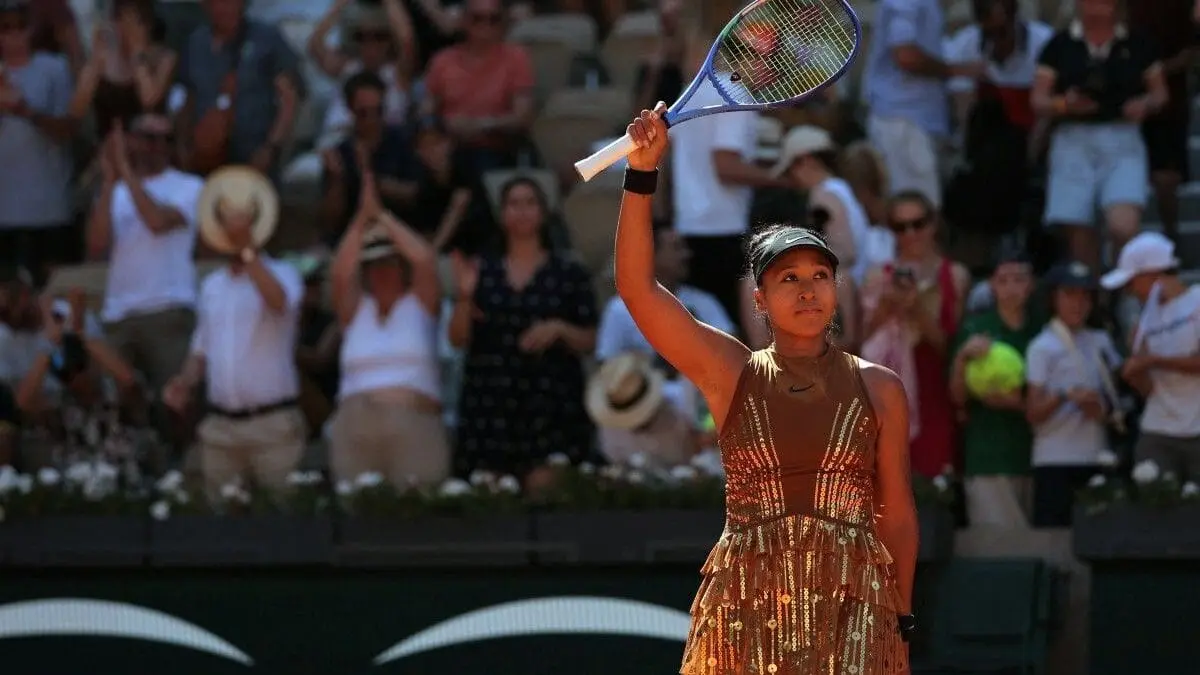
Naomi Osaka, the four-time Grand Slam champion, turned heads at the 2026 French Open with a stunning outfit inspired by the Eiffel Tower at night. The ensemble, custom-made by her sponsor, features a deep navy base with shimmering gold and silver accents that mirror the iconic landmark's nightly light show. The design includes a form-fitting sleeveless top and a high-waisted skirt, both crafted from moisture-wicking fabric to handle the clay courts of Roland Garros.
The Inspiration Behind the Outfit
Osaka revealed in a press interview that the idea came to her during a nighttime stroll near the Eiffel Tower. "I saw the lights dancing off the tower, and I thought, 'That's what I want to wear on court,'" she said. The pattern on the fabric mimics the grid-like steel structure of the tower, while sequins and reflective threads catch the stadium lights, creating a subtle sparkle effect. This is not the first time Osaka has drawn inspiration from her surroundings; she previously wore a kimono-style outfit at the 2021 Tokyo Olympics and a floral dress at the US Open to honor her Haitian and Japanese heritage.
Naomi Osaka's Career and Fashion Legacy
Born in Osaka, Japan, to a Haitian father and Japanese mother, Naomi Osaka burst onto the tennis scene as a teenager. She won her first Grand Slam at the 2018 US Open, defeating Serena Williams in a controversial final that brought global attention to mental health and sportsmanship. Since then, she has added three more majors: the 2019 Australian Open, the 2020 US Open, and the 2021 Australian Open. Despite stepping away from the tour at times to focus on mental health, Osaka has remained a powerful figure in fashion and activism.
Her on-court fashion choices often make headlines. In 2021, she wore custom masks at the US Open highlighting victims of racial injustice. At the 2024 Australian Open, she debuted a collaboration with a luxury brand featuring bold geometric patterns. The 2026 French Open outfit continues this trend of meaningful design. "Every outfit tells a story," Osaka said in a Vogue interview. "The Eiffel Tower is a symbol of Paris—romantic, resilient, and timeless. I wanted to channel that energy into my game."
Design Details and Technical Aspects
The outfit's top features a crew neck and a zipper back for easy movement. The skirt has built-in compression shorts and pockets for tennis balls—a practical addition that many players appreciate. The fabric is a blend of recycled polyester and elastane, reflecting Osaka's commitment to sustainability. The gold and silver threads are woven, not glued, to ensure they don't irritate the skin during long rallies. The outfit is part of a larger collection released by her sponsor, which includes a warm-up jacket and a visor, all bearing the same Eiffel Tower motif.
Fashion critics have praised the design for its balance of elegance and athleticism. "It's rare to see an outfit that works equally well under stadium lights and in photoshoots," wrote a reviewer for Sports Illustrated. "Osaka has a knack for merging streetwear aesthetics with high-performance gear." The outfit's debut during the night session at Philippe-Chatrier court added to the drama, as the floodlights reflected off the sequins, creating a visual spectacle that fans on social media compared to constellations.
Impact on Tennis Fashion and Beyond
Osaka's outfit is part of a broader trend in tennis where players use fashion as a form of self-expression. In recent years, stars like Serena Williams, Roger Federer, and Coco Gauff have collaborated with designers to create unique looks. Osaka's French Open outfit has sparked discussions about cultural inspiration versus appropriation. Many fans noted that she paid homage to Paris without appropriating any specific culture, setting a respectful example. The outfit is expected to sell out quickly, with pre-orders already high on the brand's website.
Off the court, Osaka has used her platform to advocate for mental health awareness and social justice. She has been open about her struggles with anxiety and depression, inspiring millions to speak up. Her fashion choices often mirror her mood and message. For the 2026 French Open, she said the outfit represents "finding light in the darkness," a reference to her personal journey. "Clay has always been challenging for me," she admitted. "But wearing this outfit reminds me to play with joy, not fear."
Historical Context: The Eiffel Tower as Muse
The Eiffel Tower has inspired countless artists, from painters to poets, and now athletes. Built in 1889 for the World's Fair, it was initially criticized but became a global symbol of romance and innovation. Its nightly light show, featuring 20,000 bulbs, is one of Paris's most popular attractions. Osaka's outfit captures that magic in textile form. The designer explained that the pattern was based on photographs of the tower at midnight, using satellite imagery to map the exact arrangement of lights. The result is a digital print that changes tone depending on the angle of the light—what the brand calls "3D-luminescence."
Match Performance and Reception
Osaka wore the outfit during her first-round match against a qualifier, which she won in straight sets—a strong start for someone often struggling on clay. The outfit drew loud cheers from the Parisian crowd, many of whom wore Eiffel Tower-themed accessories in solidarity. Social media exploded with comments: "Naomi is serving looks AND tennis," one user wrote. "This is the best outfit of the tournament," said another. Fans created memes comparing the sequins to the tower's lights. Even other players complimented her; fellow competitor Iga Swiatek called it "gorgeous and inspiring."
Broader Trends in Athlete Fashion
The integration of fashion into sports is not new. In the 1970s, Billie Jean King wore custom eyeglasses and colorful tops. In the 1990s, Andre Agassi's denim shorts and neon shirts broke barriers. Today, athletes like Naomi Osaka, Serena Williams, and LeBron James are considered style icons. Osaka has her own fashion line and has modeled for major magazines. Her French Open outfit is expected to influence future collections, with designers looking to landmarks for inspiration. The palace of Versailles, the Great Wall of China, and the Sydney Opera House might soon appear on tennis courts.
Challenges and Criticisms
Despite the praise, some critics argued that the outfit was too flashy for a sport that values tradition. The French Open, known for its strict dress code (all-white was mandatory until recent decades), has relaxed rules but still expects decorum. Osaka's shimmering outfit pushed boundaries. However, tournament officials issued no complaints, and many saw it as a welcome evolution. Others questioned the practicality: do sequins affect speed or comfort? Osaka confirmed that the fabric was tested in wind tunnels and on practice courts, showing no noticeable impact on performance.
Looking Ahead
As the French Open progresses, all eyes will be on Osaka to see if she can advance deep into the tournament. Her best result at Roland Garros is the third round in 2021. But with a new attitude and stunning outfit, she may exceed expectations. The outfit has already become a symbol of her resilience. Fans are eager to see if she will wear variations for later rounds, perhaps inspired by other Parisian landmarks like the Arc de Triomphe or Montmartre. Osaka hinted at more surprises: "I have a few more designs up my sleeve. Paris is full of inspiration, and I'm just getting started." She also plans to auction the outfit after the tournament, with proceeds going to mental health charities. This move aligns with her philanthropic work, including her partnership with a nonprofit that supports children's education in Haiti and Japan.
Final Thoughts on Fashion in Tennis
The intersection of sports and fashion continues to grow, with athletes becoming influencers and designers. Naomi Osaka's 2026 French Open outfit is a perfect example of how personal expression can enhance athletic performance and connect with fans. By drawing from the Eiffel Tower, she honored her host city while staying true to her creative instincts. The outfit will likely be remembered as one of the iconic tennis looks of the decade, alongside Serena's catsuit and Roger's cardigans. As tennis evolves, so will its fashion, and Osaka remains at the forefront of that change.
Source: Firstpost News