

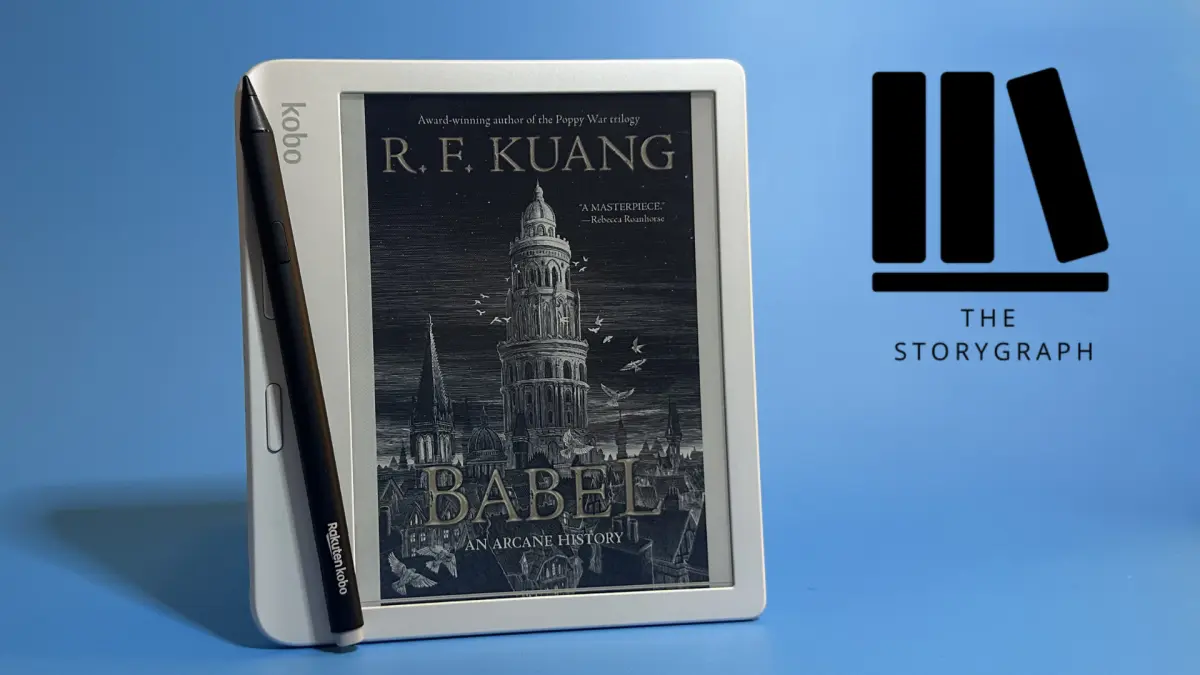
If you want an e-reader but prefer to avoid Amazon, the Rakuten Kobo e-reader line has long been a compelling alternative. Kobos are known for their speed, ease of use, and excellent value. Now, the company is teaming up with another bookish platform to offer an even more seamless reading experience. The Storygraph, a popular service for tracking everything you read, is coming to all Kobo devices starting in June 2025.
The integration will sync Kobo e-readers and apps with a user's Storygraph account. This means that reading progress will be automatically captured in the Storygraph account. When a reader finishes a book on their Kobo, it will be marked as read on Storygraph without any manual effort. Nadia Odunayo, Founder and CEO of Storygraph, stated, "Our mission is to make reading lives better, and removing the friction from tracking is one of the most direct ways we can do that."
The Rise of Storygraph
Storygraph was launched in 2019 as a direct alternative to Goodreads, which Amazon acquired in 2013. Goodreads had been the dominant platform for book tracking, but many readers grew frustrated with its lack of updates, poor recommendation algorithms, and monolithic ownership. Storygraph aimed to address these issues with a more modern, user-centric approach. It offers detailed reading statistics, mood-based recommendations, content warnings, and a community that is less focused on corporate influence.
The platform quickly gained a loyal following, particularly among readers who wanted to support independent alternatives. By 2023, Storygraph boasted millions of users and was regularly cited in bookish communities as a preferred tool for tracking reading goals, discovering new books, and connecting with like-minded readers. Its algorithm uses machine learning to suggest titles based on a user's reading history and preferred moods, which many find more accurate than Goodreads' simplistic ratings system.
Kobo's Strategy Against Amazon
Rakuten Kobo has consistently positioned itself as the anti-Amazon choice in the e-reader market. While Amazon's Kindle dominates sales, Kobo has carved out a niche by offering features that appeal to bibliophiles who value openness and competition. Kobo devices support the EPUB format natively, whereas Kindle uses its proprietary AZW format, making it harder to buy books from other stores. Kobo also partners with local bookstores and libraries through services like OverDrive, allowing users to borrow e-books directly from public libraries—a feature that is more cumbersome on Kindles.
The integration with Storygraph is the latest step in this strategy. By automatically syncing reading data, Kobo removes a manual step that many readers find tedious. On Amazon's ecosystem, Kindle already integrates with Goodreads, but that integration has been criticized for being clunky and forcing users to rely on Amazon's own services. Kobo and Storygraph aim to offer a smoother, more ethical alternative. Additionally, both companies are independent of Amazon, which appeals to readers who want to minimize their support for the tech giant's dominance in the book industry.
How the Integration Works
Users will need to link their Kobo account with their Storygraph account. Once linked, any reading progress on a Kobo e-reader or the Kobo app (on iOS and Android) will automatically update the Storygraph profile. This includes pages read, books started, books finished, and reading time. The feature is expected to be available via a firmware update in June 2025, and it will work on all current Kobo models, including the Kobo Clara Colour, Kobo Libra Colour, Kobo Sage, and Kobo Elipsa.
The partnership also means that Storygraph's detailed analytics will become even more accurate. Storygraph already tracks reading pace, favorite genres, and trends over time. With automatic updates, users no longer need to remember to log their reading manually—a common pain point that leads to incomplete records. According to Kobo's product team, the integration was designed to be unobtrusive; it does not interrupt the reading experience and runs silently in the background.
Impact on the Book Industry
The move has broader implications for the book industry. Amazon's control over e-books and reading data has long been a concern for publishers, authors, and independent booksellers. Goodreads, while still massive, has seen a decline in user trust due to issues like review manipulation and lack of transparency. Storygraph's rise, combined with Kobo's hardware, represents a decentralized alternative that could shift power away from Amazon.
Independent bookstores, in particular, stand to benefit. Storygraph allows users to link their accounts to local bookstores for purchase recommendations, bypassing Amazon's marketplace. Kobo also partners with independent bookstores through its Kobo Books affiliate program. Together, they create an ecosystem that supports local businesses rather than monopolistic giants.
Moreover, the integration encourages more people to track their reading, which is a boon for readers who enjoy reflecting on their literary journey. With automatic tracking, even casual readers may become more engaged with their reading habits, leading to increased book consumption and discovery.
Technical Details and Compatibility
Kobo devices are known for their excellent screen quality, adjustable warm light, and waterproofing across many models. The integration with Storygraph does not change these hardware features. The firmware update will add a new menu option in the settings, allowing users to sign in to Storygraph. The sync happens over Wi-Fi or cellular data (for devices with connectivity).
Storygraph's web and mobile app will also be updated to reflect the Kobo integration. Users can still manually enter books read on other platforms (e.g., paper books or other e-readers) but the Kobo sync ensures that e-reading on Kobo is fully automated. The company has not announced any subscription fee for this feature; it will be free for all Kobo users who have a Storygraph account (which has a free tier and a Plus subscription with additional analytics).
Security and privacy were also considerations. Both companies stated that only reading progress data is shared, not personal information or purchase history. Users can disconnect their accounts at any time, and the synchronization uses encrypted connections.
Market Reaction and Future Prospects
News of the integration has been well received in bookish circles on social media platforms like Twitter, Reddit, and BookTube. Many existing Kobo owners expressed excitement about the feature, as they had previously been manually entering data into Storygraph. Some Kindle users even hinted that this could be the push they need to switch to Kobo.
For Rakuten Kobo, the partnership helps differentiate its devices in a market where hardware differences are shrinking. While Amazon's Kindle continues to offer a vast library and low prices, Kobo's focus on user freedom and integration with non-Amazon services is a powerful selling point. The company has also been expanding its color e-reader lineup, with the recent launch of the Kobo Clara Colour and Kobo Libra Colour, which use advanced color e-ink technology for a better reading experience.
Looking ahead, both companies are expected to explore deeper integration. Rumors suggest that future updates might include one-click borrowing from local libraries via Storygraph, or even shared reading recommendations that use Storygraph's AI to suggest books available directly from the Kobo store. Such features would further cement the partnership as a viable alternative to Amazon's walled garden.
For readers who value independence, control over their data, and a more thoughtful reading experience, the Kobo-Storygraph integration is a welcome development. It removes barriers to tracking, supports ethical alternatives, and reminds us that the book world is not owned by one company. As more readers seek out these alternatives, the market may become more diverse and responsive to user needs.
In summary, the upcoming integration between Kobo and Storygraph is a significant step in the ongoing battle against Amazon's dominance in the e-reader and book-tracking space. By combining Kobo's user-friendly hardware with Storygraph's intelligent tracking, the two companies are making it easier than ever for readers to maintain a detailed and accurate record of their literary journeys. This move not only benefits current Kobo users but also attracts new customers who want a more ethical and feature-rich reading ecosystem. The partnership underscores a growing trend in the tech industry: consumers are increasingly choosing products that align with their values, even if it means leaving behind the convenience of a single dominant platform.
Source: Mashable News