

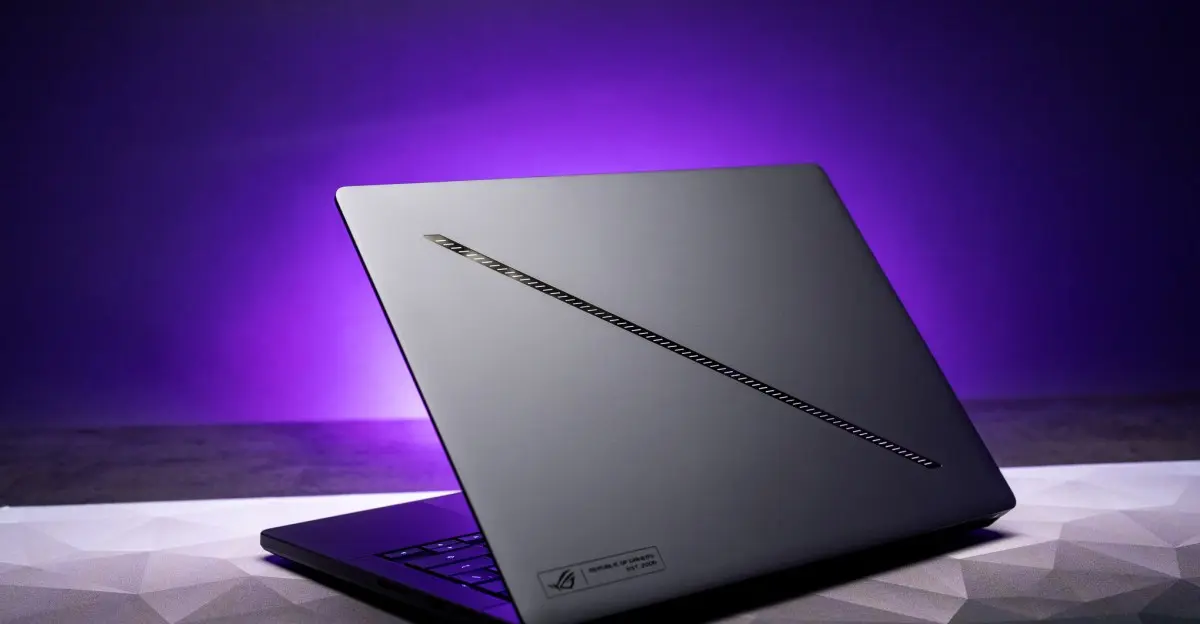
The Asus ROG Zephyrus G14 has been a standout in the gaming laptop segment since its debut in 2020. Over the years, it has evolved through design refreshes, processor upgrades, and even a 16-inch sibling. Now, in 2026, Asus introduces a new flagship model that swaps its longtime AMD partnership for Intel's latest Panther Lake CPUs. This shift brings both impressive gains in efficiency and performance, but also a jaw-dropping price increase that challenges the value proposition that made the G14 famous.
A Legacy of Innovation
The original Zephyrus G14 disrupted the market by packing powerful hardware into a compact, portable chassis. It was one of the first 14-inch gaming laptops that didn't scream 'gamer' with aggressive styling. Instead, it offered a sleek, minimalist design with an optional AniMe Matrix LED array on the lid. Over the years, Asus refined the thermal system, upgraded the display to OLED panels, and improved the keyboard and trackpad. The 2024 redesign brought a new aluminum chassis, slimmer bezels, and a larger trackpad. The 2026 model continues this trajectory with subtle cosmetic updates: more LED segments in the lid animation and circular vent holes on the bottom for better airflow.
The new Intel Core Ultra 9 386H chip represents a major shift. Panther Lake is Intel's answer to AMD's Ryzen AI chips, focusing on power efficiency and on-device AI capabilities. In the G14, this processor is paired with Nvidia's GeForce RTX 5070 Ti Laptop GPU. The combination delivers excellent performance in both creative workloads and gaming. In Photoshop and Lightroom, the laptop handles 50-megapixel RAW files with ease, and video editing in Premiere Pro is smooth. On the gaming side, titles like Battlefield 6 and Helldivers 2 run at high settings with fluid frame rates, often exceeding 60 fps at native resolution without relying on upscaling.
Battery Life Breakthrough
One of the most significant improvements is battery life. Thanks to the efficiency of the Panther Lake architecture, the new G14 can last over 17 hours in our battery rundown test, a huge leap from the previous AMD model's 8.5 hours. In real-world use, it comfortably powers through a full workday of browsing, Slack, and music streaming, with around 10 hours of mixed usage. This is remarkable for a gaming laptop, which traditionally struggles to reach half that. The 73Wh battery is well-utilized, and even when pushing the discrete GPU for photo editing, the battery life remains respectable at five to six hours.
The 14-inch OLED display is brighter than before, reaching 500 nits in SDR and up to 1,100 nits peak for HDR content. The 2880 x 1800 resolution at 120Hz delivers sharp, vibrant visuals that are a joy for both creative work and gaming. The color accuracy is excellent, covering a wide gamut suitable for photo editing. The webcam, however, remains a weak point—grainy in low light, though fine for video calls in good lighting.
Port Selection and Build Quality
Asus has upgraded the port selection, adding a full-size SD card slot (finally!) and switching to Thunderbolt 4 instead of USB4. The laptop still includes two USB-A ports, HDMI 2.1, a second USB-C port, and a 3.5mm audio jack. The proprietary power connector remains, but the USB-C ports support charging as well. The keyboard and trackpad are among the best in any Windows laptop—deep key travel, a firm tactile trackpad with a satisfying click. The speakers are impressive too, with six drivers producing rich, stereo sound that rivals the MacBook Pro.
The chassis is thin and light at 3.48 pounds, matching the 14-inch MacBook Pro. It feels premium, with a magnesium-aluminum alloy construction. The AniMe Matrix lid can display custom animations, notifications, or system stats, adding a touch of personalization. Underneath, the cooling system keeps the keyboard deck relatively cool during gaming, though the bottom panel gets hot. The fans are audible under load but remain low-pitched and not intrusive.
Comparing to Alternatives
The biggest elephant in the room is the price. Our review configuration costs $3,599.99, and the base Intel model starts at $3,450. This is a massive jump from previous generations, which launched at around $1,000 to $1,400 for entry-level models. Last year's AMD version with the same GPU costs nearly $1,000 less. While the new G14 offers better battery life, a brighter screen, and an SD card slot, it's hard to justify the premium for most buyers. You could purchase an M5 MacBook Pro and a dedicated gaming console or handheld PC for the same price.
Competitors like the Razer Blade 16 and Asus' own Strix Scar 16 offer higher performance but sacrifice portability. The G14 remains unique in its ability to blend thin-and-light design with genuine gaming and creative power. For users who need one device for everything—work, photo editing, and gaming—it's an excellent choice. But the value equation has shifted. The G14 was once a budget-friendly alternative to premium gaming laptops; now it's a luxury item itself.
The 2026 Asus ROG Zephyrus G14 is a testament to how far gaming laptops have come. It delivers desktop-class performance in a portable, elegant package with outstanding battery life. However, the steep price increase due to RAMageddon and Intel's premium chips means that only those with a flexible budget should consider it. For others, the last-generation AMD model remains a more sensible purchase. The G14 is almost perfect, but the price keeps it from being a universal recommendation.
Source: The Verge News