

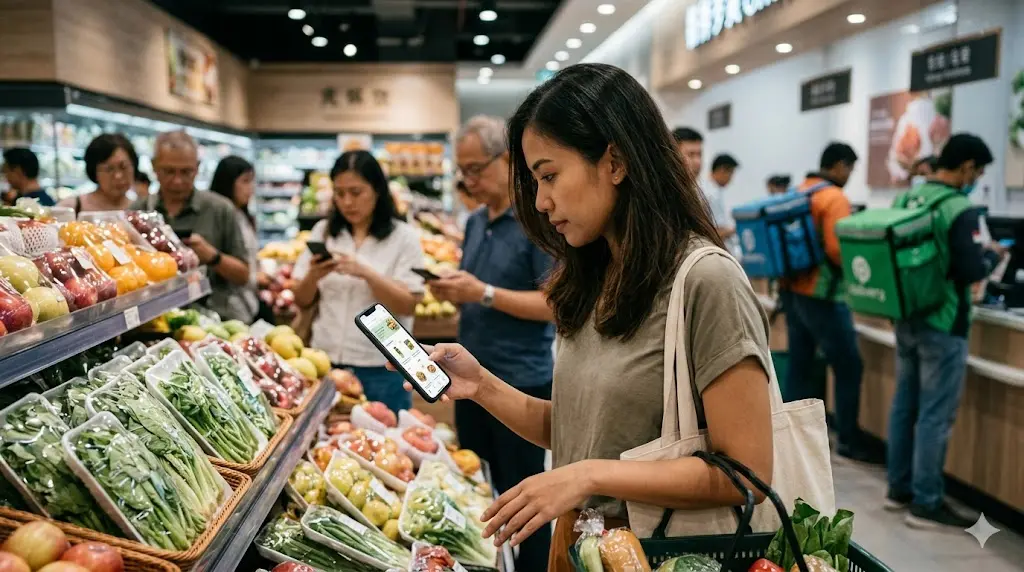
Global market research on food security in online retail shows that ecommerce platforms are becoming increasingly important in ensuring food availability, accessibility, and supply chain resilience. As consumer demand for online grocery shopping grows, retailers must balance inventory management, logistics efficiency, affordability, and food safety to maintain reliable food access worldwide.
Global market research on food security in online retail highlights a growing intersection between ecommerce and one of humanity's most fundamental needs: access to safe, affordable, and nutritious food. As consumers increasingly purchase groceries and food products online, retailers are playing a larger role in shaping food availability across local and international markets.
Here's the thing: food security isn't only a government concern anymore. Online retailers, logistics providers, and digital marketplaces now influence how efficiently food reaches consumers. Understanding current research helps businesses prepare for changing consumer behaviors, economic conditions, and supply chain challenges while supporting long-term growth.
What Is Global Market Research on Food Security in Online Retail?
Food Security in Online Retail: The ability of digital retail platforms and ecommerce businesses to provide consistent access to safe, affordable, nutritious food through reliable supply chains and efficient distribution systems.
Global market research on food security in online retail examines how online marketplaces contribute to food accessibility while addressing challenges such as supply disruptions, inventory shortages, pricing volatility, and consumer demand fluctuations.
Research typically focuses on:
Online grocery adoption
Food supply chain management
Consumer purchasing behavior
Inventory forecasting
Distribution efficiency
Food affordability
Digital food access
Retail sustainability initiatives
Unlike traditional retail models, online food retailers can gather real-time purchasing data that helps predict demand and improve product availability.
Expert Tip
Many businesses focus heavily on attracting new customers. In my experience, maintaining consistent product availability often has a greater impact on customer loyalty than promotional discounts.
Why Food Security in Online Retail Matters in 2026
Food security remains a major economic and social priority worldwide. Online retail continues to influence how consumers access food products, particularly in urban areas and regions with expanding digital infrastructure.
Several factors explain why this topic matters even more in 2026.
Growing Consumer Dependence on Online Grocery Shopping
Consumers increasingly expect food products to be available through digital channels.
Convenience plays a role, but reliability matters even more. Households want confidence that essential items will be available when needed.
Supply Chain Volatility
Global supply chains still face occasional disruptions from weather events, geopolitical issues, transportation bottlenecks, and changing trade conditions.
Online retailers must adapt quickly to maintain inventory levels and customer satisfaction.
Data-Driven Demand Forecasting
Digital retailers can analyze purchasing patterns in real time.
This capability allows businesses to predict demand more accurately and reduce the risk of shortages.
Food Accessibility Expansion
Online retail can improve access to food for consumers living in underserved areas.
What most people overlook is that ecommerce may help reduce geographic barriers to food access, particularly when supported by efficient delivery networks.
Sustainability Expectations
Consumers increasingly care about food waste reduction and sustainable sourcing.
Retailers that align food security efforts with sustainability goals may gain stronger customer trust and long-term loyalty.
Expert Tip
Investing in predictive analytics often delivers better food security outcomes than simply increasing inventory levels. Excess stock can create waste, while accurate forecasting improves efficiency.
How to Strengthen Food Security in Online Retail
Food security requires a strategic approach that combines technology, logistics, and customer-focused planning.
1: Improve Demand Forecasting
Accurate forecasting reduces both shortages and overstock situations.
Retailers should analyze:
Historical sales data
Seasonal trends
Regional demand patterns
Promotional impacts
Consumer behavior changes
Better forecasting supports consistent product availability.
2: Diversify Supplier Networks
Relying on a limited supplier base increases risk.
Successful retailers often establish relationships with multiple suppliers across different regions to improve resilience during disruptions.
3: Enhance Inventory Visibility
Real-time inventory tracking helps retailers respond quickly when stock levels change.
Customers also benefit from accurate availability information during the purchasing process.
4: Strengthen Logistics Infrastructure
Efficient delivery systems are essential.
Food products often require specialized transportation, temperature controls, and rapid fulfillment to maintain quality and safety.
5: Use Data to Reduce Food Waste
Inventory optimization can help businesses identify slow-moving products before they expire.
Reducing waste improves profitability while supporting sustainability objectives.
6: Build Consumer Trust
Food security depends partly on customer confidence.
Clear product information, transparent sourcing practices, and reliable delivery performance help strengthen trust over time.
Common Mistake or Misconception
More Inventory Always Improves Food Security
This sounds reasonable at first.
Yet excessive inventory can actually create new problems.
Perishable products may expire before purchase, increasing waste and operational costs. Overstocking can also tie up capital that could be invested elsewhere.
A more effective approach focuses on inventory accuracy and supply chain responsiveness rather than simply accumulating stock.
I've seen organizations invest heavily in warehouse expansion while neglecting forecasting improvements. Often, better planning would have produced stronger results at a lower cost.
Expert Tips and What Actually Works
Businesses that perform well in food-related ecommerce tend to share several characteristics.
Prioritize Data Quality
Accurate decisions depend on reliable information.
Poor data can lead to inventory shortages, pricing mistakes, and forecasting errors.
Develop Supplier Relationships
Strong partnerships often provide greater flexibility during disruptions.
Retailers with collaborative supplier networks frequently recover faster from unexpected challenges.
Focus on Regional Demand Differences
Consumer preferences vary significantly between markets.
Understanding local purchasing patterns helps improve stock allocation and fulfillment efficiency.
Balance Speed and Reliability
Fast delivery attracts customers.
Reliable delivery keeps them coming back.
In many cases, consumers value predictable service more than ultra-fast fulfillment options.
My Personal Take
One trend that deserves more attention is how food security and customer experience are becoming closely connected. Consumers rarely think about supply chain management until products become unavailable. When availability remains consistent, trust naturally grows.
Real-World Example
Imagine an online grocery retailer operating across several metropolitan regions.
Initially, the company relied on a small group of suppliers and experienced recurring stock shortages during seasonal demand spikes.
After implementing predictive analytics and expanding supplier relationships, product availability improved significantly. Customer satisfaction increased, and order fulfillment rates became more consistent throughout the year.
While hypothetical, this example reflects common strategies observed across successful food ecommerce operations.
Expert Tip
Food security planning should include scenario testing. Businesses that prepare for disruptions before they occur often recover much faster when challenges arise.
People Most Asked About Food Security in Online Retail
What is food security in online retail?
Food security in online retail refers to ensuring consumers can consistently access safe, affordable, and nutritious food products through digital purchasing channels and reliable delivery systems.
Why is food security important for ecommerce businesses?
Food availability directly affects customer trust and retention. Consistent access to products helps maintain satisfaction and encourages repeat purchases.
How does technology improve food security?
Technology supports forecasting, inventory management, logistics optimization, and real-time monitoring. These capabilities help retailers reduce shortages and improve operational efficiency.
What are the biggest threats to food security in online retail?
Supply chain disruptions, transportation challenges, inventory inaccuracies, supplier dependency, and sudden demand shifts are among the most common risks.
Can online retail improve food accessibility?
Yes. Ecommerce platforms can extend food access to consumers in areas where physical retail options may be limited, particularly when supported by reliable delivery infrastructure.
How does food security affect customer loyalty?
Customers are more likely to return to retailers that consistently provide the products they need. Reliable availability often strengthens long-term trust.
What role does sustainability play in food security?
Reducing food waste, improving inventory management, and supporting responsible sourcing practices contribute to both sustainability goals and food security outcomes.
Final Thoughts
Global market research on food security in online retail demonstrates how ecommerce is becoming an increasingly important part of global food distribution systems. As online grocery adoption continues to expand, retailers must focus on supply chain resilience, forecasting accuracy, inventory management, and customer trust.
Businesses that successfully balance efficiency, accessibility, and reliability will be better positioned to support food security objectives while strengthening their competitive position in the evolving digital commerce environment.
Businesses aiming to increase brand visibility and organic traffic can benefit from global newswire services combined with local citation services. Gain high authority backlinks, stronger SEO ranking, wider media coverage, and instant publishing opportunities that help agencies, startups, bloggers, and SEO professionals expand their online reach with confidence.