

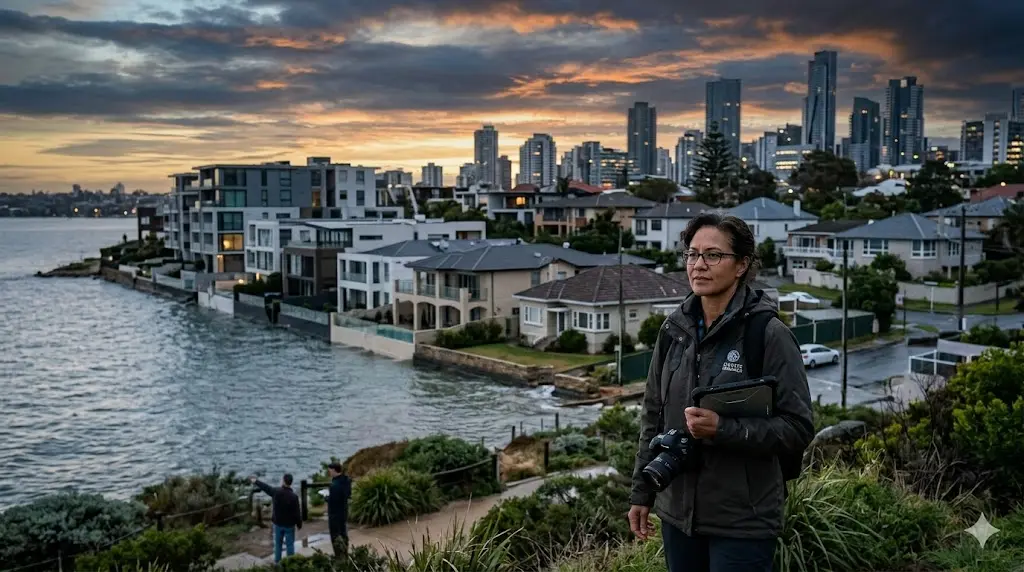
Global housing market research on climate change refers to studies examining how environmental conditions affect residential property markets, urban growth, housing affordability, and investment trends.
A few years ago, most buyers focused mainly on location, commute times, and nearby amenities. That's still true to a point, but climate exposure has entered the conversation in a serious way.
Here's the thing. People don't just buy homes anymore. They buy future risk.
Climate-Resilient Housing: Residential property designed or located to better withstand environmental risks such as flooding, extreme heat, storms, and rising sea levels.
Researchers now track how climate threats influence:
Property appreciation
Mortgage approvals
Insurance availability
Migration patterns
Construction costs
In many regions, environmental exposure is slowly becoming a hidden tax on homeownership.
That sounds dramatic, maybe. But from what I've seen, the data keeps supporting it.
Why Global Housing Market Research on Climate Change Matters in 2026
By 2026, climate concerns aren't sitting on the sidelines anymore. They're becoming part of mainstream real estate decisions.
Insurance companies already adjust premiums based on environmental exposure. Banks are reviewing long-term lending risks more carefully. Developers are redesigning communities around sustainability and resilience.
Buyers feel the pressure too.
In my experience, many homeowners still underestimate how quickly climate-related costs can affect property values. They think these changes are decades away when some impacts are already happening now.
Take coastal regions as an example.
Imagine two nearly identical neighborhoods near the same shoreline. One invests heavily in flood defenses, drainage systems, and climate-adaptive infrastructure. The other delays upgrades due to budget concerns.
Five years later, the first neighborhood attracts more buyers and stronger investment while the second struggles with rising insurance rates and declining demand.
That scenario is becoming increasingly common.
Another trend researchers noticed involves migration. Some buyers are quietly leaving climate-vulnerable regions for areas with more stable weather conditions and lower disaster risk. This movement is reshaping housing demand in unexpected places.
Honestly, that's one of the biggest stories people still don't fully talk about.
Expert Tip
Climate-safe regions may experience stronger long-term property appreciation as environmental migration increases over the next decade.
How Climate Change Is Affecting the Global Housing Market — Step by Step
Housing markets respond slowly sometimes. Then suddenly they don't.
Climate pressure builds gradually until economic behavior shifts all at once. Here's how researchers say the process usually unfolds.
1. Environmental Risks Increase
Floods, storms, heatwaves, droughts, and wildfires become more frequent or severe.
At first, many property owners assume these are isolated incidents. Eventually patterns emerge.
Insurance providers and investors notice long before average buyers do.
2. Insurance Costs Rise
Higher climate exposure typically leads to more expensive insurance coverage.
Some homeowners discover that premiums double within only a few years. In extreme cases, coverage becomes difficult to obtain altogether.
That changes buyer psychology fast.
3. Buyer Preferences Shift
People begin prioritizing climate-resilient housing, energy efficiency, and safer geographic areas.
Here's what most guides miss: emotional comfort matters too. Buyers don't just evaluate numbers. They want peace of mind.
A house near recurring wildfire zones might technically remain affordable while still feeling psychologically risky.
4. Developers Adapt Construction Strategies
Builders increasingly focus on sustainable real estate trends and resilient infrastructure.
That includes:
Elevated home designs
Fire-resistant materials
Green roofing systems
Better insulation
Water management systems
Some governments now encourage these changes through tax incentives and environmental regulations.
5. Property Values Diverge
Climate-resilient areas often maintain stronger value stability compared to high-risk zones.
This doesn't happen evenly everywhere. Certain vulnerable cities still experience strong demand due to tourism or economic opportunity.
Still, long-term risk calculations are becoming harder to ignore.
Expert Tip
When researching property investments, compare future climate projections alongside traditional housing metrics. Short-term affordability can hide major long-term costs.
Why Sustainable Real Estate Trends Are Growing So Fast
Sustainable real estate trends used to feel optional.
Now they’re becoming financially practical.
Energy-efficient homes reduce utility costs. Climate-adaptive construction lowers maintenance risk. Green-certified buildings often attract stronger buyer interest.
That combination changes market behavior quickly.
I’ve noticed younger buyers especially care about sustainability features more than previous generations did. They ask about solar efficiency, insulation quality, flood resistance, and long-term energy savings during property searches.
A decade ago, many buyers barely discussed those things.
Another factor driving sustainable housing demand is government regulation. Some countries now require stricter environmental construction standards for new developments.
That creates tension in the market though.
Construction costs rise initially, but long-term operating costs often fall. Developers who ignore environmental standards might save money upfront while losing competitiveness later.
What people overlook is how climate adaptation affects luxury and middle-income housing differently too.
Wealthier buyers can often relocate more easily or invest in resilient infrastructure. Middle-income homeowners usually face tougher trade-offs between affordability and environmental safety.
That gap may become one of the biggest housing challenges over the next several years.
Common Misconception About Climate and Housing Markets
Climate Change Only Affects Coastal Homes
This assumption turns out to be surprisingly inaccurate.
Coastal flooding gets most of the headlines, but climate change affects inland housing markets too. Heatwaves, water shortages, wildfire risks, and severe storms impact residential areas far from the ocean.
A suburban neighborhood with aging electrical infrastructure might struggle during prolonged heat events. Rural communities can face insurance complications tied to wildfire exposure. Urban apartment markets may experience rising cooling costs and energy strain.
Climate risk spreads differently depending on geography.
That’s why broad housing market research matters so much.
One hypothetical example explains this clearly.
Suppose a fast-growing inland city experiences record-breaking summer temperatures for several consecutive years. Air conditioning demand overwhelms infrastructure. Utility costs climb sharply. Residents begin preferring newer energy-efficient developments while older housing stock loses appeal.
No flooding involved. Still a climate-driven housing shift.
Expert Tips and What Actually Works
Let me be direct. Buying the cheapest home in a high-risk area may not actually save money long term.
Research consistently shows that hidden environmental costs eventually surface through insurance, repairs, infrastructure issues, or declining resale demand.
In my opinion, buyers should probably spend more time studying environmental reports than granite countertops.
That might sound extreme, but housing markets are changing faster than many people expected.
Here's my unpopular take: some climate-vulnerable regions may continue growing despite rising risks simply because people emotionally love living there.
Beachfront demand isn't disappearing overnight. Neither is mountain tourism housing.
Human behavior isn't always rational.
Still, investors and long-term homeowners should think beyond short-term market hype. Areas with stronger infrastructure planning, water management, and climate adaptation strategies will likely perform better over time.
Another thing I've seen? Communities that actively discuss environmental resilience usually recover faster after disasters than places that avoid the conversation entirely.
Expert Tip
Strong local infrastructure often matters more than individual home features when evaluating long-term climate resilience.
How Governments and Cities Are Responding
Governments worldwide are slowly adjusting housing policies to account for climate realities.
Some cities restrict development in flood-prone regions. Others invest heavily in resilient infrastructure projects designed to protect housing markets from environmental damage.
Several countries now encourage:
Green building standards
Energy-efficient retrofitting
Climate-resilient zoning laws
Public transportation expansion
Sustainable urban planning
Not every strategy works perfectly.
Sometimes regulations unintentionally increase housing prices by making construction more expensive. That creates tension between affordability and sustainability goals.
Still, most researchers agree that delaying adaptation usually costs more later.
What fascinates me is how quickly climate discussion moved from environmental activism into banking, insurance, and real estate investment circles. Five years ago, many investors treated climate risk as secondary. Now major financial institutions openly model it into long-term projections.
That shift alone changes housing markets significantly.
People Most Asked About Global Housing Market Research on Climate Change
How does climate change affect housing prices?
Climate change affects housing prices by increasing environmental risk, insurance costs, and infrastructure concerns. Properties in safer, climate-resilient areas often maintain stronger long-term demand.
What are climate-resilient homes?
Climate-resilient homes are properties designed to better withstand environmental threats such as floods, storms, wildfires, and extreme heat through stronger construction and efficient systems.
Will climate change lower property values everywhere?
Probably not everywhere. Some high-risk regions may experience slower growth or declining values, while climate-safe areas could see stronger housing demand and appreciation.
Why are insurance companies raising housing premiums?
Insurance companies adjust premiums based on disaster frequency and projected risk exposure. More severe environmental events increase repair costs and claim frequency.
What are sustainable real estate trends?
Sustainable real estate trends include energy-efficient housing, green construction materials, resilient infrastructure, and environmentally responsible urban development strategies.
Are buyers considering climate risk more seriously now?
Yes. Buyers increasingly evaluate flood exposure, heat resilience, insurance availability, and long-term environmental safety before purchasing property.
Which regions may benefit from climate migration?
Areas with moderate weather, reliable infrastructure, lower disaster exposure, and strong water access could attract more residents over the next decade.
Final Thoughts
Global housing market research on climate change shows that environmental risk is becoming deeply connected to property values, investment behavior, urban planning, and housing demand worldwide.
Climate resilience isn't just a political discussion anymore. It's becoming a financial reality for homeowners, investors, developers, and cities alike.
Housing markets probably won't transform overnight. But the direction is becoming harder to ignore.
Businesses and agencies looking for stronger SEO ranking and wider media coverage can grow faster with online press release distribution and trusted digital marketing services built to increase organic traffic and brand visibility. From instant publishing opportunities to high authority backlinks, these solutions help startups, bloggers, and SEO professionals improve search performance with reliable PR distribution services and performance-focused marketing strategies.