

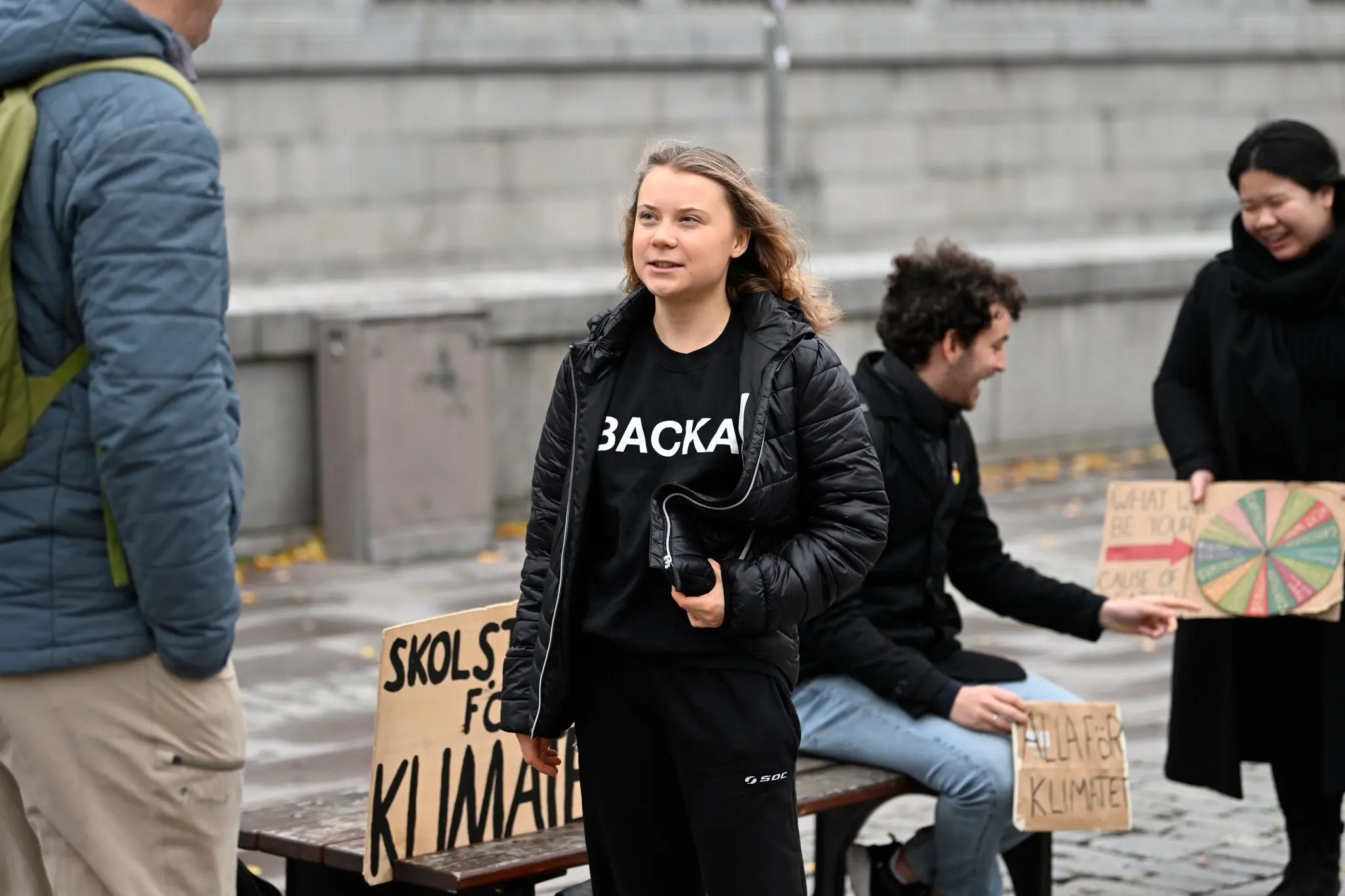
Swedish environmental activist Greta Thunberg has reached a milestone: she graduated from high school on June 9, 2023, bringing an end to her iconic Friday school strikes that began in 2018. However, the 20-year-old activist made it clear that her fight against climate change is far from over.
Thunberg started her solitary protest outside the Swedish Parliament building in Stockholm every Friday during school hours when she was just 15. Her simple act of defiance—holding a hand-painted sign reading 'Skolstrejk för klimatet' (School Strike for Climate)—quickly resonated with teenagers around the world. Within months, millions of students in over 100 countries joined the Fridays for Future movement, organizing massive protests that pressured governments and corporations to take climate action more seriously.
'Technically, I won't be able to school strike anymore because I've graduated,' Thunberg tweeted on June 9, posing with her graduation cap and a Swedish-language sign. 'But the fight has only just begun.' She emphasized that those in power continue to sacrifice the planet for short-term gains, warning that humanity is approaching 'nonlinear ecological and climatic tipping points beyond our control.'
From Lone Protester to Global Icon
Thunberg's journey from a solitary protester to a globally recognized activist is remarkable. Diagnosed with Asperger syndrome, she has described her condition as a 'superpower' that allows her to see through complex issues with clarity. Her direct, often confrontational speeches at the United Nations Climate Change Conference and the World Economic Forum in Davos drew both praise and criticism.
In 2019, she was named Time magazine's Person of the Year, the youngest ever to receive the honor. She has also been nominated for the Nobel Peace Prize multiple times, though she has not won. Her influence extended beyond youth activism; she inspired a wave of climate litigation, policy changes in some countries, and increased public awareness about the urgency of the climate crisis.
A Legacy of Grassroots Mobilization
The Fridays for Future movement she ignited became a powerful force in environmental politics. Even during the COVID-19 pandemic, when in-person protests were curtailed, the movement transitioned to digital strikes and continued to organize virtual actions. Key demands include net-zero emissions by 2050, with interim targets aligned with the Paris Agreement, and a just transition to renewable energy.
Thunberg has always stressed that the movement is about collective action, not individual heroism. She frequently reminds journalists to focus on other young activists, particularly from the Global South who face disproportionate climate impacts. For her final school strike, she was joined by renowned musician Patti Smith, who was in Stockholm for a concert. Smith expressed deep emotion upon meeting Thunberg, posting on Instagram: 'This is Greta Thunberg, faithfully taking her Friday School Strike for Climate Action. She graduates today, and we extend our gratitude and congratulations.'
Criticism and Resilience
Despite her popularity, Thunberg has faced significant backlash. Critics accuse her of being alarmist, overly simplistic, or a tool of political interests. Some world leaders, including former U.S. President Donald Trump and Brazilian President Jair Bolsonaro, have mocked her online. However, Thunberg has remained unflappable, often using humor and facts to counter attacks. Her 'blah blah blah' speech at the 2021 Youth4Climate summit in Milan became a viral moment, highlighting the gap between political rhetoric and meaningful action.
She has also been transparent about her mental health struggles, including depression triggered by climate anxiety. Her willingness to speak openly has resonated with many young people facing similar fears about the future.
The Road Ahead
With her school strikes ending, Thunberg plans to shift her strategy. While she will no longer skip classes, she will continue to protest outside the Swedish parliament on Fridays, albeit in a different capacity. She may also focus on higher education, travel to more climate conferences, or pursue legal avenues to hold polluters accountable. The Fridays for Future movement, however, remains independent and decentralized, with local groups planning actions around the world.
On the day of her final school strike, activists gathered in Bonn, Germany, to protest outside UN climate talks. The message was consistent: governments must accelerate their commitments to reduce greenhouse gas emissions and support vulnerable communities. Thunberg's example shows that even one person's determined action can spark a global movement, but the real work, she insists, is far from done.
As she enters this new chapter, Thunberg carries the hopes of a generation that refuses to inherit a broken planet. Her graduation is not an end but a transition—from a schoolgirl protester to a full-time activist whose voice will continue to resonate in classrooms, boardrooms, and halls of power worldwide.
Source: The Asahi Shimbun News