

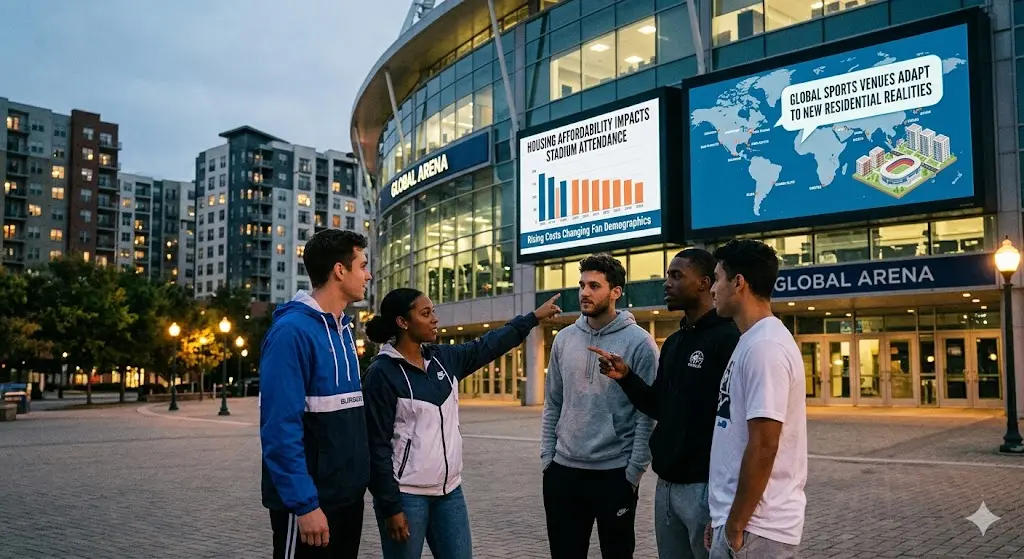
Housing affordability is quietly reshaping the global sports industry in ways most fans never notice. Rising rents, expensive urban living, and limited affordable housing are affecting where athletes live, where teams relocate, and even which cities can successfully host professional sports organizations.
What used to be a financial issue for families has now become a serious business challenge for sports franchises, local leagues, event organizers, and young athletes trying to build careers. And honestly, this shift is happening faster than many sports executives expected.
Housing affordability is changing the sports industry by influencing athlete recruitment, team locations, stadium development, youth participation, and sports tourism. Cities with lower living costs are increasingly attracting teams, training centers, and sporting events because affordable housing supports long-term growth for athletes, staff, and fans.
What Is Housing Affordability in Sports?
Housing affordability: the ability for athletes, sports workers, and fans to access reasonably priced housing without sacrificing financial stability.
That definition sounds simple. The real impact isn’t.
A decade ago, sports organizations mainly focused on sponsorships, broadcasting rights, and ticket sales. Housing costs rarely entered the conversation. Now they’re part of boardroom strategy meetings.
Professional athletes earning millions can still manage expensive cities. But coaches, trainers, junior athletes, stadium workers, academy staff, and semi-professional players often struggle with rising rent prices. In many major sports cities, affordable housing has practically disappeared.
What most people overlook is that sports ecosystems rely heavily on middle-income workers, not just superstar athletes.
A football academy in a high-cost city might lose talented youth players simply because their families can’t afford nearby housing. Smaller leagues are already seeing this happen in several regions.
Why Housing Affordability Matters in 2026
By 2026, housing affordability is expected to influence sports business decisions more than ever before. Teams are no longer choosing locations based only on market size or sponsorship opportunities.
They’re looking at livability.
Cities with lower housing costs are becoming attractive destinations for training camps, sports academies, and even professional franchise relocations. That’s not speculation anymore. It’s already happening in parts of Europe, North America, and Asia.
I’ve seen smaller regional sports hubs suddenly gain attention because they offer something major cities can’t: sustainability for athletes and staff.
Here’s the thing. A city packed with luxury apartments but lacking affordable homes for sports workers creates long-term instability. Teams may generate revenue today while slowly losing talent pipelines tomorrow.
One realistic example involves youth hockey programs in expensive urban regions. Several families reportedly began relocating to lower-cost suburban areas because housing expenses were consuming income previously spent on training and travel. Participation rates shifted almost overnight.
Another surprising trend is athlete mental health.
Financial pressure linked to housing instability affects focus, performance, and recovery. Younger athletes entering professional systems often carry family financial stress with them. That changes the entire development environment.
Expert Tip
Sports organizations investing in community housing partnerships today will probably outperform competitors over the next decade. Stable living conditions improve retention, athlete development, and local fan loyalty.
How Housing Affordability Is Reshaping the Sports Industry Step by Step
1. Teams Are Reconsidering Expensive Cities
Several organizations now evaluate housing costs before expanding into new markets. Expensive cities may still attract attention, but operational costs continue climbing.
Staff relocation packages alone can become overwhelming.
Lower-cost cities offer financial breathing room for both teams and employees. In most cases, that translates into stronger long-term planning.
2. Young Athletes Face Higher Entry Barriers
Youth sports participation increasingly depends on household income and housing stability. Families spending huge portions of income on rent often reduce sports spending first.
Travel teams, equipment, coaching sessions, and tournament fees add up quickly.
That creates a talent gap. Some future elite athletes never even get the chance to develop.
3. Stadium Development Is Changing
Modern stadium projects now involve residential planning alongside sports infrastructure.
Mixed-use developments featuring apartments, retail space, and entertainment districts are becoming more common because cities want year-round economic value from sports investments.
Oddly enough, housing may become more important than parking lots around future stadiums.
4. Sports Tourism Is Evolving
Fans traveling for games increasingly choose affordable destinations.
A family may skip attending a championship event in a costly city if hotel and rental prices become unreasonable. Sports tourism depends heavily on accessible accommodation.
That impacts local economies more than many officials admit publicly.
5. Athlete Relocation Decisions Are Becoming Personal
Athletes once prioritized contract value almost exclusively. Now quality of life matters more.
Affordable housing, commute times, schools, and community stability influence decisions during free agency or transfers. You can already see this trend across multiple professional leagues.
The Biggest Misconception About Sports and Housing
Expensive Cities Don’t Always Create Better Sports Markets
This might sound backward, but higher living costs can actually weaken sports ecosystems over time.
People assume wealthy cities naturally attract stronger sports industries. Sometimes they do. But they can also push out the workers and families that support grassroots development.
A city full of luxury developments may still struggle to sustain affordable youth sports participation.
That’s the counterintuitive part.
In my experience, communities with balanced living costs often build deeper sports cultures because more families can actively participate. Accessibility matters more than glamour.
Expert Tips That Actually Work
Sports organizations trying to adapt to housing affordability challenges usually make one mistake: they think short term.
That approach rarely works.
Here’s what smart organizations are starting to do instead:
Building partnerships with local housing developers
Supporting affordable athlete housing near training centers
Investing in suburban or secondary-city academies
Offering relocation assistance beyond star players
Creating transportation systems that reduce housing pressure
One semi-professional basketball organization reportedly reduced staff turnover simply by helping employees access affordable nearby housing. No massive salary increases. Just practical support.
That’s a lesson many larger franchises are probably ignoring right now.
Expert Tip
If a sports organization wants sustainable growth, it should study housing trends as carefully as player statistics. Financial pressure affects recruitment, retention, and fan engagement more than executives often admit.
How Governments and Sports Organizations Can Respond
Housing affordability won’t fix itself.
Cities hoping to maintain strong sports economies need coordinated planning between sports authorities, urban developers, and local governments.
Here’s a realistic approach that might actually help:
Expand affordable housing near sports districts
Support transportation between suburbs and stadiums
Protect community sports spaces during urban expansion
Encourage mixed-income housing developments
Create incentives for youth sports accessibility
None of these solutions are flashy. But practical usually wins long term.
Why Smaller Cities Could Win Big
One of the most interesting shifts happening right now is the rise of secondary sports markets.
Smaller cities with manageable living costs are becoming attractive alternatives for tournaments, training facilities, and developmental leagues.
Fans often enjoy lower travel costs, easier transportation, and cheaper accommodations. Athletes gain stability. Teams reduce operational expenses.
Everybody benefits, at least in theory.
A few years ago, many executives probably would’ve dismissed these markets entirely. Not anymore.
People Most Asked About Housing Affordability and Sports
How does housing affordability affect athletes?
Affordable housing affects athletes by influencing financial stress, training accessibility, relocation choices, and long-term career stability. Younger athletes are often impacted the most because their families absorb most living costs.
Why are sports teams moving to smaller cities?
Smaller cities usually offer lower operational costs, affordable housing, and better long-term sustainability for staff and athletes. Some organizations also see stronger community engagement in these markets.
Does expensive housing reduce youth sports participation?
Yes, in many cases it does. Families dealing with high rent or mortgage costs often reduce spending on sports programs, travel leagues, coaching, and equipment.
Can affordable housing improve sports performance?
Indirectly, yes. Stable housing reduces stress and allows athletes to focus more consistently on training, recovery, and competition.
Why do stadium projects include housing developments now?
Modern sports developments increasingly combine residential and entertainment spaces to create year-round economic activity and address urban housing demands.
Will housing affordability change global sports permanently?
Probably. Rising living costs are already influencing athlete recruitment, team operations, fan travel, and city investment strategies worldwide.
Are grassroots sports affected more than professional leagues?
Absolutely. Grassroots programs rely heavily on local family participation, affordable facilities, and accessible transportation. Housing pressure hits those systems first.
Final Thoughts
Housing affordability is no longer just an urban planning issue. It’s becoming a defining factor in the future of the global sports industry.
Teams, leagues, and governments that recognize this shift early will likely build stronger, more sustainable sports ecosystems over the next decade. Others may struggle with shrinking participation, rising costs, and unstable talent pipelines.
And honestly, this conversation is only getting started.
Businesses, agencies, and growing brands looking for stronger online exposure can boost their digital presence through global newswire services and trusted digital marketing services. These platforms help improve SEO ranking, drive organic traffic, increase brand visibility, and secure high authority backlinks through instant publishing and targeted media coverage that actually reaches the right audience.