

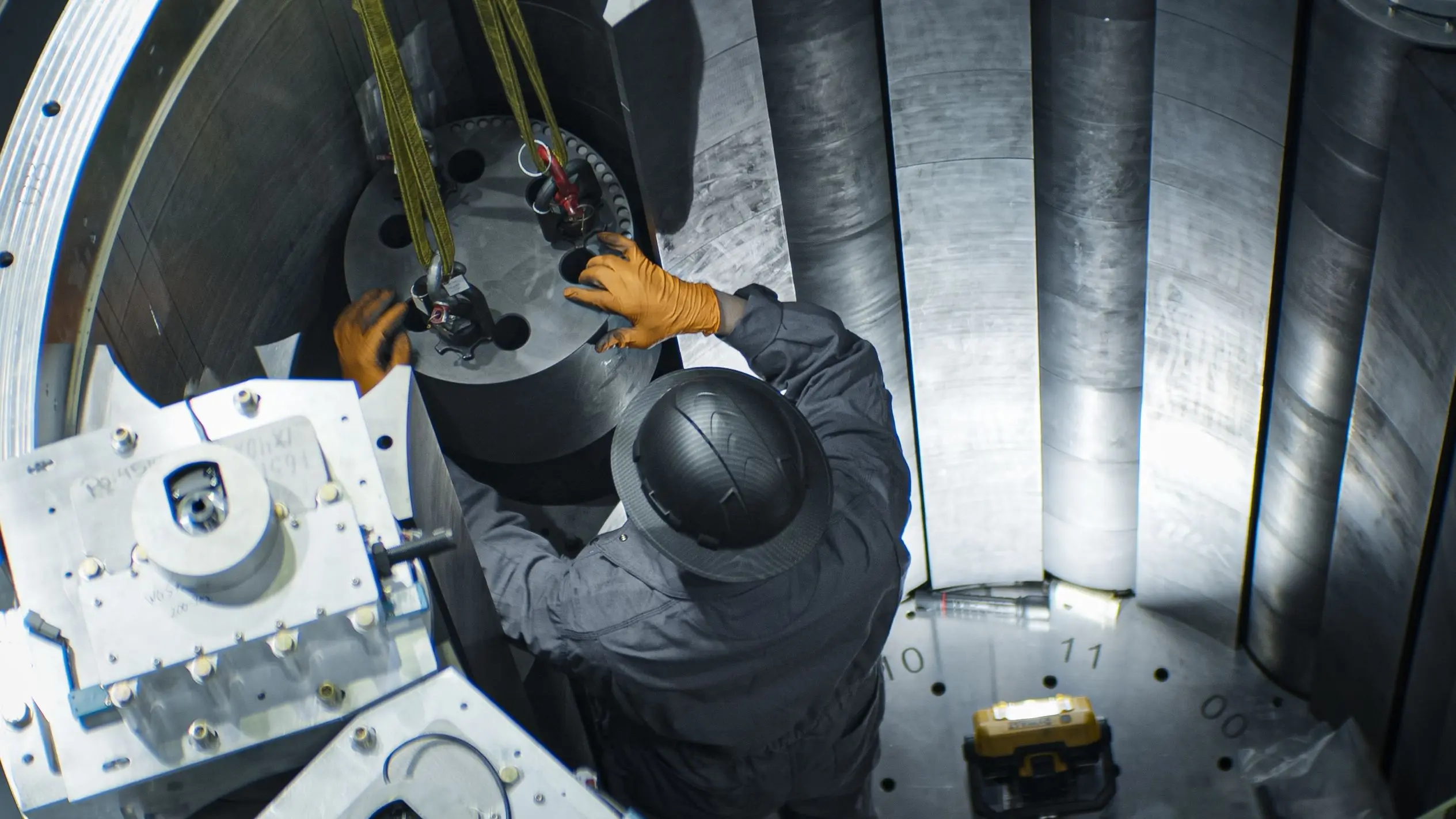
A nuclear energy startup has revealed a major capital infusion, announcing that it has raised nearly $500 million to develop advanced reactors for the U.S. military. The funding round, one of the largest ever in the advanced nuclear sector, underscores the Pentagon’s escalating interest in small, transportable reactors that can power remote bases and reduce dependence on vulnerable fuel supplies.
The company, which is developing a new generation of compact nuclear reactors, said the funds will accelerate research and development, support the construction of a full-scale prototype, and expand its engineering workforce. The reactors are being designed to be more rugged, efficient, and easier to transport than conventional civil reactors, making them particularly attractive for military applications.
Why the military needs microreactors
Today, the U.S. Department of Defense spends billions of dollars each year to keep fuel flowing to its installations around the world. In war zones, fuel convoys are among the most dangerous missions a soldier can undertake. Trucking diesel to a remote base can expose troops to roadside bombs, ambushes, and hostile fire. Even in peacetime, transporting fuel to isolated installations such as radar stations, missile early-warning sites, or arctic outposts is a logistical nightmare.
The military has therefore been searching for a way to generate electricity on-site, without a constant resupply line. Renewable systems such as solar and wind are useful, but they are intermittent and require large battery banks. Nuclear reactors, by contrast, can run continuously for years without refueling, producing a stable, high-density source of power.
This is not a new idea. The U.S. Navy has operated nuclear reactors in submarines and aircraft carriers since the 1950s, and those reactors have proven remarkably safe and reliable. But adapting that technology for land and expeditionary use has been difficult. Traditional reactor designs require enormous containment structures, extensive safety systems, and large teams of trained operators. The new class of microreactors aims to solve those problems by leveraging modern materials, advanced fuels, and passive cooling systems that do not require pumps or external electricity in an emergency.
What the startup is building
The company’s reactor design belongs to a category known as microreactors, often defined as small modular reactors with an electric output of less than twenty megawatts. The core is only a few feet wide and can fit inside a shipping container. In many designs, the entire reactor system arrives at a site as a self-contained unit that can be connected to existing electrical infrastructure in a matter of days.
Because the reactor is intended to operate for at least five to ten years between refueling, it eliminates the need for a local fuel depot. That means a military base can function almost indefinitely without resupply, which is a game-changing advantage for operations in contested environments. It also reduces the carbon footprint of the military, helping the Department of Defense meet its sustainability goals without compromising mission capability.
The company plans to submit its design for safety certification in the coming years. The deployment pathway for military reactors is different from the one used for civilian nuclear plants, as the Department of Defense and the Department of Energy have their own oversight regimes. This could allow for more rapid testing and deployment, although it also raises important questions about public transparency and long-term liability.
The investment landscape
The nearly $500 million funding round is led by a well-known clean energy venture capital firm, with participation from defense-focused investors and strategic partners in the nuclear industry. Although the company did not disclose its full cap table, sources familiar with the deal say that the round was oversubscribed, reflecting intense interest from investors who see nuclear energy as a vital pillar of both national security and the global energy transition.
This investment is part of a broader rally in nuclear technology. Over the past five years, advanced nuclear companies have raised billions of dollars in private capital. Bill Gates’ TerraPower, which is developing sodium-cooled fast reactors, has received substantial funding from both private investors and the U.S. government. Sam Altman’s Oklo has gone public via a SPAC and is working with the Air Force on microreactor deployment studies. NuScale Power, another small modular reactor developer, has broken ground on projects in multiple countries.
The U.S. Department of Energy has also played a critical role, committing over $1 billion to demonstration projects through its Advanced Reactor Demonstration Program. That program has funded companies like X-energy and Kairos Power, both of which are working on designs that could eventually compete for defense contracts.
What sets the military apart is the urgency. Unlike civilian utilities, the Pentagon can act as a single customer with a clear mission need and a substantial budget. This reduces market risk and gives startups a path to first deployment that is more predictable than the commercial market. A successful military project could also validate the technology for civilian use, making it easier to raise future financing and obtain regulatory approval.
Challenges ahead
There are considerable hurdles to overcome. First, there is the question of safety. Although advanced reactors are designed to be inherently safe, a nuclear accident on a military base could have severe implications for personnel and surrounding communities. The reactor must be able to survive airplane crashes, rocket attacks, and cyber intrusions. It must be operated by a small crew under extreme conditions, and its safeguards must deter theft or sabotage of fissile material.
Second, there is the issue of nuclear waste. Microreactors produce less spent fuel than conventional reactors, but they still generate highly radioactive material that needs to be removed, transported, and stored. In remote bases, spent fuel would have to be held on-site for several years before a suitable transport vehicle arrives. This adds complexity to what is meant to be a simple solution.
Third, there is an unresolved legal and policy framework. The Atomic Energy Act gives federal agencies broad authority over military nuclear facilities, but the exact licensing process for a mobile microreactor is still being defined. DoD has issued outreach documents and held industry days, but it has not yet established a formal certification standard for portable reactors. This regulatory uncertainty could slow the program despite the fresh funding.
Implications for the future
Despite these challenges, the military’s commitment to microreactor technology appears to be solidifying. In recent years, the Air Force has tested artificial intelligence algorithms to optimize reactor site selection, while the Army has installed a microreactor test facility in a hangar at Nellis Air Force Base. The latest funding round is a clear signal that the private sector is ready to support this effort at scale.
The company expects to break ground on a prototype at a U.S. national laboratory within two years. The prototype will undergo a series of thermal and safety tests, followed by a demonstration at a military installation. If the demonstration succeeds, the company could begin producing deployable units by the early 2030s.
For now, the impact of this funding extends beyond the military base. The technologies and engineering processes developed for the Pentagon program — from advanced fuel assemblies to compact heat exchangers — are expected to spill over into commercial power markets. Data centers, island communities, and isolated industrial sites are all potential customers for a clean, reliable, long-lasting power source. In many ways, the military round is a proof point that nuclear energy is back, and that its smallest, most agile forms could dominate the future.
Source: TechRadar News