

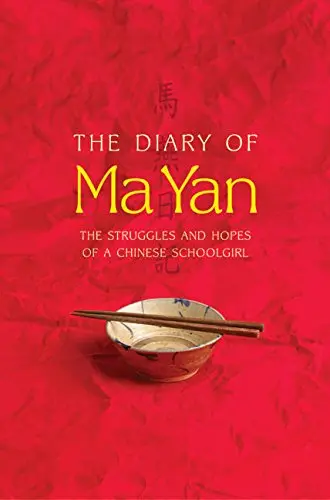
In an era when stories of hardship and resilience often struggle to find a platform, The Diary of Ma Yan: The Struggles and Hopes of a Chinese Schoolgirl stands out as a deeply human document. This volume collects the personal journals of a Hui Muslim girl from one of China's poorest regions, offering readers an intimate look at the cost of education and the power of a child's determination. Published by HarperCollins in June 2005, the book quickly became more than a memoir—it became a catalyst for charitable action, inspiring the creation of an association dedicated to keeping rural Chinese children in school.
The Story Behind the Diary
Ma Yan was born into a family living in a single-room house in the Ningxia Hui Autonomous Region, an arid and impoverished area in northwest China. Her parents were farmers, and her mother, like many women in the region, was illiterate. The family's economic situation was precarious, and every yuan spent on school fees or supplies represented a significant sacrifice. Yet Ma Yan's parents, particularly her mother, were determined to give their daughter an education that they never had.
The diary itself came to light through a remarkable chain of events. When Ma Yan was 13 and 14 years old, she recorded her daily struggles and dreams in a notebook. In 2002, her mother, suffering from a stomach ulcer, left home to take on hard labor hundreds of miles away—a desperate measure to earn money for her daughter's school fees. During a meeting arranged by a French journalist, Pierre Haski, Ma Yan's mother handed him the diary, hoping that he might help her daughter's story reach a wider audience. Haski, moved by the entries, edited them into a book, later translated from French by Lisa Appignanesi.
A Child's Resolve
What strikes readers most about Ma Yan's diary is the unwavering clarity of her goal. Page after page, she repeats her determination to excel at school so that she can eventually attend university. In one entry, she writes: "I must work really hard in order to go to university later. Then I'll get a good job, and Mother and Father will at last have a happy life." This refrain is not merely a literary device; it is the central motivation that drives her through hunger, exhaustion, and the constant fear of disappointing her parents.
The repetitiveness of these themes—the academic pressures, the financial worries, the fear of failure—could make the diary seem monotonous to a casual reader. But as the book's editors note, this very repetition underscores the extraordinary resolve that defined Ma Yan's daily existence. Her world was small, confined to a classroom, a dormitory, and a long walking path between home and school. Yet within that small world, her ambitions were vast.
Daily Hardships and Small Triumphs
Ma Yan's diary is filled with details that will open many readers' eyes to the realities of rural education in China. She describes going without food for days to save money for a pen. She recounts the weekly journey she and her brother made, walking more than 12 miles each way to and from school, where they boarded during the week. At school, meals were often scarce, and hunger was a constant companion. In winter, the cold was biting; in summer, the heat was relentless. Yet Ma Yan rarely complains. Instead, she records these hardships as facts of life, obstacles to be overcome rather than reasons to give up.
One particularly moving entry describes how she and her brother would sometimes skip meals entirely to stretch their meager resources. The discipline required to endure such deprivation, while still focusing on schoolwork, is almost unimaginable to children in more affluent settings. But Ma Yan's resilience is a testament to the human spirit's capacity to persist in the face of adversity.
The Cultural and Geographic Context
To fully appreciate Ma Yan's story, it is essential to understand the region where she grew up. Ningxia is one of China's smallest provinces, with a population that includes a significant Hui Muslim minority. The Hui people are Chinese-speaking Muslims, and their culture blends Islamic traditions with Han Chinese customs. In rural Ningxia, many families live in poverty, relying on farming and herding. Education is often seen as the only pathway out of this cycle, but it comes with costs that many families cannot bear: school fees, books, uniforms, and the loss of a child's labor at home.
Ma Yan's mother, despite being illiterate, understood this better than most. Her decision to leave home for grueling work demonstrates a powerful belief in education as a transformative force. In a culture where daughters have historically been prioritized less than sons for schooling, Ma Yan's mother's commitment to her daughter's education is particularly noteworthy. It challenges stereotypes and highlights the quiet heroism of many rural Chinese mothers.
From Diary to Movement
After the diary's publication, readers responded with remarkable generosity. The book's proceeds, along with donations, helped establish the Association for the Children of Ningxia, a charitable organization dedicated to providing school fees and supplies for children in the region. The association's mission is straightforward: to ensure that no child has to drop out of school because of financial hardship. Ma Yan herself, now in her twenties, has been able to continue her education with the support of donors, and she has become a symbol of hope for many others in similar circumstances.
The success of the book also sparked broader conversations about rural education in China. It drew attention to the persistent disparities between urban and rural schools, the struggles of ethnic minorities, and the sacrifices that families make for their children's futures. While China has made enormous strides in education access over the past two decades, the issues Ma Yan documented remain relevant for millions of children today.
A Mother's Sacrifice
One of the most poignant aspects of the diary is the role of Ma Yan's mother. Although she could not read a single word her daughter wrote, she recognized the importance of the diary and carried it with her on a journey of hundreds of miles. Her ulcer, left untreated for lack of money, did not stop her from performing hard labor in a distant city. She endured separation from her family and physical pain to give her child a chance at a better life. This sacrifice is a recurring theme in Ma Yan's entries, as she grapples with the weight of her mother's expectations.
In one entry, Ma Yan writes of her fear that she might fail her exams and thereby disappoint her mother. This fear, while painful, also fueled her determination. She studied late into the night, often by the dim light of a candle, because she knew that her mother's efforts were not in vain. The bond between mother and daughter is the emotional heart of the book, transcending the barriers of literacy and distance.
Literary and Educational Value
Beyond its documentary value, The Diary of Ma Yan serves as a powerful educational tool for young readers. In classrooms, it offers a window into a life vastly different from that of most children in the West, yet one that shares universal emotions: love for family, fear of failure, and hope for the future. The book is recommended for ages 10 and up, and its accessible prose makes it suitable for middle-grade and young adult readers.
Teachers and parents have used the diary to spark discussions about global inequality, the importance of education, and the resilience of children in difficult circumstances. It also encourages empathy, as readers are invited to imagine what it would be like to walk barefoot for hours to reach a school where meals are uncertain. In this way, the book is not just a memoir but a bridge between worlds.
Reception and Impact
Upon release, the book received praise for its authenticity and emotional power. Critics noted that while the diary's repetitive nature could be seen as a flaw, it also reflected the obsessive focus that poverty imposes on the mind. Every small setback becomes a crisis; every success is a monumental triumph. The book was recognized as a valuable contribution to the genre of children's literature that addresses social issues, alongside works like I Am Malala and Three Cups of Tea.
The physical edition of the book is modest—166 pages—but its reach has been extended through translations and digital formats. An open ebook edition was released in 2009, ensuring that the story could reach even more readers. The paperback edition, published in 2006, remains a staple in school libraries and book clubs.
A Continuing Legacy
Fifteen years after its initial publication, The Diary of Ma Yan continues to resonate. The Association for the Children of Ningxia has helped numerous students; however, the need remains great where many families still live on less than two dollars a day. Ma Yan's story has been cited in academic studies on education and poverty, and it has motivated philanthropic efforts beyond the scope of the original foundation.
In a world where headlines often focus on conflict and division, Ma Yan's diary is a reminder of the simple, universal desire for a better life. Her voice, captured on the page while she was still a child, speaks with a clarity that transcends cultural boundaries. She did not ask for fame or pity; she simply wanted to learn. In doing so, she taught others about courage, sacrifice, and the transformative power of hope.
Source: Publishersweekly News