

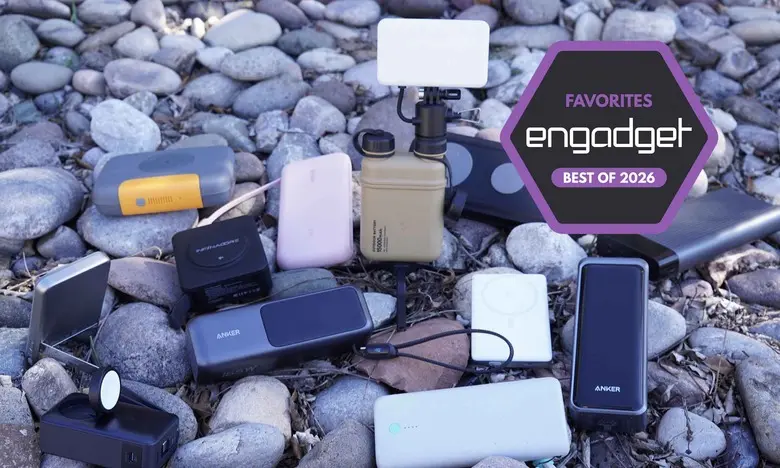
A dead phone is one of modern life's most stressful predicaments. If you carry a portable battery, you can sidestep the panic entirely. But the sheer number of power banks available makes picking the right one tricky. After testing dozens of models across several years, we've identified the best portable chargers for every scenario. Whether you need a quick boost for your smartphone or a high-capacity brick to keep your laptop alive, here are our top picks for 2026.
Best Power Banks for 2026
We've broken down the best power banks by category—so you can find exactly the right one for your needs.
Best MagSafe Power Bank
Anker MagGo Power Bank (10K)
Capacity: 10,000mAh | Maximum Output: 15W (wireless) | Ports: One USB-C in/out | Weight: 8.82 oz
Anker's MagGo Power Bank is among the first Qi2-certified products on the market, and the new standard drastically improves its performance. It recharged an iPhone 15 from near-dead to 50 percent in about 45 minutes—by comparison, our previous top pick took an hour and a half to do the same. It also left enough charge to bring the phone up to 70 percent on a second refill.
A clear LED display shows remaining battery percentage and estimated time to full or empty. The magnetic connection is strong enough to use the phone while charging, and the small kickstand props the phone up for video viewing. If you rotate to landscape, StandBy mode engages. While it can charge non-Apple devices, Qi2 support on new Android phones also benefits from the faster speeds and magnetic alignment. The USB-C port ensures you can charge devices without wireless capability.
Pros: Fast Qi2 wireless charging, sturdy kickstand, helpful display. Cons: Pricier than other MagSafe packs.
Best Portable Charger for Android
Anker Nano Battery (Foldable USB-C)
Capacity: 5,000mAh | Maximum Output: 22.5W | Ports: One USB-C and one USB-C connector | Weight: 3.5 oz
The Anker Nano is about the size of a lipstick case and features a built-in USB-C connector that folds away when not in use. This means you never have to remember a separate cable. In testing, it charged a depleted Galaxy S23 Ultra to 65 percent in about an hour. It's also small enough to use your phone comfortably while it's charging. The battery is ideal for topping up earbuds or a phone on the go. For a bit more capacity, Anker's 30W Nano Power Bank offers 10,000mAh and a built-in display.
Pros: Extremely portable, affordable. Cons: Small enough to lose.
Best Low-Capacity Power Bank
Anker 10K Fusion
Capacity: 10,000mAh | Maximum Output: 30W | Ports: One USB-C in/out port, one USB-C in/out cable, wall prongs | Weight: 8.8 oz
The Anker 10K Fusion eliminates the need to pack a wall adapter or charging cable. It has a foldable two-prong plug for charging the bank itself and a built-in USB-C cable for your devices. Despite those attachments, it's compact—a bit wider than a stick of butter—yet packed with 10,000mAh. The 30W output triggered rapid charging on a Galaxy S23, taking it from 5 percent to full in just over an hour. In 20 minutes, an iPhone 15 went from near-dead to 45 percent.
There's an additional USB-C port for other devices, and both the cable and port can be used to refill the battery. The built-in display shows a fairly accurate percentage readout. The textured sides give it a pleasant grip.
Pros: Built-in cable, wall prongs, accurate display, affordable. Cons: iPhone charging is slower than some rivals.
Best Medium Capacity Power Bank
Belkin BoostCharge 20K with Integrated Cable
Capacity: 20,000mAh | Maximum Output: 30W | Ports: One built-in USB-C in/out cable, one USB-A port, one USB-C port | Weight: 14 oz
An integrated cable is a welcome feature, and Belkin executes it well. The BoostCharge 20K includes a magnetized USB-C cable that tucks away nicely. It charged a Samsung Galaxy S24 Ultra from near-dead to full in 75 minutes and an iPhone 15 from 5 to 87 percent in just over an hour. The 20,000mAh capacity means you can do this multiple times—roughly three full charges for a typical smartphone.
The two additional ports let you keep multiple devices topped up simultaneously, though charging speed will drop. Four LED lights indicate remaining battery level. It comes in blue, pink, white, or black, and the matte finish resists smudges.
Pros: Built-in cable, multiple colors, affordable, great capacity for the price. Cons: Not the fastest charging speed.
Best Medium-High Capacity Power Bank
Nimble Champ Pro
Capacity: 20,000mAh | Maximum Output: 65W | Ports: Two USB-C in/out | Weight: 12.9 oz
The Nimble Champ Pro delivers blistering speeds—it charged a Galaxy S23 Ultra from 5 to 100 percent in under an hour, faster than any other battery we tested except our premium pick. It also recharges quickly from the wall. With 20,000mAh, it provided nearly three full charges to both iPhone and Galaxy test devices and even refilled an iPad multiple times.
Nimble is a certified B-Corp, and the Champ Pro is made from 90 percent post-consumer recycled plastic. The marbled finish looks distinctive, and the attached lanyard is a nice touch. Both USB-C ports support input and output, so you can charge two devices at once.
Pros: Super fast charging, eco-friendly materials, sturdy design. Cons: Indicator lights underestimated the remaining charge in our tests.
Best Multi-Device Power Bank
BioLite Charge 100 Max
Capacity: 25,000mAh | Maximum Total Output: 120W | Ports: Wireless pad (15W), two USB-C (100W), one USB-A (15W), one USB-C (15W) | Weight: 1.28 lbs
The BioLite Charge 100 Max is compact and travel-friendly, with a rounded design and rubberized texture. It has four USB ports and a MagSafe-compatible wireless charging pad. In testing, it charged an iPhone 15 five times, a Galaxy S23 Ultra four times, and a MacBook Pro to 75 percent in under an hour. The magnetic hold is secure enough for stationary use, but not for carrying around while charging.
Ten LED pips indicate remaining charge, and they proved accurate. BioLite is a climate-neutral certified B-Corp that donates power and lighting solutions to underserved communities.
Pros: Compact, fast multi-device charging, company mission. Cons: More expensive than comparable options.
Best Laptop Power Bank
Anker Laptop Power Bank with Built-In Cable
Capacity: 25,000mAh | Maximum Output: 165W | Ports: Two built-in USB-C in/out cables, one USB-A port, one USB-C port | Weight: 1.31 lbs
Forgetting a charging cable is a common problem, but Anker's laptop power bank solves it with two attached USB-C cables: one on the side and a retractable cord that extends up to two feet. Both are bidirectional, so you can charge devices or refill the battery itself. The display shows remaining charge, output wattage per port, and estimated time to full.
This battery delivered a fast charge to laptops and phones alike. It's made from durable matte silver plastic, and the smaller display avoids the scratching issue we saw with previous models. At its price, it offers excellent value given the built-in cables.
Pros: Two built-in cables, durable, informative display, fast charging. Cons: Screen picks up smudges.
Best Premium Power Bank
Anker Prime Power Bank 26K 300W
Capacity: 26,250mAh | Maximum Combined Output: 300W | Ports: Two USB-C (140W), one USB-A (22.5W) | Weight: 1.32 lbs
Anker's premium power bank is the most powerful we've tested. It has an app connection, but the real magic lies in the hardware: 140W output from either USB-C port, a 26,000mAh capacity, and a display that shows battery percentage and temperature. It charged an iPhone 15 to 60 percent in 30 minutes and delivered more charge to a MacBook Pro than any other battery of its size.
The design is sleek—glossy black front, matte silver body—and it's more compact than most 27,000mAh rivals. The optional charging base ($110) makes recharging as simple as setting down the battery. That cost makes it a luxury, but for professionals who need reliable high-speed power, it's worth it.
Pros: Super fast, premium design, useful display. Cons: Expensive, especially with the base.
Best Power Bank for Outdoors
Nestout 15000mAh Outdoor Battery Power Bank
Capacity: 15,000mAh | Maximum Output: 32W | Ports: One USB-C in/out, one USB-C in, one USB-A | Weight: 12.8 oz
This rugged power bank has an IP67 rating, meaning it can survive submersion in up to a meter of water for 30 minutes. We tested it by dropping it into a bucket of water for five minutes, and it worked flawlessly afterward. Screw-on caps with gaskets keep water out, and it also passed our drop tests from chest height.
Charging speeds are slower than some rivals—an iPhone 11 reached 80 percent in about an hour and 15 minutes—but the durability is excellent. Nestout also sells accessories like a snap-on LED worklight, a tripod, and a compact solar panel that can top up the battery to 40 percent in three hours.
Pros: Waterproof, durable, innovative accessories. Cons: Slower charging, included cable is short.
What to Look For in a Portable Battery Pack
Battery Type
Nearly every power bank uses lithium-ion technology, which offers the best size-to-capacity ratio and doesn't suffer from memory effect. Energy density has increased eight-fold in the last 14 years, meaning modern batteries are smaller and more efficient than ever.
Flying with Portable Batteries
The TSA limits carry-on batteries to 100Wh (about 27,000mAh). All of our recommendations fall under this limit. They must be in carry-on luggage, not checked. Southwest Airlines now requires power banks to be in the passenger's view when actively charging a device.
Capacity
Capacity in mAh tells you how much energy is stored. A 5,000mAh bank can fill a phone to 50-75 percent. Larger 20,000-25,000mAh units can charge tablets and laptops. Keep in mind that efficiency is only around 60 percent due to heat and voltage conversion, so a 10,000mAh bank won't fully charge a 5,000mAh phone twice.
Wireless and Qi2
Wireless charging is convenient but less efficient than wired. Qi2, introduced in 2023, increased speeds to 15W and added magnetic alignment. It's now built into iPhone MagSafe and Google Pixel 10's Pixelsnap. The latest Qi2 25W standard is supported on iPhone 17 and Pixel 10 Pro XL, and compatible batteries are just hitting the market.
Ports and Design
USB-C ports deliver faster charging than USB-A, and most modern power banks feature at least one USB-C. Check port wattage—a 15W port won't charge your laptop. Built-in cables eliminate the need to carry a separate cord. Design choices like colors, kickstands, and displays don't affect performance but can enhance usability.
How We Test Power Banks
We test each power bank with a variety of devices: an iPhone, an Android phone, an iPad, and a MacBook Pro for larger units. Devices are drained to between zero and five percent, then charged until full or the power bank depletes. We also evaluate charging speed, efficiency, durability, and additional features like built-in cables and displays.
Other Power Banks We Tested
Belkin Stage PowerGrip is a clever accessory for photographers, combining a 9,300mAh power bank, wireless charging pad, built-in cable, and Bluetooth shutter. It's slow to charge a phone to full in about two hours but can be a great companion for a day of shooting.
Anker MagGo for Apple Watch power bank is a niche but highly useful device. It integrates a 10K battery, a USB-C cable, and a pop-up Apple Watch charger. It saved us on several occasions when the watch was running low.
HyperJuice 245W boasts a sleek design and a massive 27,000mAh capacity. It delivered a full phone charge in about an hour, but it lacks a USB-A port and is priced similarly to competitors with more ports and built-in cables.
EcoFlow Rapid magnetic power bank is a 5,000mAh Qi2-enabled charger with a nice design and a built-in cable. However, it didn't outperform Anker's MagGo in speed or capacity.
Mophie Snap+ Powerstation Mini is well-built and compact but only offers 5,000mAh—not enough for a full charge on most modern phones.
Power Bank FAQs
What's the difference between a portable power bank and a portable charger?
They're essentially the same thing. Both store energy in a lithium-ion battery and refill your devices via USB. Power stations are larger units that can't be taken on planes and are designed for multiple device charges or home backup.
Does fast charging ruin your battery?
Fast charging generates heat, which can degrade battery longevity over time. Modern phones mitigate this with heat shields and software controls. Studies on EV batteries suggest fast charging has a minimal effect, especially when ambient temperatures are controlled. So, fast charging is safe for day-to-day use.
Can you use one power bank for all your devices?
It depends on capacity and ports. A small 5,000mAh bank can't charge a laptop, but a 20,000mAh model can provide a partial laptop charge. Most devices with USB ports will work, but unique ports like DC require specialized batteries.
Source: Engadget News