

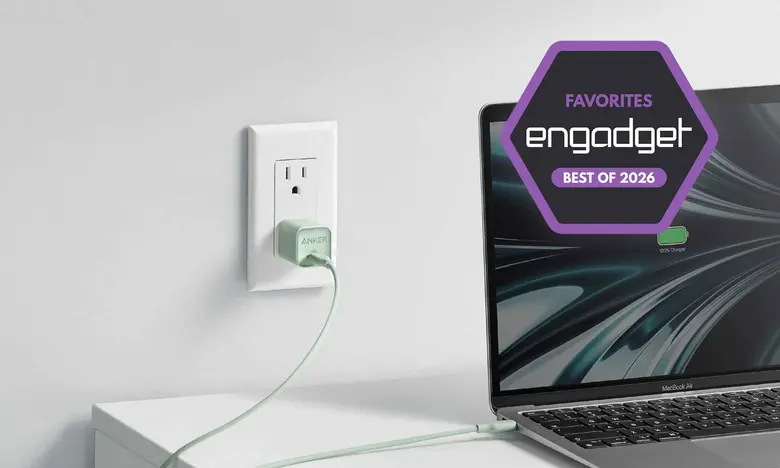
Fast chargers are no longer a nice-to-have accessory. With smartphones, tablets, laptops, and wearables all competing for wall outlets, the right charger can mean the difference between a quick top-up and a long wait. Modern devices also tend to ship without a power brick, making a dedicated fast charger a practical necessity rather than an optional extra. Choosing wisely involves more than just picking the highest wattage you can find; compatibility, port setup, and charging protocols are just as important as raw speed.
Today's best fast chargers are engineered to handle multiple devices at once, whether you're powering a phone, a laptop, AirPods, or an Apple Watch. Many combine USB-C ports with a USB-A port for older cables, while newer designs focus on multi-port output that distributes power intelligently. Brands like Anker have refined their compact GaN chargers, making it easy to carry a powerful brick that fits in a pocket but can still charge a laptop and a phone simultaneously.
With so many wattages, port layouts, and standards to consider, the best fast charger depends on how and where you charge. Are you looking for a simple wall adapter for a single phone? A travel-friendly dual-port option? Or a desktop hub that can power everything at once? This guide breaks down the key factors, answers common questions, and helps you decide which fast charger is right for your gear in 2026.
What to Consider Before Buying a Fast Charger
Before you start comparing specific models, there are three critical questions to answer: How many devices do you typically need to charge at once? How much power do those devices require? And do you plan to travel with the charger? These questions matter even more if you own a mix of older devices that rely on Lightning cables alongside newer USB-C hardware.
The first question is straightforward. If you only need to charge one device, like an iPhone or Android phone, a single-port wall charger is usually cheaper and more compact than a multi-port brick. If you regularly charge a phone, a smartwatch, and earbuds together, a three-port charger with smart power distribution will be more convenient.
Second, understand how much electricity your devices can actually accept. Buying a 140W charger for a phone that tops out at 20W doesn't make sense unless you also plan to charge a laptop. Most manufacturers list maximum charging speeds in the product specs, typically in watts or as a specific fast-charging standard. Matching the charger's output to your device's input ensures you're not wasting money on unused capacity.
Powerful laptops, particularly gaming notebooks, can draw more than 140 watts and may rely on proprietary barrel connectors. Those machines won't be compatible with universal USB-C chargers. Some laptops support USB-C power delivery but at a lower rate than their included adapter, so even if a universal charger can't supply the full wattage, it can still top up the battery slowly. Using a high-quality USB-C cable is equally important, as a substandard cable can bottleneck power delivery and even generate excess heat.
For frequent travelers, size and weight are major considerations. A large desktop charger is great for a home office but a nuisance in a backpack. GaN (gallium nitride) chargers have revolutionized the market by offering significantly smaller, lighter, and more efficient alternatives to older silicon-based adapters. Some travel-focused chargers also include interchangeable international plugs, which is a huge benefit for frequent flyers.
Finally, you need to check whether your smartphone uses a proprietary fast-charging standard or is compatible with the USB Power Delivery (USB PD) spec. For example, the OnePlus 13's included SuperVOOC adapter can deliver up to 100 watts to the phone, but if you use a generic USB-PD charger, speeds drop to 45 watts. That's still faster than many flagships, but not nearly as quick as the proprietary brick. The same principle applies to other phones with ultra-fast charging support. Always make sure your charging cable and connector are rated for the wattage you expect, otherwise you risk slower speeds and extra heat.
Understanding Fast Charging Technologies
Fast charging is not a single universal standard. It spans USB Power Delivery, Qualcomm Quick Charge, and various proprietary protocols like SuperVOOC, Warp Charge, and TurboPower. The most common universal standard is USB PD, which is supported by virtually all modern laptops, smartphones, tablets, and accessories. USB PD allows for variable voltage and current, enabling devices to negotiate the optimal power level. The latest USB PD 3.1 specification supports up to 240 watts, which is enough to charge even the most powerful portable workstations.
GaN technology deserves special mention because it has transformed charger design. Gallium nitride transistors operate at higher frequencies and with better thermal efficiency than silicon transistors. This allows manufacturers to pack more power into a smaller chassis while keeping temperatures manageable. A typical GaN charger can be 30 to 50 percent smaller and lighter than a silicon-based adapter with the same output. For frequent travelers, that weight savings can have a meaningful impact on the contents of a bag.
How to Choose the Right Port Configuration
Port configuration is another key decision. A simple single-port charger is ideal for one primary device, especially if you want the smallest possible footprint. Dual-port chargers—usually two USB-C ports, or one USB-C and one USB-A—offer more flexibility for pairing a phone and earbuds. Multi-port chargers with three or more outputs are better suited for family use or travel, as they can handle a laptop, phone, and smartwatch simultaneously.
Smart power distribution is essential in multi-port chargers. The internal controller decides how to split the available wattage among connected devices. For example, a 100W GaN charger might give 65W to a laptop and 30W to a phone when both are plugged in, but if you connect three devices, the power might be split into different combinations. Good power distribution ensures that no device is starved of power, and it prevents overloading the charger.
Some chargers also include a dedicated port for a specific device category, such as a USB-C port optimized for a laptop or a USB-A port for older accessories. If you still use a Lightning cable, having a USB-A port can save you from buying a USB-C to Lightning adapter. However, USB-A ports typically cap out at lower wattages compared to USB-C, so keep that in mind for high-power devices.
Top Picks and What Makes Them Stand Out
While we don't rank specific models here, several notable chargers have set the standard for 2026. Anker's line of GaN chargers remains a favorite due to their compact builds, reliable safety features, and intelligent power distribution. The Anker 735 charger, for instance, packs 65W into a foldable plug design with two USB-C ports and one USB-A port, making it perfect for travel. For desktop use, the Anker 727 charger offers 100W of power and a sleek charging station design that can handle phones, laptops, and tablets simultaneously.
Another popular option is the Ugreen Nexode series, which features high-power GaN chargers with 100W to 200W output, multiple ports, and foldable prongs. Ugreen offers some of the best value for the price, with models equipped with both USB-C and USB-A ports. Their smaller 30W chargers are ideal for phone-only users, while their 160W power stations can replace a laptop brick plus a few phone chargers.
For Apple users, the relatively compact 61W or 96W power adapters from Apple work well for MacBooks, but third-party GaN chargers often provide more ports and better portability. For Android enthusiasts, a charger with PD 3.1 support can unlock the highest possible speeds for devices like the Samsung Galaxy S26 Ultra or Google Pixel 11 series, both of which support fast USB PD charging.
If you're looking for a charger that also works internationally, consider models with interchangeable plug adapters or built-in universal voltage support. Most modern chargers are auto-switching between 100-240V, but the physical plug shape varies by region. Some charging travel kits come with extra tips for the US, UK, EU, and AU sockets, which can be a lifesaver on long trips.
Fast Charger FAQs
What is GaN and why does it matter?
GaN stands for gallium nitride, a semiconductor material that has become popular in power electronics. Compared to traditional silicon-based switches, GaN transistors are more efficient and can operate at higher frequencies. This translates to lower energy loss, less heat generation, and smaller component sizes. Chargers built with GaN technology can deliver more power in a significantly smaller package. If you've noticed that high-wattage chargers have shrunk dramatically over the past few years, GaN is the reason.
Do fast chargers affect battery life?
Technically, yes, because fast charging generates more heat, and excessive heat can degrade a lithium-ion battery over time. However, modern devices and chargers are designed with thermal management and charging protocols that keep temperatures within safe limits. Charging a phone from 0 to 50% using a fast charger is generally fine, and many brands limit fast charging to lower battery levels to reduce stress. Using a certified charger and high-quality cable minimizes the risk. The natural chemical aging of batteries happens regardless, so the incremental damage from fast charging is almost negligible for the typical replacement cycle.
What's the difference between a fast charger and a regular charger?
There is no universally agreed-upon threshold for what defines a fast charger. Many older chargers output only 5 to 10 watts, while basic smartphone chargers from a decade ago often delivered 5W or 10W. Today, a charger that outputs more than 18 watts is generally considered fast. However, with some phones capable of drawing over 100W and laptops needing as much as 240W, the landscape has changed dramatically. The right fast charger for you depends entirely on the devices you own and their power requirements.
Ultimately, the best fast charger for 2026 is one that matches your device's power needs, offers the right number of ports, and fits your portability requirements. By understanding the basics of power delivery, GaN technology, and device compatibility, you can make an informed decision that keeps your gear charged efficiently and safely for years to come.
Source: Engadget News