

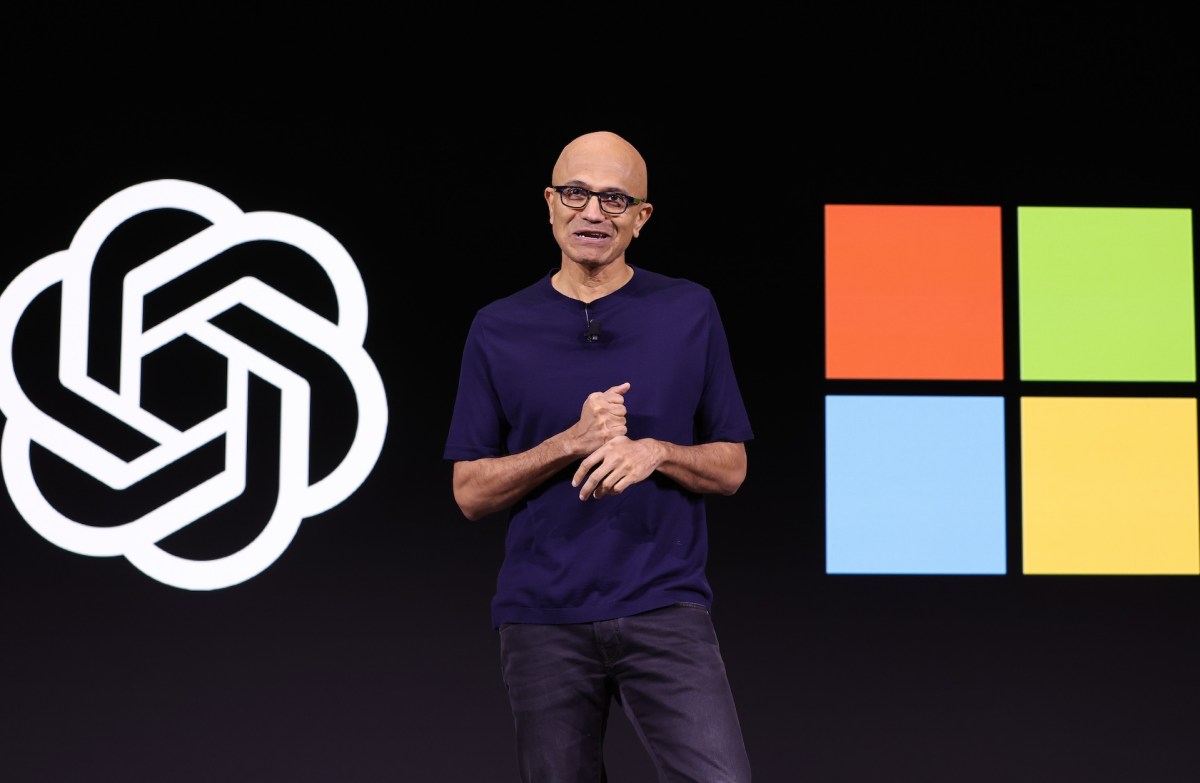
Satya Nadella, the CEO of Microsoft, has added his voice to the growing debate about the risks enterprises face when using proprietary artificial intelligence models. In a blog post published on Sunday, Nadella warns that companies that rely on models from labs like OpenAI and Anthropic are effectively paying twice for AI—once with money for token usage, and again with something far more valuable: their proprietary business data.
Nadella's argument centers on the concept of “exhaust data”—the prompts, corrections, and interactions that users feed into AI models. Every time an employee corrects a model's output or provides a detailed prompt, they are teaching the model about the nuances of their business. This knowledge, as Nadella writes, is “the kind of knowledge a competitor could never buy.” Yet enterprises are handing it over freely, often without realizing the implications.
The worry is not new. Venture capitalists like Jason Calacanis and Palantir CEO Alex Karp have previously warned that AI labs could use the data they collect from customers to build competing products or improve their own models at the expense of the original data owners. Now, Nadella—whose company Microsoft has invested billions in OpenAI and is closely tied to Anthropic—has publicly endorsed this concern, signaling a shift in the industry's thinking.
The hidden cost of AI adoption
Nadella's blog post outlined several key points. He notes that models learn from “exhaust,” including the tools agents use and the corrections people make when the model is wrong. “Every correction is distilled into institutional know-how,” he writes. This process, known as distillation, allows model makers to extract valuable insights from the data their customers provide. While distillation can be used to create smaller, cheaper models, it also means that proprietary business knowledge flows to the AI labs.
Nadella argues that it is hypocritical for AI companies to freely scrape the internet to train their models while imposing restrictive terms on distillation by others. He writes, “While the great innovation that comes from model providers having fair use rights to train models on public data is needed, I find it ironic that the status quo is to then turn around and impose restrictive terms on distillation.” This double standard, he suggests, disadvantages enterprises that want to study and improve upon the models they rely on.
The solution: own your data and orchestrate your models
To mitigate these risks, Nadella proposes a multi-pronged approach. First, he urges companies to “retain ownership” of their data, including prompts, feedback, and other interactions. This means storing sensitive data in a controlled environment—ideally on a cloud platform where the enterprise can maintain oversight. Second, he recommends building “orchestration layers” that allow companies to switch between different AI models from various providers, rather than being locked into a single vendor. This approach, reminiscent of the “multi-cloud” strategy, gives enterprises more leverage and reduces the dependence on any one AI lab.
While Nadella does not explicitly mention open source, the subtext is clear. Large enterprises are increasingly turning to open source models that can be run on their own premises (on-prem) to maintain control over their data. Idit Levine, founder and CEO of Solo.io, a company that helps enterprises manage AI systems, confirms this trend. She notes that after experimenting with proprietary model makers, customers often ask: “Can I take an open source model and run it on-prem? It will do almost 90% of what the big one's doing. It will cost way less. They understand that, and they can control it.”
Solo.io's technology powers the Linux Foundation's Agentgateway project, and its enterprise clients include T-Mobile, ADP, and SAP. Levine sees the shift toward on-prem open source models as the next big wave in enterprise AI use, driven by cost and control concerns.
The broader movement toward open models
Other companies are witnessing similar trends. Vercel, a platform for building and hosting websites that recently added AI model-switching tools, reported that open models accounted for 29% of all traffic routed through its gateway last month. OpenRouter, which helps developers route requests across different AI models, has also seen a surge in traffic to open source models. These numbers suggest that enterprises are already voting with their feet, moving away from proprietary models to regain ownership of their data.
The debate over data ownership in AI has intensified in the past year. In February, Anthropic accused Chinese open source models of sending millions of prompts to Claude in an attempt to distill its capabilities, urging the U.S. government to enforce export controls. This incident highlights the tensions around distillation and the potential for misuse. Nadella's point is that model makers cannot have it both ways: they cannot expect to train on the world's data while restricting others from doing the same to their models.
Implications for Microsoft and the industry
Nadella's warning is particularly noteworthy because Microsoft is both a major investor in proprietary AI labs and a cloud provider that stands to benefit from enterprises moving their AI workloads to Azure. By advocating for enterprises to build their own “proprietary learning environments” on the cloud, Nadella is positioning Microsoft as the safe choice for data sovereignty. At the same time, his criticism of the status quo may pressure AI labs like OpenAI and Anthropic to change their data usage policies.
Some experts see Nadella's blog post as a strategic move to encourage enterprises to adopt Microsoft's Azure cloud and its related AI services, including the ability to run open source models on Azure. Others view it as a genuine effort to address a real risk that could undermine trust in AI adoption. Regardless of the motivation, the message is clear: enterprises must be vigilant about what they share with AI models and take steps to protect their proprietary knowledge.
The trend toward open source models and on-prem deployments is likely to accelerate. With the CEO of one of the world's largest technology companies now openly urging caution, even more enterprises will reevaluate their AI strategies. Nadella's closing statement in his blog post sums up the philosophy: “In consuming intelligence, you are creating intelligence. And what you create should belong to you.”
As the AI landscape evolves, the balance of power between model providers and their customers will continue to shift. Enterprises that heed Nadella's advice may be better positioned to harness AI without giving away their competitive edge. The challenge will be implementing the right technical and legal safeguards to ensure that the data they feed into AI systems remains their own.
Source: TechCrunch News