

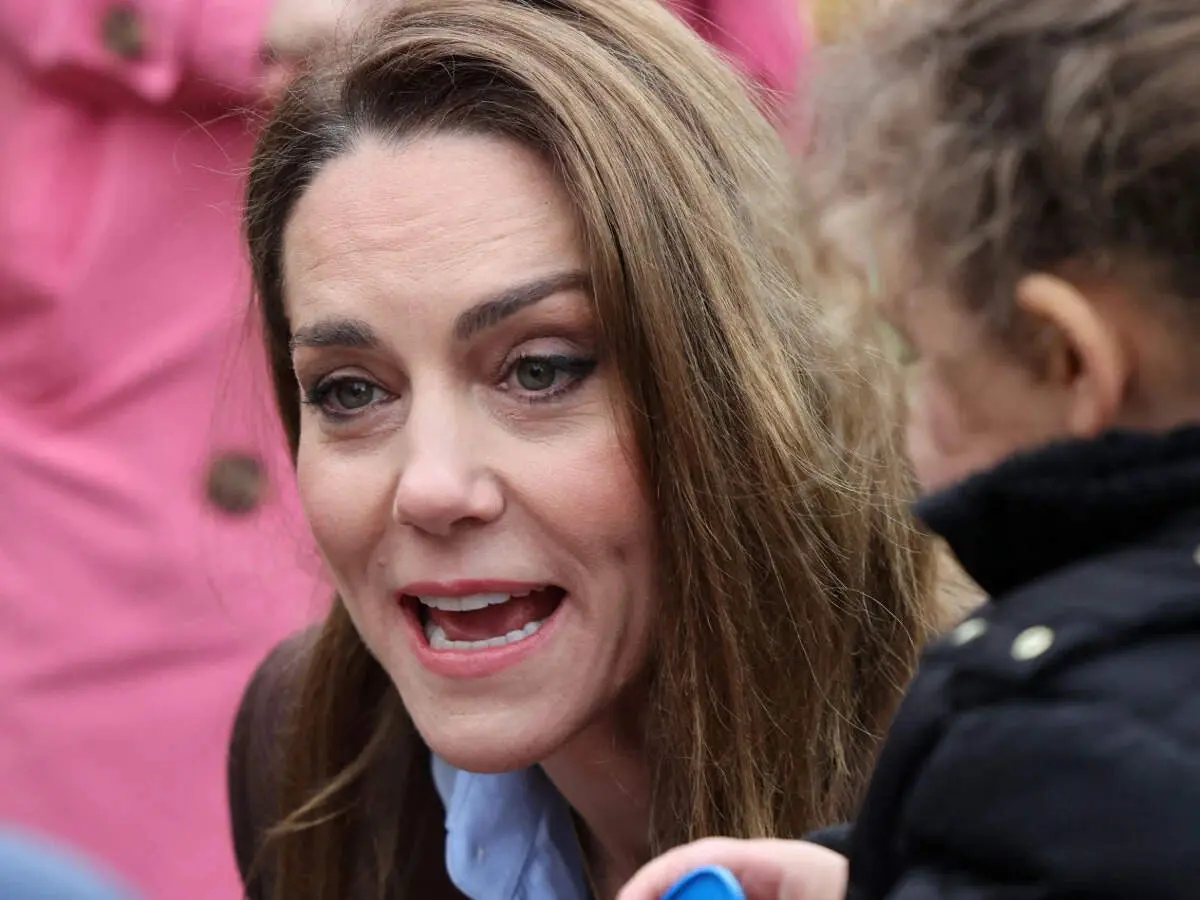
Catherine, Princess of Wales, is known for her thoughtful public statements, often linking personal values with broader social issues. Her quote of the day—“I am a firm believer that it is absolutely crucial to confront problems as early as possible”—aligns with the central mission of much of her royal work. As a devoted advocate for early childhood development, maternal health, and mental wellbeing, Catherine has repeatedly stressed that preventing crises is better than reacting to them.
The meaning behind the quote
At first glance, the sentence seems simple: do not wait to fix a problem. But beneath its straightforwardness lies a deeper philosophy that has shaped Catherine’s public role for over a decade. The Princess of Wales believes that the sooner an issue is acknowledged and addressed—whether it is an educational challenge, a family difficulty, or a child’s behavioural struggle—the more likely it is that a positive outcome can be achieved. Early resolution saves emotional distress, financial cost, and societal strain in the long term.
When Catherine speaks about confronting problems, she does so not as a distant figure but as someone who has seen the everyday pressures faced by families. Through her royal engagements and private meetings, she has witnessed the challenges faced by parents, carers, and children. Her quote suggests that we should not be afraid to ask for help, have difficult conversations, or take proactive steps in uncertain situations.
The Princess of Wales and early intervention
Catherine’s commitment to early intervention became particularly visible in 2021 when she launched The Royal Foundation Centre for Early Childhood. In its official mission, the Centre aims to promote a greater understanding of the importance of the first five years of a child’s life. These years are widely recognised by developmental scientists as a period of tremendous brain growth and emotional formation. Experiences during this window shape long-term health, behaviour, and learning.
But Catherine has been careful to note that early intervention is not only about children. It is about supporting the parents and caregivers around them. In several speeches, she has explained that the stress, isolation, or lack of knowledge experienced by a new mother or father can have a profound ripple effect. If a parent’s own struggles are confronted early—such as postpartum depression, financial hardship, or relationship tension—the whole family unit is more likely to thrive.
This is why the Princess of Wales has also raised awareness for paternal and maternal mental health risks. She has expressed that confronting the topic of mental health requires tremendous courage. Her quote reminds the public that acknowledging a problem is not a sign of weakness but, rather, a vital first step toward healing.
Turning a quote into a life lesson
The life lesson in Catherine’s quote is one that can be applied across all areas of daily life. Whether in personal relationships, professional settings, or personal health, delaying action often makes things worse. Small disagreements can become unbridgeable rifts. Lingering stress can lead to burnout. Minor legal or financial oversights can grow into serious crises.
In her own approach to royal duties, Catherine has often displayed a preference for calm, thoughtful proactiveness. She is known on official tours and events for engaging directly with specialists, listening to data, and advocating for evidence-based methods. Her quote fits neatly into that mindset: face facts, involve the right experts, and take action now.
In a typical address to charities or organisations supporting children, Catherine might say that success is never guaranteed; however, one can always give every child the best start. This philosophy is based on scientific consensus and is also rooted in compassion. To confront a problem early is to show mercy to the people involved. It prevents the guilt, shame, and complex trauma that often accompanies late discovery.
How to apply this in your family
Catherine often speaks as a mother of three as well as a Princess. While her royal circumstances are widely recognised as unique, she has shared that she and her husband, Prince William, try to focus on open communication with their children—Prince George, Princess Charlotte, and Prince Louis. Parents who follow her advice would be encouraged to:
- Check in regularly with children about their friendships and school life.
- Observe patterns in mood, eating, and sleep that might signal underlying anxiety.
- Speak with teachers or health visitors at the first sign of concern, not after months of worry.
- Create a judgement-free home environment where children feel able to say, “I have a problem.”
- Model behaviour that accepts mistakes and seeks repair.
In a famous mental health campaign video released some years ago, Catherine and her family spoke about making mental health an ordinary part of everyday conversation. That campaign, “Heads Together,” included public figures and citizens sharing how they had benefited from seeking help early. The Princess has never distanced herself from those grassroots moments. They established her credibility as someone who follows through on her words.
The science behind “early”
Researchers in neuroscience and child psychiatry consistently report that the brain develops most rapidly in early childhood. Synaptic connections are formed at a staggering pace, and stress hormones can influence structural development. If a child suffers from untreated neglect, malnutrition, or abuse, those early adversities can produce long-term health disadvantages. Catherine has cited research from organisations such as the Royal Foundation and many academic partners. She frequently mentions the statistic that a shocking share of adult mental health conditions are established during one’s adolescent years, many by age 14.
That evidence has pushed her to speak about “early help” as the most powerful tool available. In recent speeches focused on addiction recovery or family breakdown, Catherine has underscored that confronting problems early could spare families from lifelong difficulties. She has worked to reduce the stigma that prevents people from seeking help for domestic abuse, eating disorders, or behavioural difficulties. Her quote is not a simple cliché. It is a call to action backed by academic evidence.
The media and public reaction
The original article presenting Catherine’s quote was published against a typical background of world news, economic reports, and lifestyle pieces. Yet readers reacted to the Princess’s words with enthusiasm. Many found the quote especially timely near the end of a busy season when many families felt overwhelmed by pressures at work and school. Some online commentators connected the statement to global events, noting that governments too often delay decisions on climate change or economic inequality until crises hit. Others simply took it as a fresh reminder to schedule a doctor’s appointment or to reach out to an estranged relative.
Royal commentators have observed that Catherine rarely makes political statements, but she is comfortable speaking on social and developmental issues. Because of that, her quotes on resilience and love and support tend to land softly but definitively. This one, too, offers something to every reader: the permission to address a long-avoided issue before it becomes too enormous to handle.
Admirers of the Princess have increasingly collected her quotes in social media posts with the title “Quote of the day,” treating her as a modern source of inspiration. In past days, similar quotes have come from Roald Dahl, Katy Perry, and Mark Twain. The contrast highlights Catherine’s grounded yet dignified public image. She does not need elaborate fantasies to make a good point. Her words often reflect the daily work that she does out of the spotlight: meeting nurses, community leaders, families, and volunteers.
Challenges and criticisms
Of course, no public statement is without nuance. Some critics have pointed out that not every problem is solvable early, even with the best will. There are structural injustices—poverty, disability, systemic discrimination—that require more than early confrontation. Others have asked whether the pressure to confront difficulties early might stigmatise those who have not yet found the courage to speak or those who were not given a timely chance.
Catherine has generally responded to this by focusing on improving access to services. In her role, she has called for trained professionals in every community, so that a family who does seek help early is not met with a long waiting list. She also uses her platform to support innovative charities that bring care directly to the home, in the belief that early help is most impactful when offered with kindness and non-judgment. Her quote, therefore, should be viewed as a personal belief rather than a universal prescription. She aims to inspire, not to issue a clinical directive.
Why we still talk about Catherine’s quotes
The reason a quote from Catherine, Princess of Wales, earns the title “Quote of the day” in major news outlets is that she continues to represent a bridge between traditional royalty and modern, emotionally intelligent leadership. Over the years, the British public and international readers have watched her mature from Kate Middleton, the former commoner girlfriend of Prince William, to the confident and purposeful Princess. She brings attention to matters such as addictions, crime reduction, the importance of a child’s earliest years, and, concerningly, to the emotional health of frontline workers.
In each new address or interview, things she says become news because she rarely gives frivolous sound bites. There is usually depth behind the words, backed by her experience in a number of royal patronages. Catherine is not the first royal to speak about problems. The late Queen spoke often about duty, and the late Prince Philip spoke about science and service. But perhaps more than any past princess, Catherine connects those traditional themes to twenty-first-century psychology.
Early intervention in wider society
Applying her quote to a broader level, one can see parallels in how societies handle global crises. In the United Kingdom and around the world, there is growing recognition that investment in early years education provides one of the best returns for any economy. Children who have supportive early environments are more likely to finish school, secure employment, and avoid dependence on social benefits. Louise Casey, a prominent public official in Britain, has often argued for intervention before crime and violence take root. Catherine appears to share that belief, saying in a speech last year: “The problems are complex, but the starting point is simple: we must focus our efforts on the earliest possible moments.”
This echoes her direct quote and shows consistency in her message. Even in her private meetings and in her letters as patron of charities such as Place2Be and the Anna Freud Centre, she encourages the use of early intervention services to prevent depression and anxiety from dominating young lives.
Key facts from this article
- “I am a firm believer that it is absolutely crucial to confront problems as early as possible.”—Catherine, Princess of Wales.
- The Princess is the founder of The Royal Foundation Centre for Early Childhood, launched in 2021.
- Her quote reflects a philosophy rooted in neuroscience, social policy, and personal experience as a mother.
- She accepts that confronting early problems requires courage and access to support services.
- The quote has broad applications: family life, mental health, relationships, and community leadership.
- Catherine suggests everyone can begin by starting conversations earlier in homes, workplaces, and classrooms.
No matter what the future holds, and no matter what challenges emerge in the world, the Princess of Wales is likely to continue emphasising this one message. It flows through every project she chooses and every speech she crafts. The timing is never perfect to have a hard conversation, but Catherine’s quote is a reminder that waiting until the time is perfect is not a strategy. She indicates that the best time is always as early as possible.
Source: The Economic Times News