

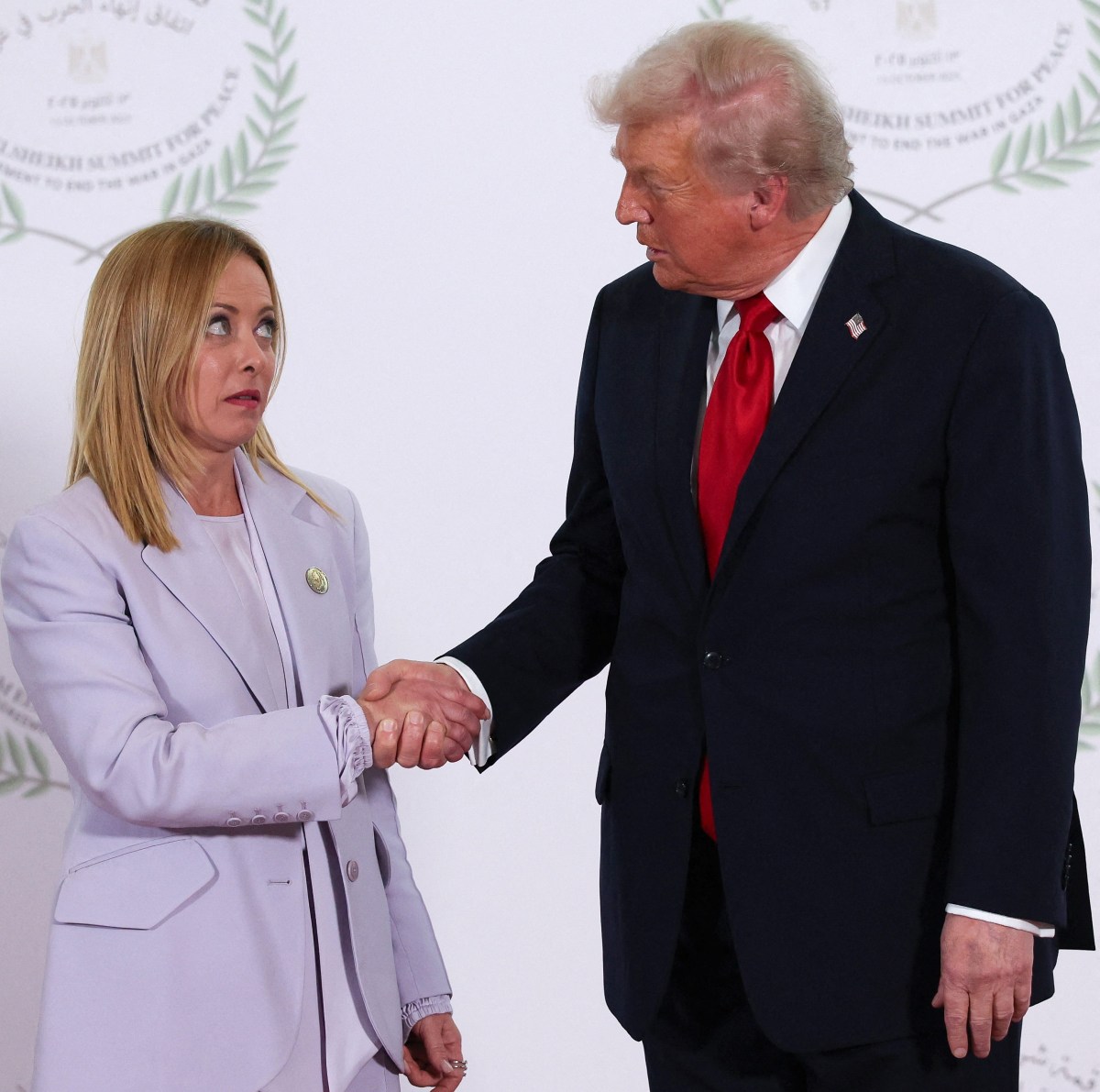
Italian Prime Minister Giorgia Meloni has reached a historic milestone, holding power over the same government for 1,413 days. In a country that has gone through 68 governments in 80 years, that level of stability is unprecedented in the postwar era. Her party, the Brothers of Italy, is planning a rally in Bari on Friday to celebrate the record. Meloni will use the event to present her record to voters ahead of the next national election.
Meloni’s time in office has been defined by her changing relationship with Donald Trump. She entered government sharing many of the same political instincts as the U.S. president on immigration, national identity, and the fight against so-called woke culture. Those affinities made her a useful bridge between Europe and Trump’s political movement. But a series of public clashes with Trump has changed that calculation, and Meloni now appears determined to show that she can lead Italy without depending on Washington’s approval.
A Record Born From Political Chaos
Italy’s republic has rarely known long-lasting governments. Since the end of World War II, Italian voters have watched dozens of coalitions rise and fall, often within a few months. Against that backdrop, Meloni’s survival in office is remarkable. Her government has managed to avoid the collapse that has ended so many previous administrations, and her party has remained a dominant force on the Italian right.
The previous postwar record was held by Silvio Berlusconi, the late media tycoon and four-time prime minister. Berlusconi’s longest single period in power ended after 1,412 days. Meloni now surpasses it by a day, a symbolic but powerful achievement. For a country where political careers often end suddenly, simply staying in government has become an important measure of success.
The milestone also opens the door to an even more significant first. If Meloni and her cabinet survive until the 2027 national election, she would lead Italy’s first uninterrupted five-year government in the history of the republic. No Italian prime minister has yet managed to complete a full term from start to finish, making that a genuinely transformative goal.
Her success is not only a product of good fortune. Meloni has shown a capacity for pragmatic conservatism that has allowed her to move beyond her party’s post-fascist roots. While she remains a right-wing leader, she has also worked with European institutions, kept public finances under relative control, and prevented the kind of coalition warfare that has doomed her predecessors.
The Break With Trump
When Meloni came to power, Washington viewed her as an important European ally. She shared Trump’s positions on border enforcement, national sovereignty, and cultural conservatism. In turn, she was described as someone who could explain Trump to Europe and Europe to Trump. For a period, that relationship gave her unusual influence on the world stage.
Lisa Musiol, head of EU affairs at the International Crisis Group, said Meloni had tried to be a Trump whisperer. She used her close relationship with the U.S. president as a strategic advantage, positioning herself in Brussels and in European capitals as the leader with a direct line to the White House. That status helped raise her international profile and gave weight to her nationalist agenda.
This year, however, the relationship broke down. The first serious rupture came in April, when Trump attacked Pope Leo XIV, a fellow American, after the Pope spoke out against the Iran war. Trump called the Pope weak on crime and terrible for foreign policy.
The criticism placed Meloni in a difficult position. Italian opposition parties demanded that she defend the Pope rather than stay quiet to appease her powerful American ally. In the end, she chose to defend Rome. Meloni said it was right and normal for the Pope to call for peace and condemn every form of war, and she called Trump’s remarks unacceptable.
Trump reacted angrily. He said that it was Meloni who was unacceptable and added, “I thought she was brave, but I was wrong.” The confrontation produced a rare moment of political unity in Italy, as politicians from across the spectrum rallied behind Meloni. Musiol called it a rally-around-the-flag moment.
The tension grew even sharper at the G7 summit in June in Evian, France. Trump claimed that Meloni had asked to be photographed with him, suggesting that she had begged for the opportunity. Meloni rejected that account with a memorable response: “Italy and I never beg.” Her words were widely praised at home as a defense not only of her own reputation but also of Italy’s national dignity.
Why Trump Became a Political Problem in Italy
One reason Meloni could afford to distance herself from Trump is that Trump is deeply unpopular in Italy. Polling by the Piepoli Institute found that only 11 percent of Italians supported Trump. That was five percentage points less than the support for Russian President Vladimir Putin, a striking result in a NATO member country.
Trump’s statements about international alliances and territorial disputes have also aggravated Italian public opinion. He repeatedly talked about taking control of Greenland, a NATO member’s territory, and he claimed that NATO allies had not taken part in front-line combat in Afghanistan. For Italy, that remark was especially offensive. More than 50,000 Italian soldiers served in Afghanistan over twenty years. According to the Italian Defense Ministry, 53 Italian personnel were killed and 723 were wounded during that mission. Trump’s suggestion that Italy and other allies had not truly fought alongside the United States undermined a deep military commitment that cost Italian lives.
Teresa Coratella, a policy fellow at the European Council on Foreign Relations, said Meloni’s hand was forced by the economic consequences of the Iran war. Higher energy prices and broader economic instability were hurting Italy, making a visible special relationship with Trump look less like an advantage and more like a burden. Coratella argued that Meloni concluded a freezing of relations and a deliberate distance from Trump was badly needed.
Trump also became a source of tension inside the European right. France’s far-right National Rally and Reform UK in Britain opposed his threats over Greenland. His tariff policies created friction with European allies, and the Iran war pushed up oil and natural gas prices across Europe. Even right-wing parties that shared Trump’s cultural conservatism began to realize that their national interests did not always align with an America First agenda.
Michael Butler, a professor of political science at Clark University, said Meloni’s ability to survive and thrive exposed important differences between European nationalists and the Trump movement. The appeal of nationalist parties in Italy and Europe is often rooted in resentments specific to each country, rather than in the grievance politics of the Trump administration. Butler added that some figures in Trump’s orbit had tried to take command of the European right, but they did so in a clumsy way that largely backfired. Meloni, a highly skilled politician, took advantage of that mistake.
By positioning herself between MAGA, the more extreme far right, and mainstream conservative groups such as the European People’s Party, Meloni strengthened her hand both in Rome and in European politics. Her open break with Trump gave her new credibility as a leader who could defend European interests while still governing from the right.
The Next Test: Italy in 2027
Meloni may have earned praise for standing up to Trump, but her biggest fight is still ahead. The next general election is expected in 2027, and she is seeking to become the first Italian prime minister to complete a full five-year term. That would require her government to stay united, the economy to remain steady, and voters to reward her party at the ballot box.
Not all Italians are convinced. Giuseppe Conte, a former prime minister and leader of the anti-establishment Five-Star Movement, has used the cost-of-living crisis to criticize Meloni’s government. He said that while the government celebrates its longevity, ordinary Italians are not celebrating. Opposition leaders argue that Meloni has focused too much on public debt and state deficits and not enough on long-term economic growth and living standards.
Musiol cautioned that confronting Trump may help Meloni’s personal popularity, but that does not automatically translate into success for her party in national elections. Voters may admire her for defending Italian honor while still wanting more progress on wages, health care, housing, and everyday economic security.
There are also concerns about foreign interference and political funding. Reports say the U.S. State Department has launched grant programs for MAGA-aligned think tanks, advocacy groups, charities, and civil society organizations across Europe. That raises questions about whether promoting far-right political forces on the continent remains a priority for the Trump administration, even as some European leaders distance themselves from him in public.
Musiol said the American culture war is still sweeping into Europe and will not disappear just because some politicians stop standing next to Trump. The networks, ideological currents, and financial resources behind that movement remain active. Meloni’s ability to stay in power may therefore depend less on her relationship with any single foreign leader than on how well she manages Europe’s shifting political tensions and Italy’s persistent economic anxieties.
Source: Newsweek News