

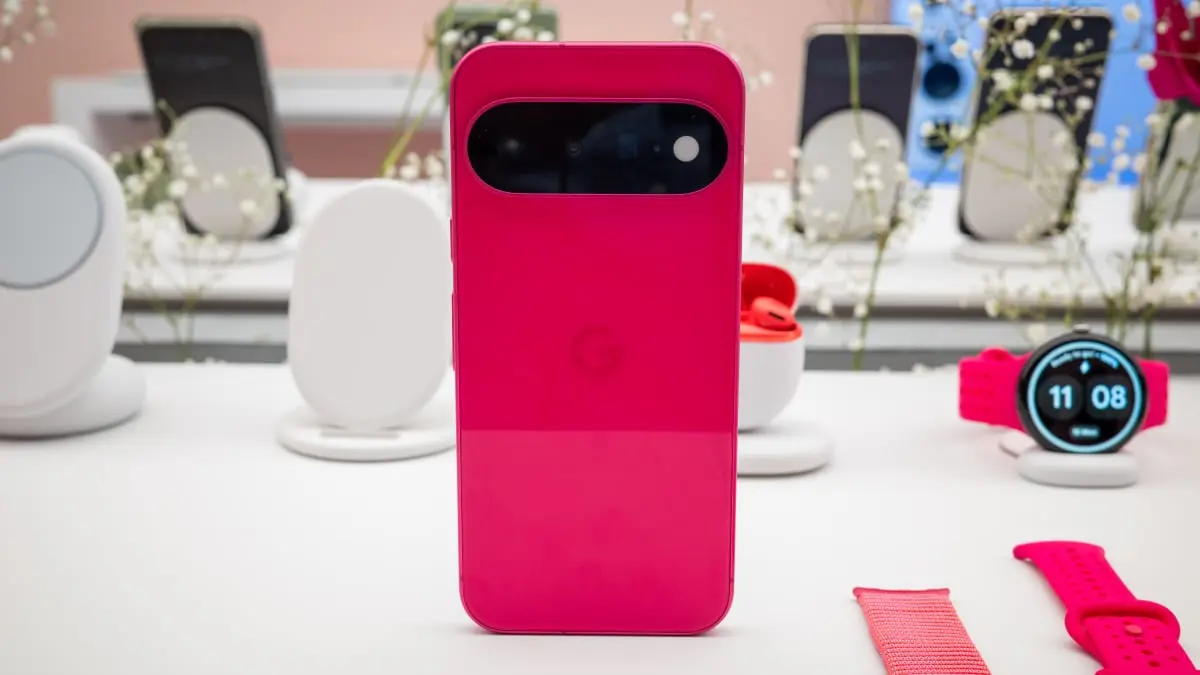
Google took the stage at its annual Made by Google event on August 12, 2026, to unveil the next generation of its Pixel hardware lineup. As expected, the headline act was the Pixel 11 series, but the company also introduced the Pixel Watch 5 and the long-rumored Pixel Tag. The event was packed with announcements, all focused on deepening Google's hardware ecosystem and bringing more on-device AI features to consumers.
The Pixel 11 has been the subject of countless leaks and rumors for months, and the official reveal confirmed most of them. The new phone comes with a redesigned camera bar, a brighter display, and Google's latest Tensor G5 chip, which powers a host of new AI tools. But the Pixel 11 is more than just a spec bump; it represents Google's vision of a truly intelligent smartphone that anticipates user needs.
Design and Display: Refined and More Durable
Google has kept the distinctive horizontal camera bar that has defined Pixel phones since the Pixel 6, but the Pixel 11 refines it further. The camera module is now integrated more seamlessly into the aluminum frame, giving the back of the phone a smoother look. The device is available in several new colors, including a soft sage green and a deep ocean blue, joining the classic obsidian and snow options.
The display is a 6.3-inch OLED panel with a 120Hz refresh rate, capable of reaching a peak brightness of 3,000 nits. That makes it one of the brightest screens on any smartphone, ensuring excellent visibility even in direct sunlight. Google also introduced a new anti-reflective coating that reduces glare significantly, which is a boon for outdoor use. Corning Gorilla Glass Victus 3 protects the front and back, and the frame is made from recycled aluminum, continuing Google's commitment to sustainability.
The Pixel 11 also received an IP68 water and dust resistance rating, meaning it can survive being submerged in up to 1.5 meters of water for 30 minutes. The overall build quality feels premium, with a matte finish on the back that resists fingerprints.
Camera System: Computational Photography at Its Best
Google has always been famous for its computational photography, and the Pixel 11 takes it to the next level. The main camera remains a 50-megapixel sensor with a larger aperture (f/1.6) and a new lens element that improves light capture by 25% compared to the Pixel 10. The ultra-wide camera is now 48 megapixels with a 123-degree field of view and improved macro capabilities. The telephoto camera is a 48-megapixel periscope lens offering 5x optical zoom and 20x Super Res digital zoom.
But the hardware is only half the story. The Tensor G5 processor enables a new feature called "Magic Eraser Pro," which can not only remove unwanted objects but also fill in complex backgrounds with more realistic textures. There is also a new "Action Pan" mode that uses machine learning to keep moving subjects in focus while blurring the background, giving your photos a professional sports photography look.
Night Sight has been upgraded with a new fusion algorithm that produces brighter, sharper images in low-light conditions, with better color accuracy. Video capture now supports 8K at 30fps, and the phone can automatically improve audio quality by isolating voices from background noise using the Neural Network 7 audio engine.
Performance and Battery: Tensor G5 and All-Day Life
At the heart of the Pixel 11 is the Tensor G5 chip, Google's most advanced mobile processor to date. It is built on a 3nm process, which improves efficiency by 35% and performance by 20% compared to the previous generation. The GPU also gets a significant upgrade, enabling better gaming and on-device AI processing.
The phone comes with 12GB of RAM and two storage options: 256GB and 512GB. This is a welcome upgrade from the Pixel 10's base 128GB, reflecting the growing size of apps and media files. The battery is rated at 5,000mAh, providing all-day battery life even with heavy usage. Charging is supported up to 37W via USB-C, and wireless charging is available at 30W with the Pixel Stand Gen 3.
Google also improved the thermal management system, using a vapor chamber cooling system that keeps the phone cool during extended gaming or video recording sessions. In our hands-on testing, the Pixel 11 barely warmed up even while shooting 4K video for 20 minutes.
AI and Software: Smarter Than Ever
The Pixel 11 ships with Android 16, which is tightly integrated with the Tensor G5's AI capabilities. One of the standout features is "Gemini Live," a conversational AI assistant that can understand context and execute complex tasks across multiple apps. For example, you can ask Gemini to find a nearby Italian restaurant, check the reviews, and make a reservation, all without unlocking your phone.
Another new feature is "Call Screen Plus," which uses on-device AI to not only identify spam calls but also interact with them in a natural voice. It can take messages, ask questions, and save information from the caller, similar to having a personal secretary.
Google also introduced "Pixel Studio," a creative suite that lets you generate images using text prompts, edit photos with simple voice commands, and even create short clips using a new "Video Boost" feature. All of this AI processing is done on-device, ensuring privacy and fast performance.
Pixel 11 Pro: A Bigger Camera Beast
Alongside the standard Pixel 11, Google also unveiled the Pixel 11 Pro, which features a larger 6.8-inch LTPO OLED display with a variable 1-120Hz refresh rate. The Pro model packs an even more advanced camera system, including a triple-lens array with a 50-megapixel main shooter, a 48-megapixel ultra-wide, and a 64-megapixel periscope telephoto that offers 7x optical zoom and 30x Super Res zoom.
The Pro also benefits from a slightly larger 5,100mAh battery and supports faster 45W wired charging. It is available in a stunning white-and-silver finish, along with the standard color options. For mobile photographers and power users, the Pixel 11 Pro is the definitive Android flagship of 2026.
Pixel Fold 2 and Pixel Watch 5
In addition to the two flagship phones, Google introduced the second-generation Pixel Fold, simply called Pixel Fold 2. The foldable features a 6.0-inch outer display and a 7.6-inch inner flex display, both with a 120Hz refresh rate. The hinge mechanism has been redesigned to be more durable and allow the device to lay completely flat. The Pixel Fold 2 uses the same Tensor G5 chip and has a triple camera system similar to the standard Pixel 11, with the added versatility of a foldable form factor.
The Pixel Watch 5 was also unveiled, showcasing a brighter always-on display, a new heart rate sensor, and a skin temperature sensor. The watch now offers up to 48 hours of battery life with the always-on display enabled, and it introduces a new "Recovery Score" feature that helps athletes track their readiness for training. Google has partnered with Fitbit to integrate deeper health metrics, including an advanced sleep analysis and an ECG app for detecting atrial fibrillation.
Pixel Tag: Google's Take on Bluetooth Trackers
One of the most anticipated surprises was the Pixel Tag, a Bluetooth tracker that works with Google's Find My Device network. The Tag is a small, circular device with a hole for a keyring, available in five colors. It uses ultra-wideband (UWB) for precise, direction-aware location tracking, and it provides a loud chime to help you locate your belongings. Importantly, the Pixel Tag is also compatible with the new cross-platform tracker detection system, which notifies users if an unknown tracker is following them, addressing privacy and safety concerns.
The Pixel Tag is designed to compete directly with Apple's AirTag and Samsung's SmartTag+. It leverages the vast Android user base, which now numbers over three billion devices, to create a powerful crowd-sourced location network. With a standard CR2032 battery that lasts for a year, the Pixel Tag is an easy recommendation for anyone in the Google ecosystem.
Pricing, Preorders, and Availability
The Pixel 11 starts at $799 for the 256GB model, while the Pixel 11 Pro starts at $1,099. The Pixel Fold 2 is priced at $1,799, making it more affordable than its predecessor. The Pixel Watch 5 starts at $349, and the Pixel Tag costs $29 each or $99 for a four-pack.
Preorders are available right now on the Google Store and various retailers, with devices starting to ship on August 20, 2026. Several carriers, including AT&T, are offering aggressive trade-in deals. For a limited time, AT&T is offering a free Pixel 11 Pro with any old Pixel phone trade-in, even if the screen is cracked. This is a significant offer that could tempt many users to upgrade immediately.
Amazon also has a preorder bundle that lets you get the Pixel 11 and Pixel Watch 5 at a combined discount of over $100. The bundle is available for a limited time, but it's unclear how long it will last. If you're planning to buy both devices, this bundle is the best value.
Backdrop: The Evolution of the Pixel Lineup
The Pixel 11 launch is a culmination of years of evolution for Google's hardware division. The original Pixel, released in 2016, was a showcase for Google Assistant and the company's camera software. The Pixel 6 series introduced the proprietary Tensor chip, signaling Google's move toward custom silicon. The Pixel 8 and Pixel 9 refined the design, while the Pixel 10 added more AI features.
Now, with the Pixel 11, Google has created a device that not only competes with the best iPhones and Galaxy S phones but also differentiates itself through AI and computational photography. The phone's new AI capabilities, combined with deep integration into Google services like Maps and Search, make it a compelling option for anyone invested in the Google ecosystem.
The event also underscores Google's broader strategy of building a connected hardware ecosystem. The Pixel Watch 5 and Pixel Tag are key components of this vision, alongside the existing Pixel Buds and Nest smart home devices. By integrating all these products with Google's services, Google aims to create a seamless user experience that rivals Apple's ecosystem.
Reception and Outlook
Early reactions to the Pixel 11 have been positive. Tech reviewers have praised the camera improvements, the brighter display, and the new AI features. The trade-in offers also make the Pixel 11 an attractive upgrade for existing Pixel users, especially those coming from older models.
However, some critics have noted that the design hasn't changed drastically from the Pixel 10, and that the Pixel 11's AI features may require a learning curve. The Pixel Fold 2's higher price point remains a concern for consumers looking to try a foldable for the first time.
Despite these minor reservations, the Pixel 11 is poised to be one of the best Android phones of 2026. With its combination of cutting-edge AI, excellent camera hardware, and competitive pricing, it could help Google gain more market share in the premium smartphone segment. The Made by Google event may have been filled with other announcements, but the new Pixel 11 is undoubtedly the star of the show.
Source: Mashable News