

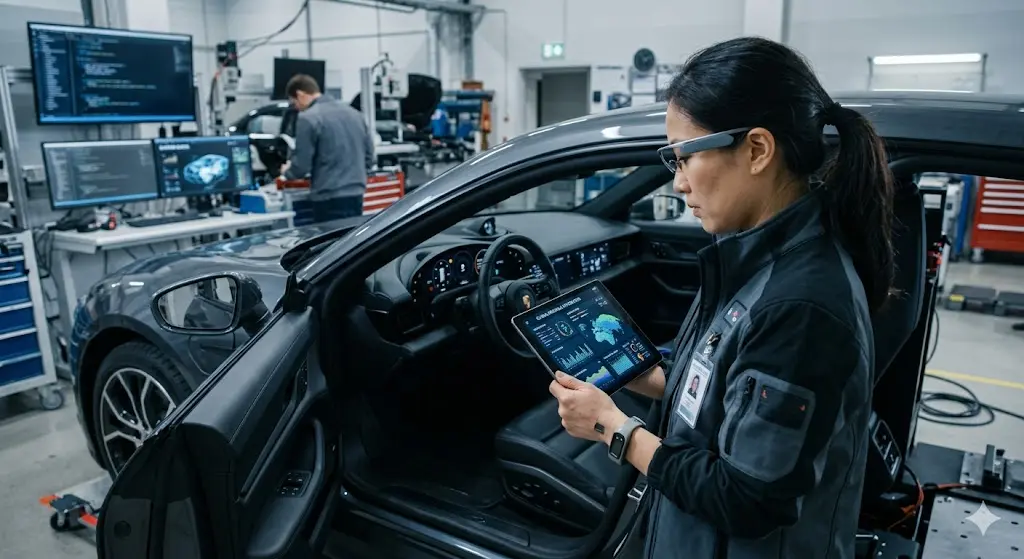
Global research on wearable technology in the automotive industry shows that connected devices are transforming vehicle safety, driver monitoring, workforce productivity, and personalized driving experiences. As automotive manufacturers invest in smart mobility solutions, wearable technologies are becoming an important bridge between drivers, vehicles, and real-time data systems.
Global research on wearable technology in the automotive industry reveals how rapidly connected devices are changing transportation. What once seemed like futuristic technology is now finding practical applications in vehicle safety, fleet management, driver health monitoring, and manufacturing operations.
Here's the thing: wearable technology isn't just about smartwatches anymore. Automotive companies are exploring ways to integrate wearable devices with vehicles to improve safety, efficiency, and user experience. As digital transformation continues across transportation sectors, research suggests that wearable solutions may become a standard component of next-generation mobility ecosystems.
What Is Global Research on Wearable Technology in the Automotive Industry?
Wearable Technology in the Automotive Industry: Connected devices worn by individuals that collect, analyze, and share data with vehicles, transportation systems, or automotive workplaces to improve safety, communication, and operational performance.
Global research on wearable technology in the automotive industry examines how wearable devices influence automotive operations, driver behavior, manufacturing productivity, vehicle connectivity, and transportation safety.
Researchers commonly study:
Driver monitoring systems
Connected vehicle ecosystems
Workplace safety applications
Fleet management technologies
Vehicle personalization
Driver health tracking
Automotive IoT integration
Smart mobility solutions
Unlike traditional automotive technologies that operate solely within the vehicle, wearables extend data collection directly to the driver or employee.
Expert Tip
Many businesses focus on consumer-facing wearables. In my experience, industrial and workforce applications often deliver faster measurable returns than consumer-focused projects.
Why Wearable Technology in the Automotive Industry Matters in 2026
Wearable technology continues to evolve beyond fitness tracking and personal health monitoring. Automotive companies are finding practical ways to integrate wearable data into transportation systems.
Several factors explain why this area is receiving significant attention in 2026.
Enhanced Driver Safety
Driver fatigue remains a major concern across transportation sectors.
Wearable devices can monitor indicators such as heart rate, stress levels, and alertness patterns. When connected to vehicle systems, these devices may help identify risks before they become serious safety issues.
Growth of Connected Mobility
Vehicles are becoming increasingly connected.
Wearables add another layer of information by providing real-time data about the driver rather than focusing exclusively on vehicle performance.
Fleet Management Improvements
Commercial fleet operators are exploring wearable solutions to improve driver well-being and operational efficiency.
Real-time monitoring can help managers identify fatigue risks and optimize scheduling decisions.
Smart Manufacturing Applications
Automotive manufacturing facilities are also benefiting from wearable technology.
Workers equipped with connected devices may receive safety alerts, operational guidance, and performance insights while performing complex tasks.
Personalized Driving Experiences
What most people overlook is that wearable technology may eventually personalize vehicles automatically.
A wearable device could recognize a driver, adjust seat positions, configure entertainment settings, and activate preferred driving profiles within seconds.
Expert Tip
Organizations implementing wearable technologies should prioritize user acceptance. Even the most advanced solution can fail if employees view it as intrusive.
How to Implement Wearable Technology in Automotive Operations
Successful adoption requires careful planning rather than simply purchasing new devices.
1: Identify Business Objectives
Start by defining the primary goal.
Examples include:
Driver safety improvement
Workforce productivity enhancement
Fleet management optimization
Manufacturing safety monitoring
Customer experience personalization
Clear objectives improve implementation success.
2: Select Appropriate Wearable Solutions
Different applications require different devices.
Smart glasses, smartwatches, biometric monitors, and wearable sensors each serve unique purposes within automotive environments.
3: Integrate with Existing Systems
Wearables generate valuable information only when connected to broader business systems.
Integration with vehicle platforms, fleet software, and operational dashboards helps maximize value.
4: Establish Data Privacy Standards
Data collection introduces privacy responsibilities.
Organizations should define clear policies regarding data usage, storage, access, and employee consent.
5: Train Users Effectively
Technology adoption often depends on training quality.
Employees and drivers need to understand how devices work and how they benefit daily operations.
6: Measure Outcomes
Track key performance indicators such as:
Safety incidents
Driver fatigue events
Operational efficiency
Productivity improvements
Employee satisfaction
Continuous evaluation supports long-term success.
Common Mistake or Misconception
More Data Always Leads to Better Results
This assumption sounds logical.
Yet excessive data collection can create confusion rather than clarity.
Companies sometimes gather enormous volumes of wearable information without establishing actionable insights. As a result, managers become overwhelmed by dashboards while meaningful improvements remain limited.
A counterintuitive finding from many technology initiatives is that fewer, highly relevant metrics often deliver better outcomes than extensive monitoring programs.
I've seen organizations invest heavily in sensors while failing to define how collected data would influence decisions. Predictably, the return on investment remained disappointing.
Expert Tips and What Actually Works
Research and industry experience point toward several best practices.
Focus on Human Benefits First
Technology should solve real problems.
If wearable solutions improve safety, reduce fatigue, or simplify work processes, adoption becomes much easier.
Prioritize User Comfort
Employees won't consistently use uncomfortable devices.
Comfort, convenience, and ease of use often matter more than advanced technical specifications.
Start Small
Pilot programs frequently outperform large-scale deployments.
Testing wearable technology with a smaller group helps identify challenges before broader implementation.
Combine Wearables with AI Analytics
Data becomes more valuable when paired with intelligent analysis.
AI systems can identify patterns that human reviewers might miss.
My Personal Take
One of the most interesting developments isn't the technology itself. It's how wearable devices are changing the relationship between people and vehicles. In many cases, future vehicles may adapt to drivers rather than requiring drivers to adapt to vehicles.
Real-World Example
Imagine a logistics company operating hundreds of delivery vehicles.
Drivers wear biometric monitoring devices that track fatigue indicators during long routes. When fatigue thresholds are reached, the system recommends breaks and adjusts scheduling recommendations.
Over time, accident rates decline, driver satisfaction improves, and operational efficiency increases. While hypothetical, this scenario reflects many of the applications currently being explored across transportation industries.
Expert Tip
Successful wearable initiatives typically balance innovation with transparency. Employees are more likely to support programs when they understand how data benefits safety and performance.
People Most Asked About Wearable Technology in the Automotive Industry
What is wearable technology in the automotive industry?
Wearable technology in the automotive industry refers to connected devices worn by drivers, workers, or consumers that interact with vehicles and transportation systems to improve safety, efficiency, and user experiences.
How do wearables improve driver safety?
Wearables can monitor fatigue, stress, alertness, and health indicators. These insights may help identify risks before accidents occur and support safer driving behaviors.
Are wearable devices used in automotive manufacturing?
Yes. Many manufacturers are exploring wearable solutions for worker safety, operational guidance, training support, and productivity monitoring.
What challenges limit wearable adoption?
Privacy concerns, data security requirements, user acceptance, device comfort, and integration complexity are among the most common challenges.
Can wearables communicate directly with vehicles?
Increasingly, yes. Connected vehicle platforms allow wearable devices to exchange information with automotive systems, enabling personalized settings and safety features.
What role does artificial intelligence play?
AI helps analyze wearable data, identify patterns, predict risks, and generate recommendations that improve operational decision-making.
Will wearable technology become standard in vehicles?
Many industry experts believe wearable integration will become increasingly common as connected mobility ecosystems continue to expand.
Final Thoughts
Global research on wearable technology in the automotive industry demonstrates how connected devices are reshaping transportation, manufacturing, and mobility experiences. From enhancing driver safety to improving workforce productivity and enabling personalized vehicle interactions, wearable technologies offer significant opportunities for innovation.
Organizations that focus on practical applications, user acceptance, data privacy, and measurable outcomes will likely achieve the strongest results as wearable technology becomes a more integrated part of the automotive sector.
Businesses, agencies, startups, and SEO professionals looking to boost brand visibility can benefit from PR distribution services alongside professional link building services. Gain high authority backlinks, stronger SEO ranking, wider media coverage, increased organic traffic, and instant publishing opportunities that help your brand stand out in competitive markets.