

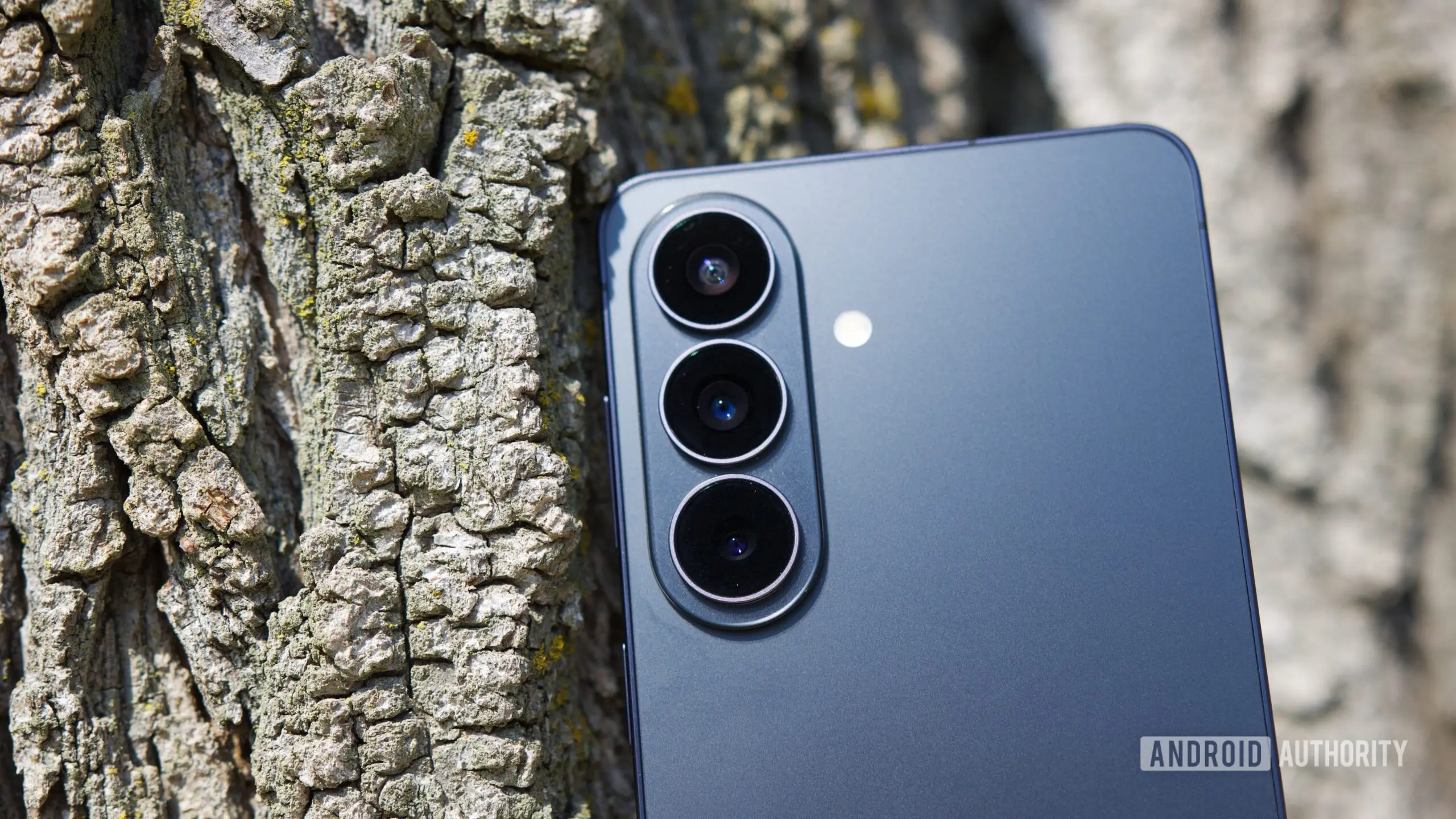
For years, Samsung’s flagship Galaxy S phones have been defined by their camera prowess in the Ultra tier, while the standard and Plus models often received less impressive telephoto hardware. That pattern may finally be breaking with the Galaxy S27 series. A new leak suggests that the base Galaxy S27 and the Galaxy S27 Plus could adopt the same 3x telephoto system that is expected to appear on the Galaxy S27 Pro, giving users of the regular models a more meaningful zoom experience.
Tipster @phonefuturist recently claimed on X (formerly Twitter) that Samsung is currently testing the Galaxy S27 and S27 Plus with a 3x telephoto setup that matches the one planned for the Pro model. While the leak does not confirm the exact sensor specifications, it aligns with an earlier report from South Korean media that indicated the Galaxy S27 Pro would feature a 12-megapixel 3x telephoto camera. If the new information is accurate, the S27 and S27 Plus could also receive that same 12MP sensor, marking the first significant telephoto upgrade for the smaller Galaxy S flagships in several generations.
A long-awaited change for the standard Galaxy S experience
Since the Galaxy S21 era, the standard model and the Plus variant have used a similar telephoto approach. Earlier devices, such as the Galaxy S20 and S20 Plus, made use of a 64-megapixel telephoto sensor that relied on cropping to achieve a 3x hybrid zoom. The Galaxy S21 and S21 Plus adopted a similar 64MP solution, but the quality was often criticized because the sensor was paired with a relatively small aperture and a limited field of view. Starting with the Galaxy S22, Samsung shifted to a more traditional 10MP telephoto sensor with true 3x optical zoom, and that same hardware was carried forward to the Galaxy S23, S24, and S25. While the 10MP 3x telephoto was serviceable, it remained largely static across those generations, offering little improvement in detail or low-light performance.
That is why the prospect of a 12MP 3x telephoto camera, even if the resolution increase seems modest, is noteworthy. A newer sensor with larger pixels or better software processing could deliver sharper images, improved dynamic range, and stronger low-light zoom shots. Additionally, Samsung has been experimenting with different camera configurations across its portfolio, and the company’s decision to potentially unify the telephoto system across the S27, S27 Plus, and S27 Pro suggests a desire to streamline production while raising the baseline quality of the non-Ultra flagships.
What we know about the Galaxy S27 Pro
The Galaxy S27 Pro is a relatively new addition to Samsung’s rumored lineup. Historically, Samsung has offered a standard model, a Plus model, and an Ultra model, with significant gaps in camera hardware between the tiers. The Pro is expected to sit between the Plus and the Ultra, providing a middle ground for users who want enhanced camera performance without stepping all the way up to the Ultra’s larger size or higher price. Earlier leaks have suggested that the Pro will share certain camera components with the Ultra, including the main sensor and an ultrawide shooter. Some reports have also claimed that the Pro could carry a large battery, significantly exceeding the capacities found in recent Plus models.
If the Pro does share its 3x telephoto system with the S27 and S27 Plus, then Samsung is clearly aiming to create a more consistent camera experience across the middle of the series. The Pro, however, might still distinguish itself through additional features such as a higher refresh rate display, faster charging, or materials differences. Exactly how Samsung differentiates the Pro from the Plus remains unclear, but the telephoto leak gives us one piece of the puzzle.
The ambiguous wording in the leak
The latest leak also contains some ambiguous phrasing. According to the tipster’s post, the S27 and S27 Plus would share their main and ultrawide camera hardware with the Ultra. However, an alternative interpretation is that the tipster meant the S27 Pro would share those components with the Ultra, not the standard models. A technology outlet that spotted the post highlighted this ambiguity. Given that previous reporting has suggested the Pro model will be the one borrowing the Ultra’s main and ultrawide cameras, that seems like the more plausible reading. But with leaks, there is always room for misinterpretation, especially when a tipster uses shorthand or omits context.
If the standard S27 and S27 Plus were to receive the same main sensor as the Ultra, that would be a major shift, as the Ultra typically uses a larger, higher-resolution sensor. However, such a move would also increase costs and could cannibalize sales of the Ultra and Pro models. For that reason, it is more likely that Samsung will keep the Ultra’s main and ultrawide cameras exclusive to the Ultra and perhaps the Pro, while the standard models receive a slightly lower-tier sensor. The telephoto camera is a separate matter, and the idea of spreading a 3x telephoto system across multiple models is easier to accept from both a cost and marketing perspective.
Galaxy S27 Ultra: A possible 50MP 4x telephoto
While the S27, S27 Plus, and S27 Pro may share a 3x telephoto system, the Ultra is reportedly heading in a different direction. The same leak claims that Samsung is testing a 50-megapixel, 1/1.9-inch 4x telephoto camera for the Galaxy S27 Ultra. That would represent a significant departure from the current 5x periscope telephoto found on the Galaxy S25 Ultra. A 4x lens combined with the 50MP sensor could allow for high-quality cropping, potentially enabling digital zoom of up to 8x or 10x while retaining acceptable detail. The larger sensor footprint compared to the existing periscope modules would also improve low-light performance, as it can capture more light and offer better pixel binning.
However, the leak does not guarantee that Samsung will adopt the new configuration. The tipster notes that the company is reportedly evaluating as many as five Galaxy S27 Ultra prototypes, meaning that Samsung is still exploring different camera setups, display options, and battery configurations. The 50MP 4x telephoto might not make the final cut if Samsung determines that the cost is too high or if the 5x optical zoom continues to be more popular with consumers. The current 5x periscope telephoto on the Galaxy S25 Ultra is already well regarded, and replacing it would require a convincing improvement in image quality.
Samsung’s camera strategy: quantity vs. quality
Samsung has been in a transition period with its smartphone camera hardware. In recent years, the company has moved away from the extremely high megapixel counts seen on some Chinese rivals, instead focusing on improved sensor sizes, faster autofocus, and computational photography. The Galaxy S25 Ultra, for example, uses a 200MP main sensor with 2x optical-quality cropping, a 50MP 5x periscope telephoto, and a 50MP ultrawide. That camera array has been praised for its versatility, though some critics have noted that the ultrawide and telephoto cameras could benefit from even larger sensors.
For the Galaxy S27 series, Samsung appears to be considering a number of changes. Besides the telephoto upgrades, there have been rumors that the standard Galaxy S27 could switch its main camera from a Samsung-built sensor to a Sony sensor, which could bring improvements in color science, dynamic range, and low-light behavior. A switch of that nature would be significant, as Samsung has used its own ISOCELL sensors for many recent flagships. The company may be looking to Sony’s stacked CMOS technology to gain an edge in a highly competitive market.
Why a 3x telephoto matters more than you might think
In the smartphone world, the telephoto lens is one of the most frequently used and appreciated camera features. A true 2x or 3x optical zoom allows users to get closer to their subjects without sacrificing image quality. The standard Galaxy S series has historically included a telephoto camera, but the quality has not always been up to the standard of the Ultra. By upgrading to a 12MP sensor, Samsung is not simply increasing the resolution by 2 megapixels; it is likely adopting a more advanced sensor with better light-gathering capabilities and potentially a faster aperture. This could result in noticeably sharper photos when taking portrait shots, capturing distant landscapes, or photographing events from a distance.
Moreover, the consistency across the S27, S27 Plus, and S27 Pro means that users who choose a smaller phone will no longer have to feel they are making a major sacrifice in zoom quality. The difference between the standard and Ultra models would still exist, with the Ultra offering a longer-range 4x or 5x zoom, but the gap between the tiers would narrow. That might encourage more users to buy the base model, which could help Samsung maintain its premium smartphone sales volume in a market increasingly dominated by high-end Android devices from Chinese brands.
The role of the Pro model in Samsung’s lineup
The introduction of a Galaxy S27 Pro has been anticipated for several months. The move would give Samsung a fourth flagship model to compete with the likes of the iPhone 17 Pro and Pro Max, as well as other Android rivals. The Pro model could fill a niche for users who want a larger display than the standard model but do not need the enormous camera capabilities or the S Pen support of the Ultra. By equipping the Pro with a 3x telephoto system that is also found on the standard models, Samsung may be able to keep the Pro’s price in check while still offering a compelling overall package.
It is also possible that the Pro model will feature a different main camera than the Ultra but still use the same telephoto hardware as the standard models. That would mean the Pro offers an improvement over the Plus mainly in terms of the main sensor, battery capacity, or display quality. Until Samsung officially announces the lineup, there is much we do not know. But the existence of multiple leaks suggests that the company is actively finalizing its camera decisions, and the next few months should bring more clarity.
What about the Galaxy S27 Edge?
Another piece of the rumor puzzle is the Galaxy S27 Edge, which has appeared in earlier speculation. Samsung has not released an Edge-branded flagship since the Galaxy S7 Edge, aside from a limited edition, so the reintroduction of the name would be a marketing decision aimed at offering a slimmer or more distinctive variant. In an online poll cited in the report, 8% of readers said they wanted to see a Galaxy S27 Edge with a decent battery. That suggests there is some interest in a new Edge model, though it may not be a priority for Samsung. The Edge could be positioned as a design-focused phone with a curved screen or a flat display with extremely thin bezels, but it is unlikely to receive a different camera system than the standard S27.
Potential risks and setbacks
As with all leaks, there is no guarantee that this information will translate into the final product. Samsung has a history of testing multiple configurations and then canceling some of them at the last minute. The five Ultra prototypes mentioned in the leak, for instance, could lead to a completely different camera arrangement than what is being reported now. Additionally, the 50MP 4x telephoto for the Ultra might be shelved in favor of the existing 5x design, particularly if the company finds that users prefer longer focal lengths for wildlife or sports photography.
There is also the question of component costs. Upgrading the telephoto lens on three different models, along with a new main sensor for the standard S27, could increase the bill of materials. Samsung may choose to offset those costs by raising prices, which would be a risky move in the current economic climate. Alternatively, the company could keep prices roughly the same and accept lower profit margins, or it could make cuts in other areas, such as battery capacity or charging speed, to balance the budget.
Battery life is a particularly sensitive topic for Samsung. The poll mentioned earlier shows that 58% of respondents want a Galaxy S27 Ultra with a 5,500mAh or larger battery, while 23% want a standard S27 that does not sacrifice battery capacity. Those results indicate that consumers are paying close attention to endurance, and they may not be willing to accept a smaller battery in exchange for camera upgrades. Samsung will have to be careful to strike the right balance between improved hardware and sustained battery life.
Further comparisons with the competition
A move to a 12MP 3x telephoto on the standard Galaxy S27 would bring it roughly in line with the iPhone 17 and iPhone 17 Plus, which are expected to feature a 12MP 2x or 3x telephoto in the next generation. Some Android competitors, such as the Google Pixel 9 Pro, offer a 5x periscope telephoto even on their smaller premium models. That has put pressure on Samsung to close the telephoto gap. While the S27’s 3x zoom would not match the Pixel’s 5x, it would represent a meaningful improvement over the 10MP 3x sensor used in the S25 series. Samsung’s computational photography algorithms have improved in recent years, so a modest hardware upgrade combined with better image processing could make a noticeable difference in real-world performance.
Another area to watch is video zoom. Many smartphone cameras offer smooth zoom transitions when recording video, but the quality of those transitions depends heavily on the hardware. A better telephoto sensor with autofocus support would also help Samsung compete with Apple’s pipeline for video capture. If the new sensor is faster and more sensitive, the S27 series could deliver smoother 4K zoom recordings with less color shift or noise smoothing.
The bigger picture: Samsung’s 2026 strategy
By 2026, Samsung is likely to face a more crowded flagship market. Apple has been increasing the base storage and camera quality of its standard iPhones, while Chinese brands like Xiaomi, Oppo, and Vivo continue to push camera innovations, such as underwater photography and AI-enhanced zoom. Samsung has responded by introducing a Pro model and by exploring new sensors and lens configurations. The Galaxy S27 series is expected to launch in early 2026, and it will be a critical release for the company to demonstrate that it can still lead in mobile photography.
Beyond the cameras, Samsung is also expected to make upgrades to the display, processor, and battery technology. The company has been working on more efficient OLED panels, and it may launch the S27 series with a new generation of LTPO display that offers better power efficiency. The processor, presumably the Snapdragon 8 Gen 5 or a custom Exynos chip, will also play a role in the camera’s performance, especially for AI-based image processing and real-time previews.
All of these factors together mean that the Galaxy S27 lineup will be a blend of new hardware and refined software. The telephoto camera leak is just one piece of a much larger puzzle, but it signals that Samsung is listening to feedback from users who have long wanted a more capable zoom lens on the standard models. Whether that leads to a 12MP 3x sensor across the S27, S27 Plus, and S27 Pro, or something else, we should expect a more substantial camera jump than in past generations.
The rumor mill will continue to churn as Samsung evaluates its prototypes and makes final decisions. Until then, consumers are left with several enticing possibilities: a standard S27 that finally brings a meaningful zoom upgrade, a
Source: Android Authority News