

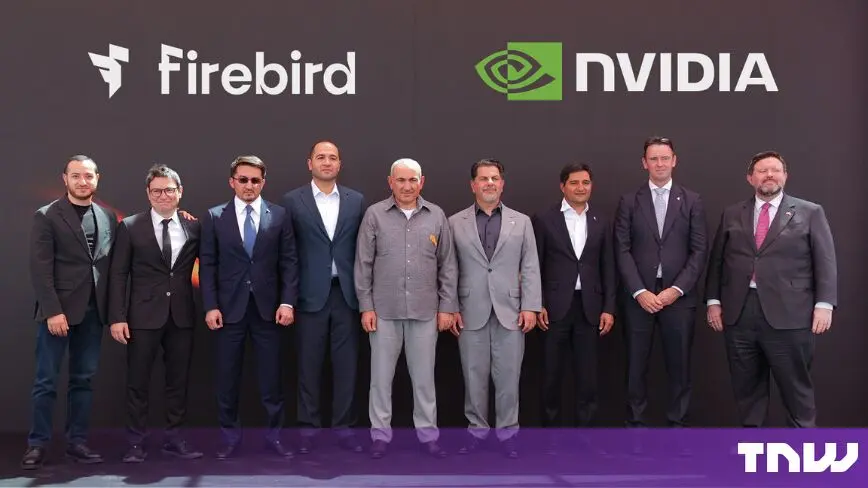
Firebird, a US-based AI cloud company, opened what NVIDIA calls the CIS region’s largest AI factory in Hrazdan, Armenia on Saturday. Armenian Prime Minister Nikol Pashinyan attended, alongside Kazakhstan’s deputy prime minister Zhaslan Madiyev and David Allen, the US chargé d’affaires in Armenia.
That guest list is the story. A US company opened a facility in a country inside Russia’s traditional sphere of influence, with an American diplomat and a Kazakh minister watching.
The licence is the load-bearing fact
None of this happens without export approval. Firebird secured a US export licence in November 2025, the regulatory step that allowed advanced NVIDIA hardware into Armenia at all. The US Department of Commerce controls the export of high-performance GPUs under national security rules, and Armenia had not previously been a destination for cutting-edge AI chips at this scale. The licence represented a deliberate policy decision, not a routine transaction.
The politics were made explicit in February. Firebird and the US government jointly announced Phase 2 at a Yerevan press conference during Vice President JD Vance’s visit, scaling the project to $4 billion and roughly 50,000 GPUs with licensing for a further 41,000 NVIDIA GB300 units. Phase One was $500 million. The announcement claimed Armenia would host one of the world’s five largest AI GPU clusters.
Export licences for advanced AI hardware have become a central tool in US technology policy. The Biden administration established a framework requiring licences for exports to many countries, then the Trump administration expanded and adjusted it. Armenia’s inclusion in this framework is notable because the country has deep historical, economic, and security ties to Russia. The decision to allow Firebird to ship tens of thousands of top-tier NVIDIA GPUs to Armenian soil suggests Washington sees the region as a legitimate arena for AI infrastructure development, independent of Moscow’s influence.
What is actually running
The opened flagship, DC-1, is specified at 6,144 NVIDIA B200 GPUs across 15 megawatts, liquid-cooled and built on NVIDIA’s reference architecture. B200 GPUs are part of NVIDIa's Blackwell generation, designed for massive-scale AI training and inference. The B200 is not merely an incremental upgrade over earlier chips; it delivers a substantial jump in floating-point performance and memory bandwidth, making it suitable for frontier models that require training runs spanning weeks. A single rack of B200 GPUs can consume more power than a small neighbourhood, which is why the facility’s cooling and power systems are as important as the compute itself.
The target is more than 70,000 Rubin and Blackwell GPUs and 300 megawatts by the end of 2027. That is a twentyfold increase in power capacity in roughly 17 months. A planned DC-2 is listed at 75,000 VR200 GPUs across 125 megawatts, with a third site at similar scale. The pace of construction is extraordinary: NVIDIA says the site went from plan to operating capacity in just over six months, with Schneider Electric supplying switchgear, three-phase UPS systems and rack enclosures, and Vertiv providing chilled-water cooling. For comparison, typical data centre builds in the United States can take two to three years from groundbreaking to full operation. Firebird compressed that timeline by using NVIDIA's reference architecture and pre-integrated components, avoiding the custom engineering that often slows hyperscale projects.
The hardware list reflects the rapid evolution of NVIDIA’s product line. The B200 is currently the workhorse for AI clouds worldwide. The GB300, mentioned in Phase 2, is a GB200 successor that integrates two Blackwell Ultra dies with a Grace CPU, offering improved memory capacity and faster interconnect speeds. The VR200, expected in later phases, is part of the Rubin family, NVIDIA’s next architecture after Blackwell. Rubin GPUs are expected to be manufactured on more advanced process nodes and may feature high-bandwidth memory such as HBM4. Firebird's commitment to adopting each generation as it becomes available is a sign of both financial confidence and technical ambition.
The power trick
The facility runs on NVIDIA’s DSX platform, which codesigns compute, networking, power and cooling as a single system rather than separate procurements. DSX, short for Data Center Supercomputing, is NVIDIA’s attempt to sell a whole data centre as a product. Traditionally, a data centre operator buys servers, network switches, power distribution units, and cooling systems from different vendors and then integrates them on site. That process is slow and often results in stranded power: the rack can draw less electricity than the building’s infrastructure can supply because of mismatched ratings and safety margins. NVIDIA claims that its platform integration allows up to 40% more GPUs on the same footprint by recovering stranded power.
For a site scaling from 15 to 300 megawatts, that coordination is where the capacity maths gets made. It is also, in NVIDIA’s own framing, a tokens-per-dollar argument rather than a performance one. AI companies do not buy GPUs for peak theoretical performance. They buy them for the number of tokens that can be generated or trained on per unit of electricity and per dollar of capital expenditure. A data centre with 15 megawatts of power and 6,144 GPUs might seem less impressive than a 50-megawatt facility, but if the GPUs are utilised at a higher rate and the power is used more efficiently, it can deliver better economics. This is especially true in Armenia, where electricity prices are lower than in many Western European countries and where the mountainous climate helps with cooling for part of the year.
The power situation in Armenia deserves closer attention. Armenia operates an aging nuclear power plant at Metsamor and has limited domestic natural gas resources. Most electricity is generated from natural gas imported from Russia, with some contribution from hydroelectric and increasingly solar power. The government has been working to diversify its energy mix, and the arrival of AI factories could accelerate that process. A 300-megawatt load is equivalent to roughly 15% of Armenia's total annual electricity generation, so the country will need to add significant new capacity if the full roadmap is realised. That could come from new gas pipelines, renewable projects, or even the construction of a new nuclear plant. The AI industry's insatiable demand for power is already reshaping energy markets in the US and Europe, and Armenia is now part of that story.
Who is paying for it
Firebird said NVIDIA intends to invest in the company, following an earlier CoreWeave investment this year. The pattern is familiar: NVIDIA takes a position in a company that then buys NVIDIA hardware at scale. This is not an act of altruism; it is a financial mechanism that aligns NVIDIA's interests with those of its largest customers. By investing in Firebird, NVIDIA gains a financial stake in the success of a data centre that will predominantly run NVIDIA chips. If Firebird grows and attracts more clients, NVIDIA profits both from hardware sales and equity appreciation. This strategy has been used by NVIDIA with several companies, including CoreWeave, which became one of the largest AI cloud providers in the US, and more recently with IREN, an Australian data centre company.
NVIDIA has now committed more than $40 billion to AI equity positions in 2026, and the structures have grown more creative. It took a $2.1 billion warrant in IREN as part of a five-gigawatt data centre deal. Warrants allow NVIDIA to buy shares at a fixed price in the future, giving it upside without immediate ownership. The same logic runs through its sovereign deals. NVIDIA invested $1 billion in Naver while striking a $500 billion arrangement with SK Group, an approach critics have labelled circular financing. The concern is that NVIDIA's investments encourage companies to buy more NVIDIA hardware than they would otherwise need, inflating demand and possibly creating a bubble. Proponents argue that the investments provide crucial capital for building infrastructure that would otherwise face a financing gap.
Firebird's financial backing extends beyond NVIDIA. CoreWeave, which is itself backed by NVIDIA and other investors, has taken a stake in Firebird. CoreWeave is one of the most prominent players in the neocloud market, and its endorsement carries weight. The company has signed a multibillion-dollar deal with OpenAI, making it a critical supplier of compute for the world's leading AI lab. Having CoreWeave as an early backer gives Firebird access to expertise in data centre operations, GPU cluster management, and client relationships. This is not a romantic story of an Armenian tech company growing organically; it is a carefully constructed financial web linking American capital, Taiwanese chip manufacturing, and South Korean memory production, with Armenia as the physical site.
The neocloud playbook
Firebird fits a category that barely existed three years ago: companies that buy GPUs at scale and rent them to model builders. These are often called neoclouds or GPU-as-a-service providers. Unlike traditional cloud providers such as AWS, Google Cloud, and Microsoft Azure, neoclouds do not offer a full suite of software services. They provide raw compute, often with high- speed networking and storage, and let customers handle their own software stacks. This model allows neoclouds to move faster and offer lower prices, because they are not maintaining hundreds of separate services. CoreWeave, an early Firebird backer, has signed a multi-year deal with Anthropic to run Claude at production scale. That deal is reportedly worth billions of dollars and secures CoreWeave as a dominant supplier of compute for safe-AI research.
Europe has its own version. Nscale committed €695 million to Portugal with Microsoft, reaching a $14.6 billion valuation in two years, on much the same thesis about sovereign capacity. The neocloud model is particularly attractive in countries that want to host AI infrastructure but lack the technical expertise to build hyperscale data centres themselves. By partnering with American or European companies, these countries can attract foreign investment, create jobs, and gain access to cutting-edge technology without having to develop their own chip design or data centre engineering capabilities.
Firebird’s first named customer is Perplexity, which is using the site for its answer engine and AI agent platform. Perplexity is a well-funded AI search startup that competes with Google and OpenAI. It has relied on a mix of its own models and third-party models, and it needs cost-effective compute for inference. Running workloads in Armenia may offer lower electricity costs and good connectivity to Europe and the Middle East. However, one named customer is a light load. Perplexity's traffic, while significant, does not require 6,144 B200 GPUs unless the company is doing substantial model training and fine-tuning. It is likely that Firebird has other customers that have not yet been announced, but the public record shows only Perplexity.
Where this goes next
Firebird is pursuing an approximately two-gigawatt roadmap spanning Armenia, Kazakhstan and further markets, which explains why a Kazakh deputy prime minister was at an Armenian ribbon-cutting. Kazakhstan has vast natural resources, including gas and coal, and a less developed tech sector than its neighbour Armenia. The Kazakh government has expressed interest in building digital infrastructure as part of its free-market reforms, but it also has close ties to Russia and China. The presence of a Kazakh official at the opening of an American-backed AI factory in Armenia suggests that Kazakhstan is exploring similar deals with the US, potentially as a way to diversify its international partnerships. Two gigawatts is an enormous amount of power. It would be enough to power a city of 1.5 million homes, or to run roughly 1.5 million modern AI accelerators. If Firebird achieves even half of that, it would rank among the largest AI infrastructure providers in the world.
The strategic logic is straightforward. Compute is becoming the thing countries align around, and the United States has found a way to place it in a region where its influence has historically been thin. Throughout the twentieth century, Armenia was firmly within the Soviet sphere, and even after independence in 1991, Russia maintained a military base in the country and monopolised its energy imports. The US had limited leverage in Yerevan. AI data centres change that dynamic because they require a web of contracts, security guarantees, and technical standards that all favour the United States. Once Armenia hosts a 300-megawatt AI factory with advanced NVIDIA chips, its dependence on Russia for technological partnership diminishes. This is a peaceful but meaningful shift in regional alignment.
The open question is demand. Building 300 megawatts in the Caucasus assumes customers will route workloads there rather than to cheaper or closer capacity, and one answer engine does not settle that. The location actually has some advantages: Armenia is on the crossroads of Europe and Asia, with fiber connections to Georgia, Iran, and the Black Sea. Latency to major European hubs is comparable to that from northern Virginia, and the price per kilowatt-hour is lower. But there are risks: Armenia has a volatile neighbourhood, with unresolved conflicts with Azerbaijan over Nagorno-Karabakh and occasional tensions along its borders. A single geopolitical flare-up could disrupt operations or spook customers. Firebird and NVIDIA are betting that the economic incentives outweigh the risks. The success or failure of this project will send a signal to other companies considering similar deals in smaller countries that lie between great powers.