

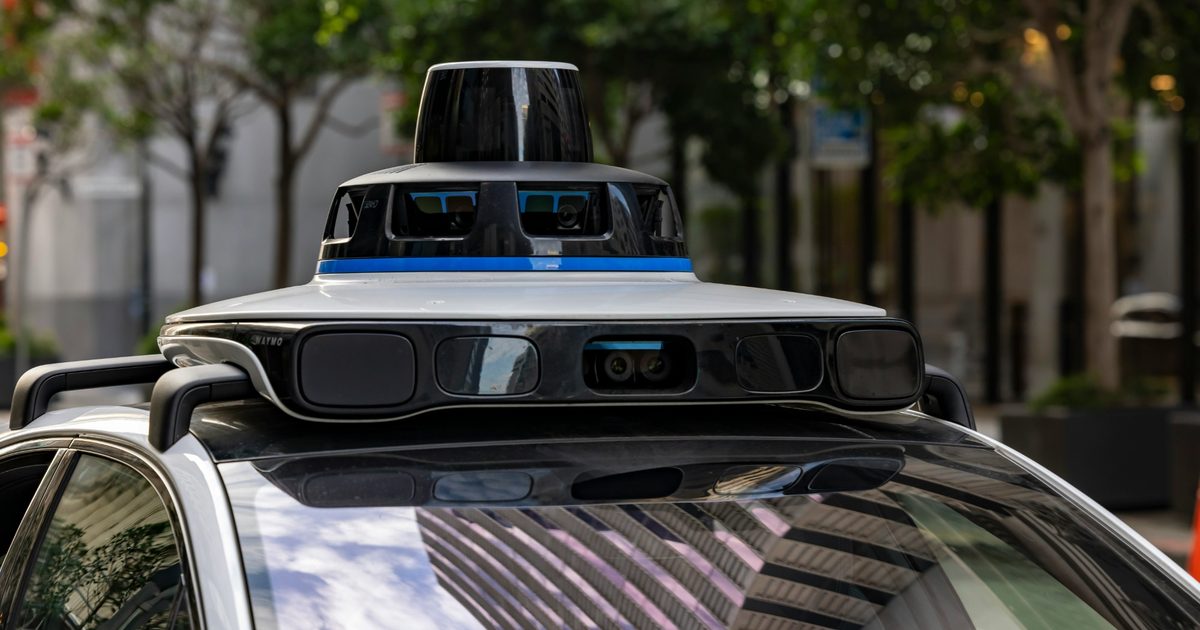
Self-driving cars have made remarkable progress in navigating roads under controlled conditions. They can merge onto highways, stop for traffic lights, and even handle complex intersections. Yet these systems still fall short in the moments that matter most: unexpected emergencies. A pedestrian dashes into the street. A car ahead slams on the brakes for no apparent reason. A large piece of debris falls from a truck. In these split-second situations, today's self-driving cars often behave unpredictably, sometimes freezing in place or making dangerous choices that delay first responders or put lives at risk.
A team at Seoul National University, led by Professor Jun Won Choi from the Department of Electrical and Computer Engineering, believes they have found a way to fill this critical gap. Their new AI model, called SafeDrive, reimagines how autonomous vehicles make decisions by forcing them to evaluate multiple safe options before acting. The research was recently selected as a highlight paper at CVPR 2026, one of the most prestigious conferences in computer vision and artificial intelligence. Only about 3% of all submissions earn this recognition, underscoring the significance of the work.
The limitations of current autonomous driving systems
Most end-to-end autonomous driving models today rely on imitation learning. They ingest terabytes of real-world driving data and attempt to mimic how human drivers react in similar situations. This approach works well in ordinary scenarios, but it has a fundamental flaw: the systems cannot explain why they chose a particular action over another. When a car swerves left instead of braking, an engineer inspecting the model has no way to verify whether that decision was the safest one. This lack of explainability becomes a liability when safety is at stake, and it has contributed to several high-profile accidents involving autonomous vehicles.
Another problem is that these models are trained on average human behavior, which is not always optimal or safe. Human drivers, after all, make mistakes, hesitate, or take unnecessary risks. By mimicking an amalgam of human responses, an AI can inherit those same bad habits. Moreover, the models typically output a single trajectory without considering alternatives or evaluating the risk of that path. This one-and-done approach leaves no room for deliberation.
How SafeDrive makes driving decisions safer
Professor Choi's team designed SafeDrive around a concept they call Fine-grained Safety Reasoning. Instead of picking a single driving path, the model generates several possible trajectories for the vehicle, each representing a different way to navigate the current scene. It then combines these trajectories with perceptual data from the car's sensors: cameras, lidar, radar, and ultrasonic sensors. For each option, SafeDrive computes a safety score that accounts for factors such as proximity to other objects, potential collisions, and the severity of impact. The vehicle then executes the path with the highest safety score.
This multi-path generation and scoring system directly addresses the twin weaknesses of existing models: safety and explainability. Safety improves because the car can consider a range of actions and pick the one with the least risk, rather than blindly following a single learned behavior. Explainability improves because engineers can examine the scores for each trajectory and understand why the car chose to brake, accelerate, or steer in a particular direction. If an accident occurs, the safety scoring provides a clear audit trail of the car's reasoning.
The approach also allows SafeDrive to handle scenarios that are rare or absent from training data. Since it does not rely solely on memorized reactions, the model can invent safe solutions on the fly by combining elements of different trajectories. For example, if a bicycle suddenly swerves into the car's path, SafeDrive might generate a trajectory that brakes hard while also planning a slight steer to the right, then compare that combination against other options to confirm it is the safest course of action.
Why this is a big deal for Korea
The selection of the SafeDrive paper as a CVPR highlight is a landmark achievement for South Korea. While the United States and China have dominated autonomous vehicle research and development, Korean contributions have often been overshadowed. This recognition signals that Korean institutions are no longer just following the pack; they are innovating at the cutting edge of AI safety.
SafeDrive is not staying confined to academic papers. It has already been integrated into EAD (End-to-End Autonomous Driving), a reference model supported by Korea's Ministry of Trade, Industry and Energy. Professor Choi's team is now collaborating with domestic autonomous driving companies to test the system in real vehicles on Korean roads. The goal is to validate the safety scoring in diverse environments, including congested urban centers, narrow alleyways, and unpredictable traffic patterns unique to the country.
Choi has stated that the team plans to refine the model using larger and more diverse datasets, and eventually push toward full commercialization. They are collecting their own driving data from a fleet of test vehicles equipped with the latest sensor suites. This data will be used to train SafeDrive on more edge cases, making it robust enough for production deployment. If successful, Korean automakers and tech firms could gain a competitive edge in the global race to deploy safe autonomous vehicles at scale.
Implications for the global self-driving industry
The autonomous driving industry has long struggled with the tension between performance and safety. Companies like Waymo and Cruise have invested billions in sensor-heavy fleets and geofenced operations, while Tesla has pursued a vision-only approach that has faced regulatory scrutiny. SafeDrive offers a middle ground that prioritizes safety without sacrificing real-time performance. By making reasoning transparent, it also aligns with emerging regulatory frameworks, such as the European Union's AI Act and proposed NHTSA guidelines in the United States, which require explainability for high-risk AI systems.
Critics may argue that evaluating multiple trajectories in real time demands significant computational resources. However, Professor Choi's team has optimized the model to run efficiently on the kind of embedded hardware already found in modern vehicles. The safety scoring uses lightweight neural networks that can be accelerated by dedicated AI chips, such as NVIDIA's Orin family, which is already used in many production autonomous vehicles. This makes SafeDrive a practical upgrade rather than a theoretical experiment.
The broader takeaway is that the next frontier in autonomous driving is not just about covering more miles or handling more complex roads. It is about building systems that can reason about safety in a human-like manner, and then explain that reasoning to regulators, insurers, and passengers. SafeDrive is a tangible step in that direction, and its recognition at CVPR suggests that the research community agrees.
As the team in Seoul continues to test and refine the model, the automotive world will be watching closely. If SafeDrive can prove its worth in real-world traffic, it could set a new standard for how self-driving cars think before they swerve, accelerate, or brake. And that might finally give the public the confidence to trust autonomous vehicles not just on a clear day, but in the chaos of a real emergency.
Source: Digital Trends News