

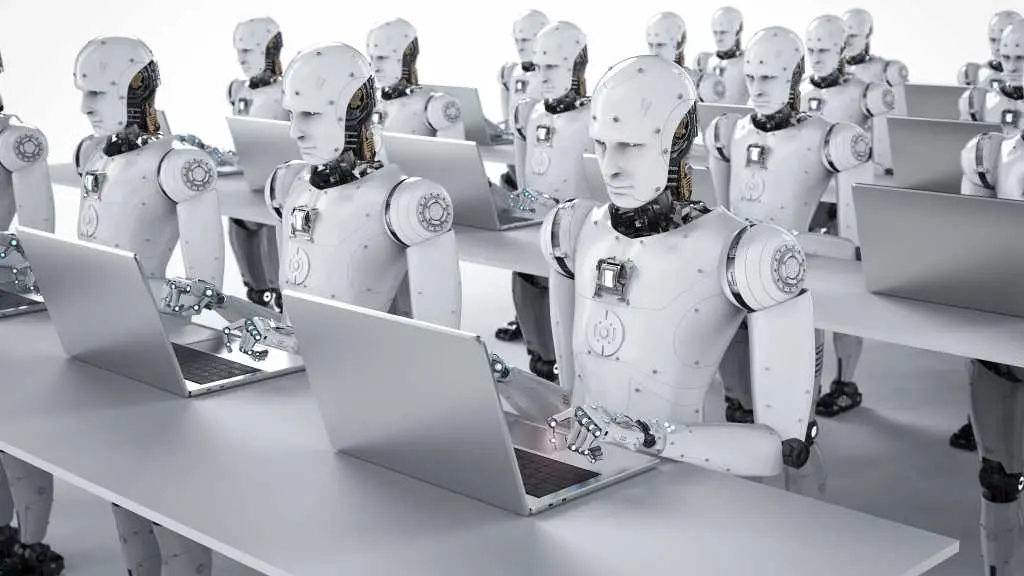
Open source has never been a sprawling community of equal contributors. Most critical software depends on a tiny core of maintainers—often unpaid individuals—doing essential work for millions of users. This arrangement worked when contributing required effort: you needed to understand the codebase, reproduce bugs, and risk public scrutiny. But AI agents are erasing that friction. Large language models and coding agents now generate plausible patches at scale, flooding repositories with what Flask creator Armin Ronacher calls “agent psychosis.” Maintainers like HashiCorp founder Mitchell Hashimoto are drowning in low-quality pull requests—so-called “slop PRs”—that take seconds to create but hours to review. Hashimoto has even considered closing external contributions entirely.
The cost of contribution
The economics behind this shift are brutal. A developer with an AI assistant can prompt a fix across dozens of files in under a minute. But the maintainer must verify changes, check for edge cases, align with project vision, and ensure no hidden bugs. That hour of review multiplied by hundreds of AI-assisted contributors creates an unsustainable burden. The OCaml community recently rejected a single AI-generated pull request containing over 13,000 lines, citing copyright concerns and a lack of resources to review it. GitHub itself is exploring tighter controls and even a kill switch for pull requests as maintainers report being overwhelmed. The barrier to producing a patch has collapsed, but the barrier to responsibly merging it remains high—and that asymmetry is breaking the open source model.
The fate of small libraries
Beyond the flood of PRs, AI is also reshaping what code is worth publishing. Small utility libraries—like Nolan Lawson’s blob-util, a JavaScript Blob helper with millions of downloads—once thrived because they saved developers time. Now developers simply ask Claude or GPT to generate a utility function in seconds. The incentive to maintain a dedicated library vanishes. Lawson argues that these libraries also served as educational tools: developers learned by reading others’ solutions. When those solutions become ephemeral AI snippets, the teaching mentality at the heart of open source is lost. As a result, the era of the small, low-value library is ending. Developers increasingly choose to build their own code rather than take on dependencies subject to constant churn.
Build it yourself
This aligns with Ronacher’s earlier provocation: use AI to help you, but keep code inside your own walls. He suggests a vibe shift toward fewer dependencies and more self-reliance. The irony is that AI may reduce demand for small libraries while simultaneously increasing the volume of low-quality contributions into the remaining ones. The result is a bifurcation of the open source ecosystem. On one side stand massive, enterprise-backed projects like Linux or Kubernetes—cathedrals guarded by sophisticated gates, with resources to filter noise. On the other side are individual or small-core projects—the proletariat—that simply stop accepting outside contributions. The “open” part of open source is being redefined.
The future of radical curation
AI was supposed to make open source more accessible, and it has—but at a cost. When everyone can contribute, no contribution is special. When code is a commodity produced by a machine, the scarce resource becomes human judgment: the ability to say no. The future of open source belongs to radical curation. The most successful projects will be those hardest to contribute to, demanding high human effort, context, and relationship. They will reject slop loops and agentic psychosis in favor of slow, deliberate, personal development. The bazaar of mass contribution was a fun idea, but it can’t survive the arrival of the robots. Open source is becoming smaller, quieter, and more exclusive. That might be the only way it survives. We don’t need more code; we need more care for the humans who shepherd these communities and create code that endures beyond a simple prompt.
Source: InfoWorld News