

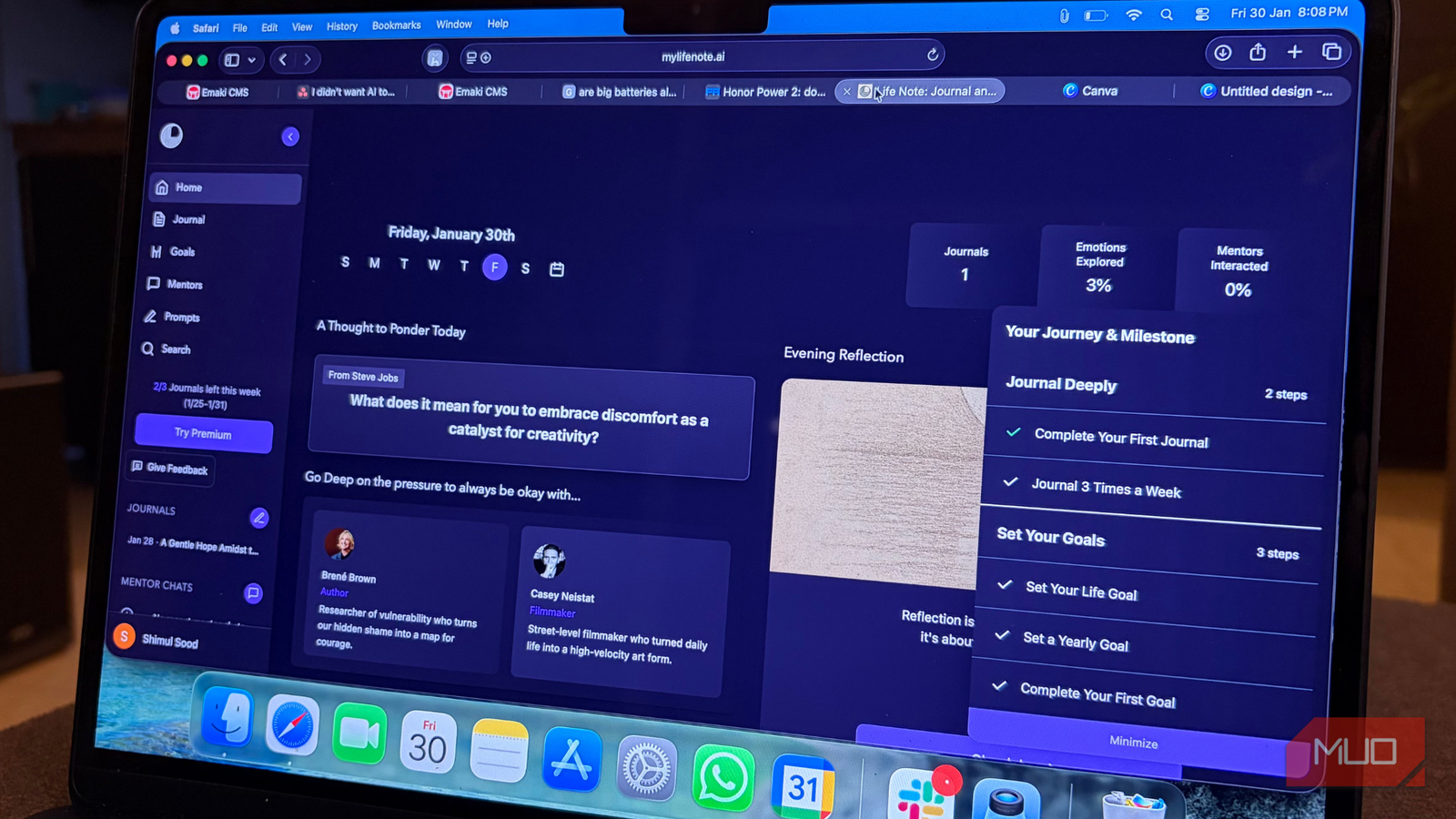
Journaling has been a cherished tradition for centuries, a way for people to capture their thoughts, emotions, and memories on paper. For many, the act of writing by hand is a meditative ritual that fosters self-reflection and clarity. The feel of a pen gliding over a page, the sound of ink drying, and the tactile satisfaction of filling a notebook create an irreplaceable experience. However, as technology continues to weave itself into the fabric of daily life, new tools have emerged that challenge these age-old practices. One such tool is Life Note, an AI-powered journaling app that promises to preserve the essence of traditional journaling while adding layers of insight and guidance. This article explores the transformative potential of AI in journaling, drawing on a firsthand account of using Life Note, expanded with background on journaling history, psychological benefits, and the evolution of digital self-reflection.
The Enduring Allure of Paper Journals
Journaling has a rich history dating back to ancient times. The Roman emperor Marcus Aurelius wrote his “Meditations” as a personal philosophical diary, and throughout the Renaissance, intellectuals like Leonardo da Vinci used journals to record observations and inventions. In the 20th century, the practice became democratized, with countless individuals using diaries to navigate emotional landscapes. Research in psychology has consistently shown that expressive writing can reduce stress, improve mood, and even strengthen immune function. The act of externalizing thoughts onto paper helps organize cognitive clutter, providing a sense of control and relief. Yet, despite these benefits, many people struggle to maintain a consistent journaling habit due to time constraints, writer’s block, or the lack of feedback. Traditional journaling remains a solitary activity; the writer pours out feelings but receives no immediate response or perspective. This is where AI-powered journaling apps like Life Note aim to bridge the gap.
What Is Life Note?
Life Note is a modern journaling application that integrates artificial intelligence to enhance the writing experience. Unlike simple note-taking apps, Life Note positions itself as a personal growth companion. The core of the app is a private, encrypted space where users can freely write about their day, thoughts, or feelings. After each entry, the AI analyzes the content and provides personalized reflections, drawing from a library of mentor figures—historical icons such as Steve Jobs, Marie Curie, or Maya Angelou. Users select a mentor whose perspective they resonate with, and the AI responds as if that mentor were offering advice. The app also uses AES-GCM encryption, ensuring that all entries remain confidential. Life Note is available on the web, as well as through iOS and Android apps, allowing users to switch between devices seamlessly.
Key Features and Functionality
To start using Life Note, users first select their preferred language and then choose a primary journaling goal from six options: Creativity, Mindfulness, Growth, Productivity, Relationships, or Health. This goal is not permanent and can be adjusted as priorities shift. The app then guides users through informational prompts about journaling techniques, setting the stage for a thoughtful practice. The writing interface is clean and minimal, reducing distractions. Before writing, users can pick a Wisdom Council (the AI mentor) such as Albert Einstein or Cleopatra. While composing an entry, optional features include adding a personal journal prompt or linking the entry to an existing goal. After finishing, clicking the Save button triggers the AI to analyze the text. The mentor then delivers a personalized message that highlights patterns, reframes thoughts, and offers gentle guidance. This immediate feedback is what distinguishes Life Note from traditional journaling and from many other digital diary apps.
A Personal Encounter with AI Reflection
The author, a long-time paper journal enthusiast with over twenty filled diaries, approached Life Note with skepticism. Typing thoughts felt impersonal, and the idea of an AI reading one’s innermost thoughts seemed intrusive. Yet, from the first entry, the experience proved surprising. On the web version, the large canvas felt almost as liberating as paper. Selecting Steve Jobs as the mentor seemed fitting given a passion for technology. After writing about a creative block and saving the entry, the AI responded with a message that not only summarized the feelings but offered a reframed perspective reminiscent of Jobs’ emphasis on innovation and perseverance. The author described feeling “shocked, surprised, and oddly comforted.” The entry did not just sit in a digital void—it sparked a conversation. The app’s ability to highlight recurring themes and emotional patterns added depth to the reflection, making journaling feel more exploratory and iterative.
How AI Enhances the Journaling Process
The integration of AI into journaling addresses several common pain points. For instance, when a writer feels stuck or uncertain, the mentor can suggest prompts or ask probing questions. This structured approach encourages deeper introspection. The AI also tracks emotional trends over time, alerting users to negative thought cycles and nudging them toward healthier habits. Unlike a human therapist or friend, the AI is always available, non-judgmental, and consistent in its feedback. Furthermore, the encryption ensures that privacy is maintained—users need not worry about their data being mined or shared. The premium version extends these capabilities with unlimited chat history, multiple perspectives from different mentors, weekly reflection letters, and priority support at a cost of $6.66 per month or $79.99 per year. However, the free version already provides substantial value for those primarily interested in unfiltered expression with occasional guidance.
The Role of Historical Mentors
Having a mentor like Steve Jobs or Frida Kahlo offer advice might seem gimmicky, but it serves a deeper purpose. These figures embody certain mindsets—Jobs’ creativity and resilience, Kahlo’s emotional honesty. By framing feedback through their perspective, the AI helps users step outside their own cognitive biases. For example, if a writer expresses frustration about a project, the AI channeling Jobs might say, “Innovation often begins with discomfort. Use this moment to simplify.” This anchoring to historical wisdom can make the advice feel more authoritative and inspiring. The mentor selection is not just cosmetic; it influences the tone and content of the AI’s responses, allowing for a customized reflective experience.
Expanding on Digital Journaling’s Evolution
The rise of smartphones and cloud computing transformed journaling from a private paper activity to a connected digital one. Early apps like Day One focused on clean design and multimedia integration. Later, apps like Journey added social features. However, most digital journals remained passive repositories—they stored entries but did not interact with them. Life Note belongs to a new wave of “smart” journals that leverage natural language processing and machine learning to offer active insights. This evolution is part of a broader trend in mental health technology, where AI is used to augment therapy, meditation, and self-care. While some purists argue that AI diminishes the authenticity of journaling, the experience described suggests otherwise. The AI does not write the journal; it merely responds to what the human has written, amplifying reflection rather than replacing it.
Practical Considerations and User Advice
For those considering Life Note, the first step is to decide on the platform. The web version offers a spacious writing area ideal for deep sessions, while the mobile app is more convenient for on-the-go entries. The author noted that writing on an iPhone felt less enjoyable than on a large screen but still functional. New users should experiment with different mentors and goals to find the best fit. It is also worth reading the introductory prompts, as they help calibrate the app to one’s intentions. Regular use can gradually improve self-awareness, as the AI highlights blind spots and reinforces positive behaviors. The app does not impose any minimum entry length, so even short notes can yield meaningful feedback. Over time, the pattern analysis can reveal growth or stagnation, making journaling a tool for personal accountability.
Why Privacy Matters
In an age of data breaches and surveillance, journaling apps must prioritize security. Life Note employs AES-GCM encryption, a robust standard used by governments and financial institutions. This means that entries are scrambled both during transmission (in transit) and while stored (at rest). Only the user possesses the decryption key. The company cannot read entries, which is crucial for maintaining trust. For journaling to be truly cathartic, the writer must feel safe to express anything without fear of exposure. This level of encryption aligns with the intimate nature of diary-keeping. Users should verify such claims by reviewing the app’s privacy policy and possibly using a password manager to secure their account.
Modern journaling does not have to abandon the soul of the practice. Life Note demonstrates that AI can serve as a mirror, reflecting back the emotions and patterns we sometimes miss.
Source: MakeUseOf News