

The AI Bubble: A Giant Bet on Imaginary Markets
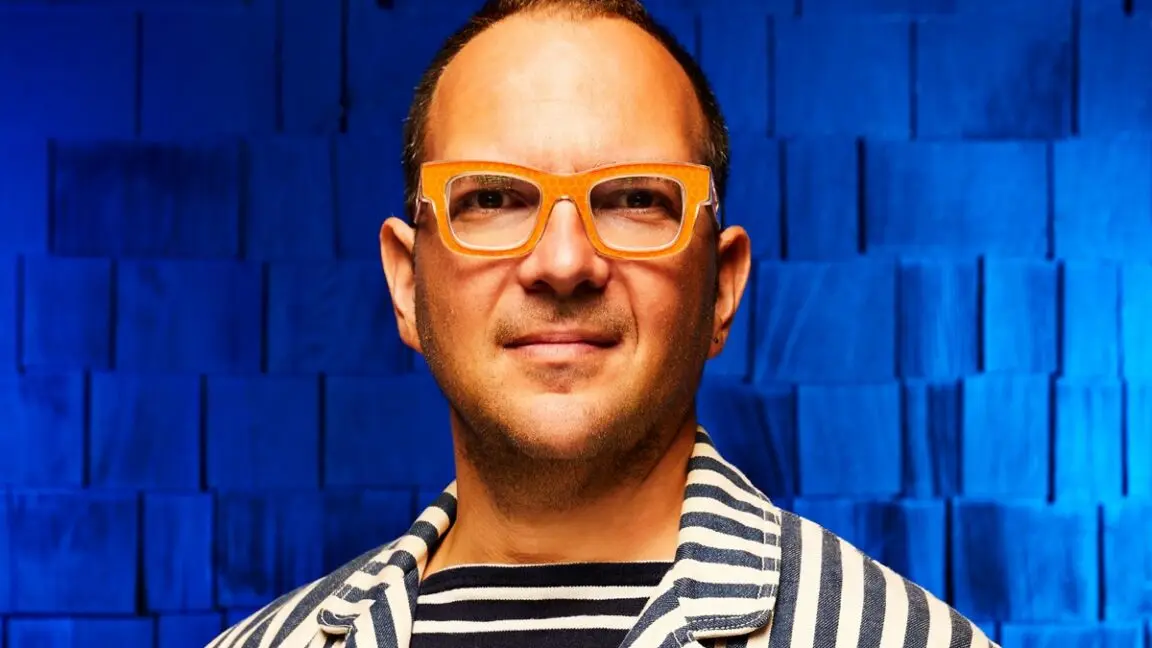
Tech journalist and science fiction author Cory Doctorow is back with a new book, The Reverse Centaur's Guide to Life After AI, which serves as a follow-up to last year's Enshittification: Why Everything Suddenly Got Worse and What To Do About It. In a recent interview, Doctorow dissected the AI industry's massive bubble, drawing parallels to other tech manias but insisting that this one is uniquely dangerous. He notes that global capital expenditure on AI has ballooned to $1.4 trillion, making it the most money-losing undertaking in human history. "AI is the money-losingest thing our species has ever done," he said. "We have never lost as much money as we've lost on AI."
Doctorow argues that the AI bubble is largely driven by the need for big tech firms to maintain the appearance of growth. Once companies like Meta or Amazon saturate their markets, they can no longer grow organically. To keep investors happy, they must invent imaginary markets—first the metaverse, then crypto, now AI. "The capital markets have the object permanence of a toddler," Doctorow quipped. This cycle of hype allows companies to issue overvalued stock and use it to acquire other businesses, but it also creates enormous financial fragility.
The Reverse Centaur Economy
Central to Doctorow's critique is the concept of the "reverse centaur." In automation theory, a centaur is a human augmented by technology—like a radiologist using AI to analyze scans. A reverse centaur, by contrast, is a person serving as a "squishy meat appendage for an uncaring machine." Examples include Amazon delivery drivers monitored by AI cameras, who become peripherals to the van rather than empowered workers. Doctorow warns that the AI industry's primary goal is to create more reverse centaurs, stripping workers of autonomy and dignity.
He distinguishes between positive augmentation—where skilled workers choose how to use AI tools—and the reverse centaur scenario, where workers are forced to produce more at the expense of quality and well-being. "The difference is between the words on the Greek temple, 'Know thyself,' and your boss shining 16 cameras in your face and going, 'I know you better than you do,'" Doctorow said.
Why AI Appeals to Powerful Elites
Doctorow suggests that AI's appeal to political and business leaders lies in a fantasy of a world without people. "Hell really is other people," he explained. "You can't get stuff done without other people helping you... And other people stubbornly refuse to organize everything they do to make you happy." For rich and powerful individuals, AI represents a way to bypass the messy complications of human labor and collaboration. This fantasy explains why initiatives like DOGE fired so many government workers—it played into the idea that government can function without employees.
In the corporate sphere, every leader secretly fears that if workers don't show up, everything shuts down—but if they don't show up, the business continues. AI allows them to wire a "toy steering wheel" directly into the drivetrain, giving them the illusion of control while eliminating the need to confront people who know how things actually work. "You just type some stuff to the chatbot, and it shits out your product," Doctorow said, summarizing the appeal.
Workers: Centaurs vs. Reverse Centaurs
One of the most striking observations in Doctorow's analysis is the difference between workers who embrace AI and those who resist it. Unlike earlier technological waves—where workers sometimes fought to bring new tools into the workplace—AI is often forced upon employees. "The business press today is full of people saying, 'What are we going to do about the fact that no one wants to use AI?'—along with ads for firms that will spy on your workers so you can punish those who refuse," he noted.
Workers who report positive experiences with AI are those who have control over how the technology assists them. They are centaurs, using AI to enhance their skills. Those who hate AI are reverse centaurs, forced to produce more at higher speed, with more blame and less reward. Doctorow points to the Hollywood screenwriters and actors as the only workers who successfully beat AI, thanks to their exemption from Taft-Hartley restrictions on sectoral bargaining. He argues that extending sectoral bargaining to all workers would be more effective than new copyright laws in protecting against AI-driven exploitation.
The Productive Residue After the Crash
Despite his harsh criticism, Doctorow is not anti-AI. He uses local models on his computer for tasks like transcribing audio and finding typos. He sees potential in the open-source models and applied statisticians that will remain after the bubble bursts. "When the AI bubble bursts, you're going to be able to buy GPUs for pennies on the dollar," he predicted. "You're going to have your pick of applied statisticians who have interesting ideas but are stuck building what their bosses want."
He contrasts this with the cryptocurrency bubble, which left behind only "shitty monkey JPEGs and worse Austrian economics." The dot-com bubble, though destructive, left useful infrastructure: cheap servers, a generation of skilled programmers, and a creative energy that gave rise to Web 2.0. Doctorow believes the AI bubble could similarly leave behind useful tools, especially if we focus on smaller, efficient models that run on local hardware rather than massive data centers.
He cites the example of DeepSeek, a spin-out of a Chinese hedge fund that received just $6 million to optimize open-source models. When they released their model, it was so efficient that it caused a $600 billion sell-off in the market—the largest single-day decapitalization in history. "If you've got cheap hardware and applied statisticians, you've got a better setup than arguing about whether the word-guessing program is going to become God," Doctorow said.
Practical AI That Makes a Difference
Doctorow emphasizes that AI does not have to be 100% accurate to be useful. He uses Whisper to transcribe and index audio from podcasts, making it searchable. He uses a local chatbot to catch typos in his daily blog posts, even accepting false positives because the process is quick. "It's fine. Sometimes it's good, sometimes it's not," he said.
More importantly, he highlights the work of his friend Patrick Ball at the Human Rights Data Analysis Group (HRDAG). Ball uses AI tools to analyze arrest reports and identify cases that share linguistic patterns with successful exonerations. This helps the Innocence Project of New Orleans prioritize cases, speeding up the release of wrongfully convicted individuals. "It's not like they're asking the chatbot to write a brief, but it's a hugely important function, and it is getting innocent people out of prison," Doctorow said.
This practical, human-centered use of AI—running on local computers, serving specific needs—is what Doctorow hopes will survive the inevitable crash. He advises against trying to prohibit web scraping or training data, arguing that such measures would only empower big media companies to strike exclusive deals with big tech. Instead, the focus should be on labor laws that give workers collective bargaining power and on building AI tools that augment rather than replace human judgment.
Source: Ars Technica News