

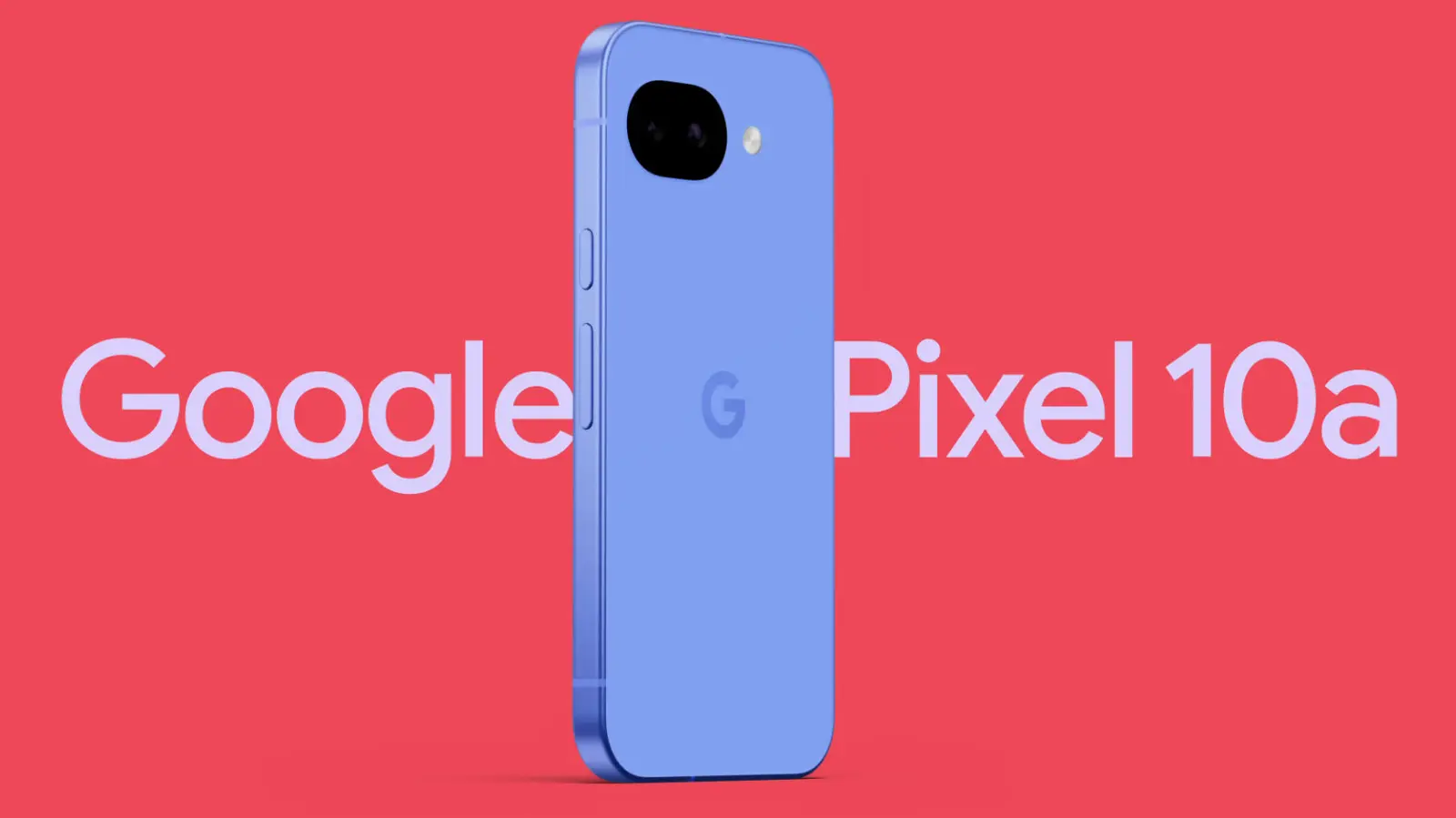
The launch of the Pixel 10 in 2025 marked a decade since the series first debuted, giving Google ample time to carve out its niche in the fiercely competitive smartphone industry. Pixel phones are often criticized for average performance and battery life, but they remain top recommendations for users seeking clean software and outstanding camera quality. Google's lineup is streamlined: a base Pixel model, Pro and Pro XL variants, a foldable, and the budget-friendly 'a' series, typically released six months later.
The Pixel 10a starts at $500 for the 128GB version, compared to $800 for the regular Pixel 10 and $1,000 for the Pixel 10 Pro. Achieving such a significant price gap requires compromises. The Pixel 10a uses the same aluminum frame as the flagship but swaps the glass back for a composite plastic panel. It also lacks the telephoto camera, losing the ability to capture distant subjects with optical zoom. Additionally, Google reduces costs by equipping the 'a' series with less powerful chips, slower wireless charging, and a slightly inferior display.
Google's Winning Formula for Budget-Oriented Phones
The Pixel 3a, introduced in 2019, was the first budget-friendly Pixel. It featured a lower-end processor and a standard refresh rate display, effectively stripping down the Pixel 3. Since then, Google has followed a consistent recipe: dialing back build materials, performance, and camera hardware to offer a substantially cheaper model. Over time, the 'a' series has closed the gap in several key areas, but Google keeps costs down by reusing older processors and reserving flagship features for premium models.
The Pixel 10a, for example, is powered by 2024's Tensor G4 chip, 8GB of RAM, 128GB of storage, a 120Hz pOLED display, a dual-camera setup, and a 5,100 mAh battery. The Pixel 9a, released in 2025, packs identical hardware. Iterative upgrades are common in smartphones, but Google takes component recycling further than most OEMs. While the Tensor G4 with 8GB RAM delivers solid day-to-day performance, the Pixel 10a lacks features like Magic Cue that require on-device AI. Pixelsnap, Google's answer to MagSafe, is also absent. The plastic back allows wireless charging but at slower speeds (up to 10W), and the ultrasonic fingerprint sensor is replaced by an optical sensor.
The Pixel 10a Plays It Very Safe
Launching the 'a' series six months after the flagship models gives Google a strategic advantage: it can repurpose existing components for a more affordable device. Despite being less powerful than the Pixel 10, the Pixel 10a uses the same primary and ultrawide camera sensors, dropping only the 5x telephoto lens. The Tensor G4 chip, while identical to that in the Pixel 9 and 9 Pro, has never been a performance leader. It suits a budget device, but it lags behind Qualcomm's and Apple's latest mid-range chips. For instance, the OnePlus Nord 6 (exclusive to Asia) uses the Snapdragon 8s Gen 4, achieving up to 50% higher AnTuTu scores than the Tensor G4, yet priced around $450.
Google remains one of the few mainstream brands offering a base storage of 128GB. Considering the Pixel's emphasis on camera quality, users may need cloud storage sooner than they would with an iPhone 17e. Despite these limitations, Pixel 10a users generally agree the phone has more positives than negatives. It even enjoys the same seven-year software update commitment as other Pixel models.
The component recycling strategy extends beyond the chipset. The display panel, battery, and even vibration motor in the Pixel 10a are often carried over from previous generations. This approach not only lowers manufacturing costs but also simplifies supply chain management. Google has perfected the art of repurposing parts: the Tensor G4 was originally designed for the Pixel 9 series, and by the time it reaches the Pixel 10a, yields are high and costs are low. This allows Google to offer a phone with near-flagship camera processing and software features at a mid-range price.
Another key factor is the reduced R&D expenditure for the 'a' series. Since the design language and core architecture are shared with the premium models, Google only needs to create a slightly modified chassis and software configuration. The plastic back, while less premium, is cheaper to produce and more durable than glass. It also allows for a larger battery without adding weight, as seen with the 5,100 mAh cell in the Pixel 10a. Similarly, the optical fingerprint sensor, though slower, costs a fraction of the ultrasonic sensor used in the Pixel 10 Pro.
Google's software optimization also plays a role. The Tensor G4, despite being surpassed by competitors in raw benchmarks, delivers smooth performance for daily tasks because of Google's tight integration with Android. Features like adaptive battery, call screening, and real-time transcription rely more on AI efficiency than brute force. By limiting AI-driven features on the 'a' series, Google saves on licensing and cloud computing costs. For instance, the Magic Cue feature, which requires a dedicated AI chip, is reserved for the Pro models.
The pricing strategy also benefits from Google's direct-to-consumer sales model. By selling through its online store and partnering with select carriers, Google avoids retailer markups. The 'a' series often sees discounts during major sales events, bringing the price closer to $400. This aggressive pricing has made the Pixel 10a a strong competitor against devices like the Samsung Galaxy A56 and the OnePlus Nord 6, despite the latter offering better raw performance.
In summary, the Pixel 'a' series thrives on deliberate compromises and smart resource allocation. Google prioritizes camera quality, software experience, and long-term updates while sacrificing premium materials, peak performance, and certain advanced features. This formula has proven successful, earning the 'a' series consistent praise as some of the best budget-friendly phones available.
Source: SlashGear News