

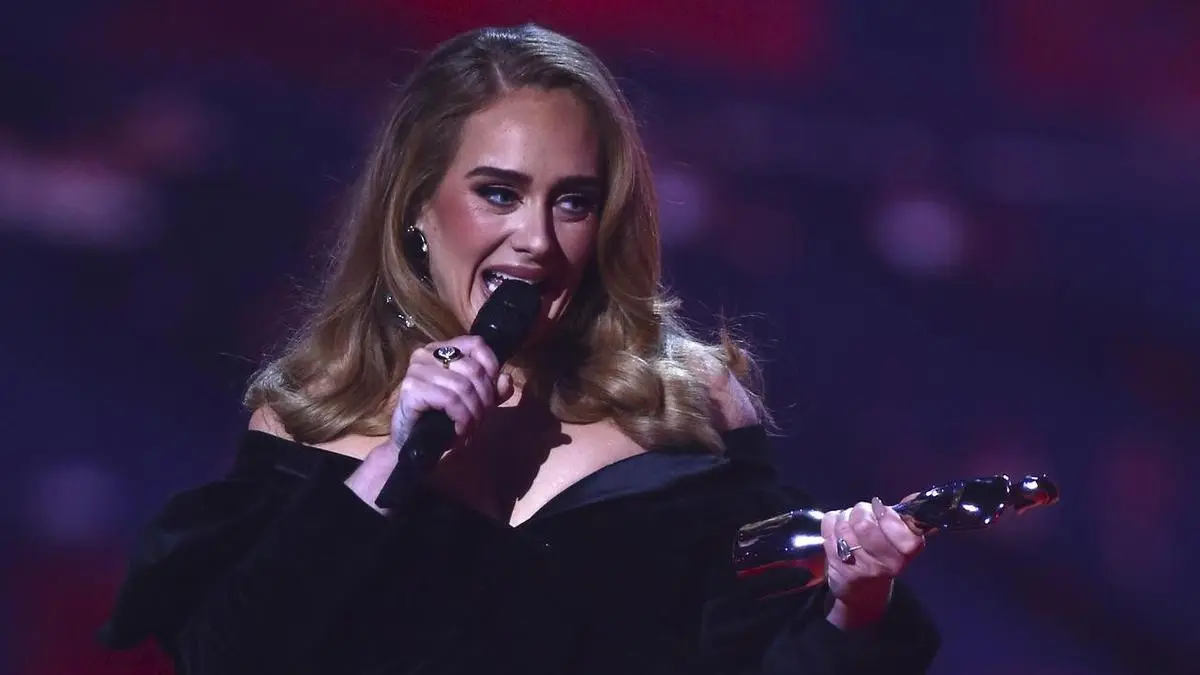
Adele has found herself at the centre of a social media storm after her acceptance speech at the 2022 Brit Awards was accused of being transphobic. The singer, who won the newly gender-neutral Artist of the Year award, used her moment to say: 'I understand why the name of this award has changed, but I really love being a woman and being a female artist. I'm really proud of us.'
The comments, made at London's O2 Arena on 8 February 2022, were met with applause from the audience. However, online, a number of Twitter users swiftly condemned her remarks as exclusionary towards transgender people. One user wrote: 'Please, no, Adele, don't be a TERF (trans-exclusionary radical feminist).' Another claimed she had 'lost respect' for the star and would boycott her music. Some of the criticism was later walked back as a joke, but the damage had already fuelled a wider conversation about gender identity and the meaning of female-centred statements in the age of inclusivity.
The Brit Awards had decided that year to remove gendered categories, merging Best Male and Best Female into single honours to promote inclusivity. Adele acknowledged this change in her speech but doubled down on her personal pride in womanhood. This stand has been interpreted by some as a subtle rejection of the trans community, because they argue that celebrating being a woman exclusively could erase non-binary or trans identities. Others, however, see it as an innocent expression of identity that should not be weaponised.
Piers Morgan, the controversial broadcaster and long-time Adele supporter, was quick to leap to her defence. On Twitter, he wrote: 'How dare Adele have the brass-neck audacity to ignore gender-neutral bulls and take pride in being female? She's clearly an evil TERF who must be cancelled immediately.' His sarcastic tone was aimed at mocking the critics, but it also added heat to an already polarised debate. Many other public figures and commentators weighed in.
Jane Symons, an author and journalist, called the backlash 'astonishing' and said: 'A decade ago, if someone had said a woman would be criticised for the thought-crime of saying she liked being a woman, I would have laughed.' Teacher Debbie Hayton, writing in The Spectator, argued that Adele's inspirational message had been twisted. 'Here was a woman — who has sold tens of millions of albums — telling the world she was proud to be a woman. That's something to celebrate, not condemn.'
To understand the cultural context, it is helpful to look at Adele's career. Born in Tottenham, London, in 1988, she rose to fame with her debut album 19 in 2008, driven by the break-up anthem 'Chasing Pavements'. Since then, she has become one of the best-selling music artists of all time, with album sales exceeding 120 million worldwide. Her Grammy and Brit Awards are numerous, and her ability to connect emotionally with fans has made her a household name. This is not the first time she has made statements about femininity and empowerment. In interviews, she has often discussed her pride in being a mother and a woman, but she has also shown support for LGBTQ+ rights in the past, including dedicating songs to same-sex couples.
The term TERF was popularised in the 2010s to describe feminists who advocate for sex-based rights and exclude trans women from women's spaces or categories. Accusations of transphobia have become increasingly common in public discourse, especially when high-profile individuals make statements about biological sex or womanhood. Critics argue that when a cisgender woman like Adele says 'I love being a woman', it can imply that only people assigned female at birth can be women, which invalidates trans women's identities. Supporters counter that she simply expressed her own joy in her own identity, not a political stance.
The online firestorm also included parody accounts and memes. One viral tweet read: 'Who'd have thought Adele was a transphobe and would use her platform to call for the destruction of the trans community? Especially the confused teenagers.' That tweet was later deleted after the user admitted it was a joke, but not before it had been shared widely. This episode highlights the difficulty of tone on platforms like Twitter, where sarcasm and genuine anger can be difficult to distinguish.
Several other celebrities have faced similar backlash in recent years. JK Rowling, for example, has been at the centre of a long-running controversy for her tweets about biological sex and trans rights. Other musicians, such as Bette Midler and Sinead O'Connor, have also been accused of transphobia for seemingly benign comments about womanhood. The pattern suggests that as society evolves to be more inclusive of all gender identities, the boundaries of permissible speech are being renegotiated, often painfully in real time.
Adele has not yet publicly responded to the backlash. She is known to be private and selective about addressing internet controversies; for instance, she did not directly reply to critics who accused her of cultural appropriation when she wore Jamaican-inspired hairstyles or when she changed her body shape after weight loss. It remains to be seen whether she will issue a statement clarifying her intent.
In the meantime, the Brit Awards have defended the decision to go gender-neutral, stating that the move was about 'celebrating artists solely for their music and work, rather than how they identify or how others may see them.' Many in the music industry have praised the change as a step forward for equality.
For Adele's millions of fans, the controversy is likely to be fleeting. Her sixth studio album 30, released in 2021, debuted at number one in multiple countries and includes the hit 'Easy On Me'. The singer's commercial power remains immense, and boycotts are rarely effective against artists of her stature. But the conversation she inadvertently sparked continues to resonate, raising questions about how celebrities can navigate the fine line between personal pride and social inclusivity.
Ultimately, the incident serves as a reminder that even the most beloved stars can become lightning rods in culture wars. Adele's simple statement about loving being a woman became a flashpoint, revealing deep divisions over language, identity, and the meaning of feminism in the 2020s. Whether one views her as a victim of cancell culture or as a necessary voice for sex-based realities, the episode shows that public discourse is as volatile as ever.
Source: 7NEWS News