

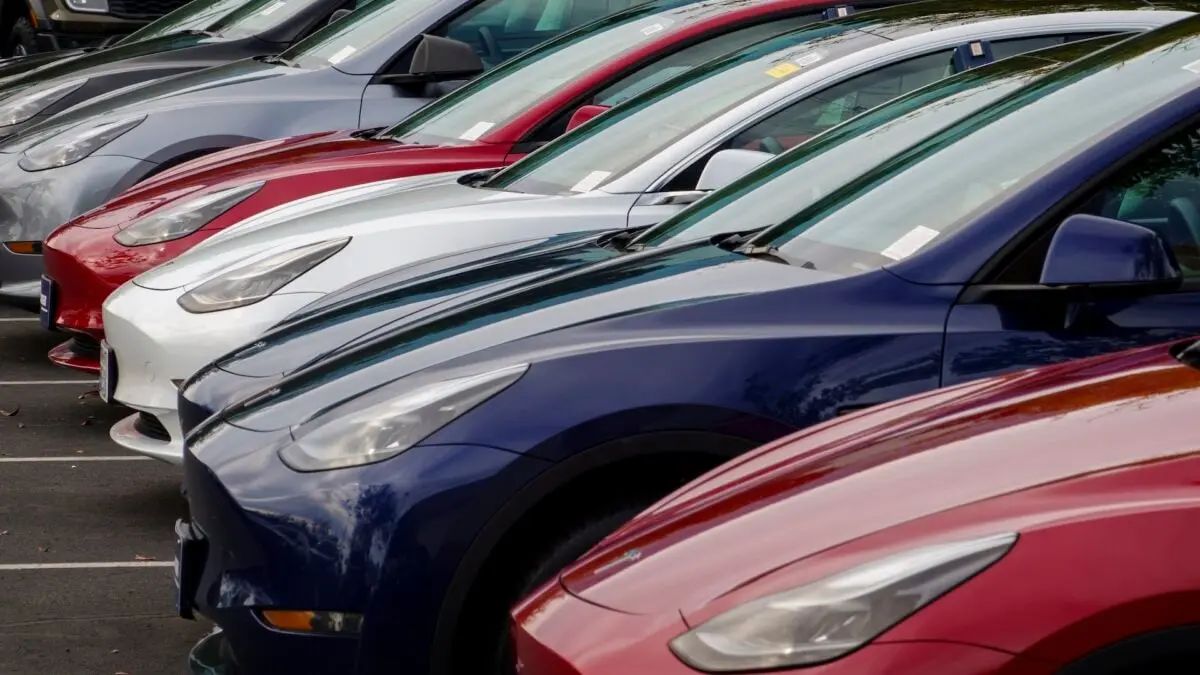
Tesla is making a strong comeback in Europe after a turbulent 2025, when the company's sales on the continent took a nosedive amid political controversies surrounding CEO Elon Musk. The electric vehicle maker announced plans to hire 1,000 new workers at its Gigafactory near Berlin as part of an aggressive push to increase production to 7,500 vehicles per week by October, according to Electrek. This follows a previous announcement just months earlier of another 1,000 new jobs at the plant and a target of 6,000 vehicles per week by the end of June.
The production ramp-up at Tesla's first European factory is a clear sign that the company believes demand will continue to grow. Electrek noted that if Tesla achieves its October target, the German facility would be on track to produce approximately 390,000 electric vehicles per year. That is still below the original 500,000-vehicle annual capacity goal set when the factory opened in 2022, but it represents a significant recovery from the slowdown seen last year.
The 2025 Slump: Political Backlash and Market Decline
In 2025, Tesla's European sales suffered as Musk's increasingly hardcore conservative politics, his direct involvement in the Department of Government Efficiency (DOGE), and personal ties to then-President Donald Trump alienated many European consumers. At that time, Trump was threatening to take over Greenland and implemented tariffs on the continent. Meanwhile, Musk actively promoted far-right and anti-immigrant movements in Europe, including Germany's Alternative for Germany (AfD) party. More recently, Musk was accused of inciting violence with posts related to anti-immigrant demonstrations in Belfast.
These actions created a consumer boycott sentiment across Europe, where many buyers chose to avoid Tesla as a form of political protest. The sales decline was steep, and analysts questioned whether Tesla could ever regain its foothold in a market that values sustainability and social responsibility. However, the latest data suggests that time, combined with economic factors, has healed the wounds.
The Rebound: Economic Drivers and Consumer Behavior
Tesla registrations in Europe rose 57 percent to more than 118,000 vehicles from January through May 2026, compared with the same period in 2025, according to the European Automobile Manufacturers' Association. This surge is being driven by rising fuel costs and new government incentives for zero-emission vehicles in Germany, Europe's largest auto market.
German consumers, in particular, are taking advantage of generous subsidies for electric vehicles, which were expanded earlier this year. The German government introduced a new bonus for buyers of EVs priced under €40,000, directly benefiting Tesla's Model 3 and Model Y, which are now manufactured locally in Berlin. The Made-in-Europe badge also helps lower the price because it avoids the import tariffs that apply to vehicles built in the United States or China.
The rebound highlights a disconnect between political rhetoric and consumer behavior. While European leaders have spent much of 2026 talking about the need to reduce dependence on American technology companies, everyday consumers are making purchase decisions based on price, convenience, and product quality.
Europe's Tech Sovereignty Drive
French President Emmanuel Macron set the tone early this year when he declared at the Munich Security Conference in February that Europe must become a geopolitical power. He emphasized the need to accelerate derisking from all big powers, particularly in defense and technology, to achieve greater independence.
France has taken concrete steps, such as banning U.S. video conferencing platforms like Microsoft Teams and Zoom for government use and switching to the French platform Visio. The French armed forces have also signed a deal to use Mistral's AI models and software. Additionally, the European Commission unveiled a comprehensive tech sovereignty package earlier this month, aimed at strengthening the bloc's digital autonomy in semiconductors, AI, cloud computing, and open-source software. The Commission also announced that it has reached a preliminary position that Amazon Web Services and Microsoft Azure should be regulated as gatekeepers under the Digital Markets Act, the EU's strict antitrust law for large digital platforms.
These moves signal a serious intent to reduce reliance on American big tech. However, the electric vehicle sector presents a paradox. Unlike cloud computing or social media, where European alternatives are scarce, the auto industry is one area where Europe already has strong homegrown manufacturers. Volkswagen, BMW, Stellantis, and others have invested billions in electric vehicle development. Additionally, Chinese companies like BYD have made breakthroughs in driving range and charging speed, offering European consumers more options than ever.
The Easiest Front Surrendered
The irony is not lost on analysts: electric vehicles should be the easiest sector for Europe to decouple from American technology. Yet consumers are flocking back to Tesla, the quintessential American EV brand, despite the political controversies. The reasons are practical. Tesla's vehicles offer a well-established charging network, competitive pricing thanks to local production, and a brand that still enjoys cachet among early adopters and tech enthusiasts.
European automakers, while making progress, still lag behind Tesla in aspects such as over-the-air software updates, battery efficiency, and autonomous driving features. Chinese EVs, though cheaper and increasingly advanced, face uncertainty over potential EU tariffs due to ongoing trade disputes. As a result, Tesla remains the safe and convenient choice for many European buyers.
For now, Tesla seems confident that European customers will continue to find their way back to its showrooms. The company is actively hiring and expanding production capacity, betting that the geopolitical noise will not derail its growth in the region. Whether Europe can simultaneously pursue tech sovereignty and rely on an American company for a key part of its green transition remains an open question.
The resurgence of Tesla in Europe illustrates the challenges of policy-driven consumer behavior. Governments can set targets and create incentives, but ultimately, individual car buyers vote with their wallets. And as long as Tesla offers a compelling product at a competitive price, the easiest front in the war on American big tech may remain surrendered.
Source: Gizmodo News