
A new report from Politico offers a fascinating and somewhat ironic look at the state of AI regulation in 2026. It appears that the very companies that once pleaded for government oversight are now receiving it—but not in the way they expected. Big AI wants the Trump Administration to speak with a clear voice about what is not okay, and broadly acknowledges that some form of crackdown was inevitable. However, they also long for the earlier Trump era, when the official stance was that AI should not be regulated at all.
Dean Ball, recently hired by OpenAI as Head of Strategic Futures, captured this sentiment in the Politico story. He expressed mixed feelings: "[T]here are things the administration is doing that I'm not so much of a fan of, in terms of the abruptness and the opacity and the strictness, but the more fundamental point is that I'm glad they've arrived to the conclusion that they have — to take this stuff seriously." This echoes the broader industry frustration: relief that AI is finally being treated as a serious matter, but anxiety over the unpredictable and opaque nature of the current regulatory actions.
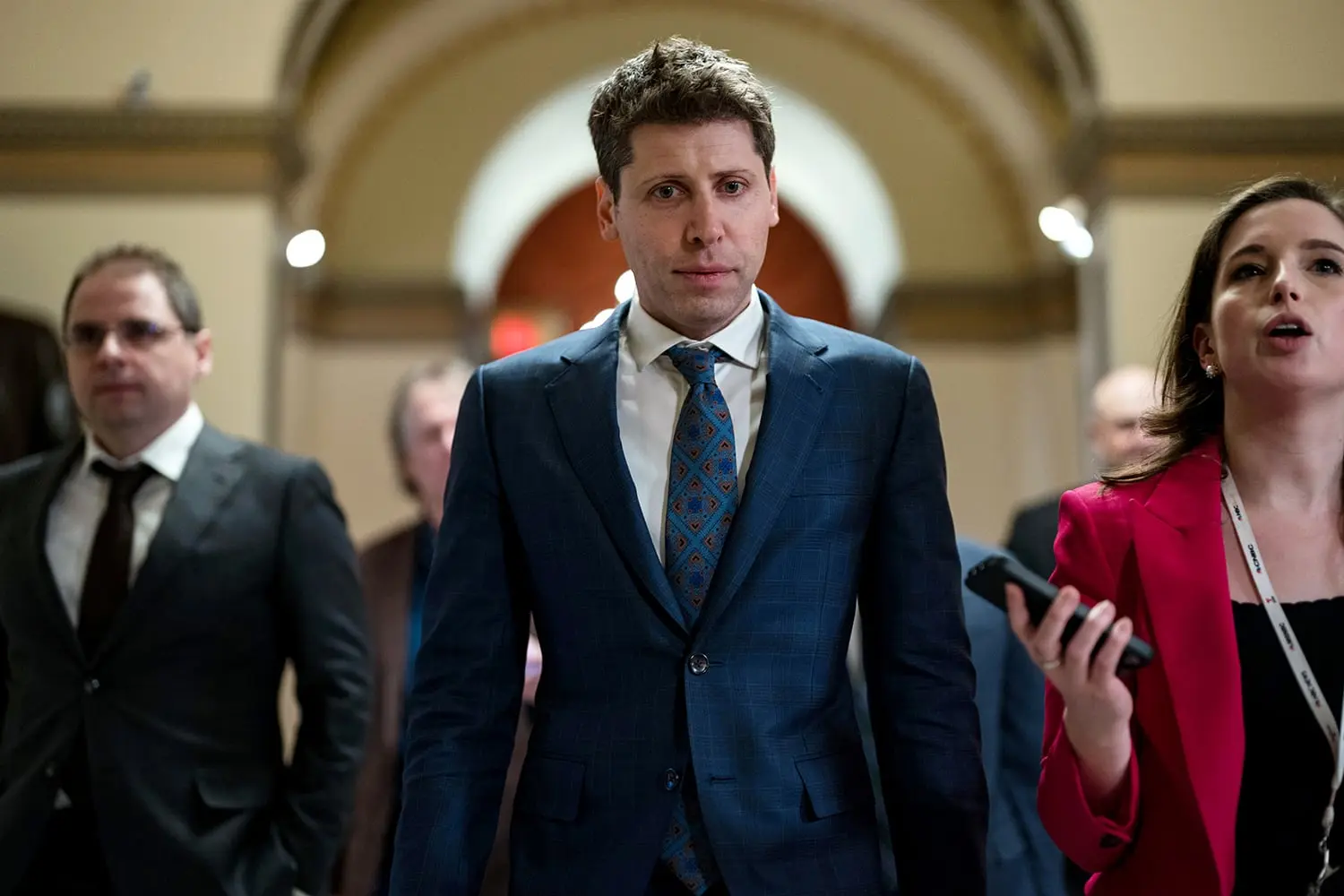
The article draws a vivid analogy to a dentist preparing a terrified child for a painful extraction. Before even putting on a bib, the dentist holds up a tray of intimidating tools: a huge metal syringe, thick pliers with textured grips, and a flat blunt instrument that could be used to jimmy open a locked car. The message is clear: this is going to hurt. In a similar spirit, OpenAI CEO Sam Altman went before Congress in 2023 and warned, "I think if this technology goes wrong, it can go quite wrong. And we want to be vocal about that." He added, "We want to work with the government to prevent that from happening."
Anthropic CEO Dario Amodei, in his essay “The Adolescence of Technology,” wrote that humanity's ability to survive the coming AI turmoil “will depend on our character and our determination as a species, our spirit and our soul.” He forewarned that “the years in front of us will be impossibly hard, asking more of us than we think we can give.” These statements, whether genuine or strategic, have now proven prescient. The AI CEOs essentially said, “This is going to hurt, and we don't want to be blamed.” And they were right.
There is one crucial difference between Big AI and a dentist: America never asked Sam Altman or Dario Amodei to extract our metaphorical teeth. They arrived unbidden, without certifications, making grand promises about America's technological smile that most citizens find hard to take seriously. Yet they deserve credit for at least showing what is on the tray. And the public is not impressed. According to a survey conducted by Anthropic itself, only 15% of Americans trust AI companies to make decisions about AI development and use. Seven in ten oppose building data centers in their areas. Pessimism about AI is widespread, and a majority want development to slow down.
Perhaps most tellingly, 87% of Americans believe it is either “very likely” or “somewhat likely” that within the next 20 years, foreign governments will use AI to attack the U.S. This deep public anxiety stands in stark contrast to the Trump administration's initial signal of bold, unregulated progress. In his famous February 2025 Paris speech, Vice President JD Vance essentially declared that no regulation was coming and that everyone had better get used to it. He argued that regulation “would not only unfairly benefit incumbents in the space, it would mean paralyzing one of the most promising technologies we have seen in generations.”
Vance did not care what was on the dentist's tray. He had heard the promises of a super-smile and wanted America alone to possess it. For the most part, that has remained the administration's position. The only major brush with regulation before this month was the declaration of Anthropic as a supply chain risk—not because its AI tools were scary, but because the administration loved their potential lethality. It wanted to be told that these were the most lethal instruments in the world, whether true or just marketing, and it wanted sole control over how much lethality was meted out and where.
So it is gratifying, from a certain perspective, to finally see the Trump administration flinch at one of the dentist's tools—specifically, Anthropic's Claude Fable 5 model—and bring the unwanted dental procedure to a temporary halt. The administration's actions have resulted in an almost complete moratorium on new releases, according to Saif Khan, a former Biden administration tech advisor. He noted that this is beginning to seriously impact companies' bottom lines.
Anthropic and its chief competitor, OpenAI, are suffering together. Regarding its new GPT 5.6 series, OpenAI is attempting to reassure the public that everything is going according to plan, making the models available to a small group of VIP customers while working with the administration on a rollout framework. But behind the scenes, OpenAI is frustrated. In a blog post, the company wrote, “We don't believe this kind of government access process should become the long-term default.” An anonymous policy advisor for frontier AI companies told Politico, “It feels like they're walking on eggshells a little bit.”
Meanwhile, as cybersecurity experts have pointed out following the Fable/Mythos ban, rival labs in China will be able to capitalize on the disorder, pushing ahead with their own AI development while U.S. labs struggle to determine what is and isn't allowed. Earlier this month, the Trump administration released an Executive Order requesting—not demanding—that AI companies submit their models for federal vetting. OpenAI claims it is working with the administration to develop a repeatable process for future releases. However, the current regulation plan bypasses Congress entirely, making AI governance a matter of whether Donald Trump is pleased with what he sees. He does not like guardrails that can be jailbroken, nor does he tolerate China-linked groups gaining unauthorized access to frontier models during VIP-only periods.
Setting aside dreams of what AI might do in fanciful future scenarios, we already know what it does, and the public does not like it. We now live in the painful future that Big AI's CEOs warned about. The president has paused the dental procedure, but it looks like he is about to change next to nothing and start it back up again. The industry, the public, and the government are caught in a tense standoff, with no clear path forward.
Source: Gizmodo News