

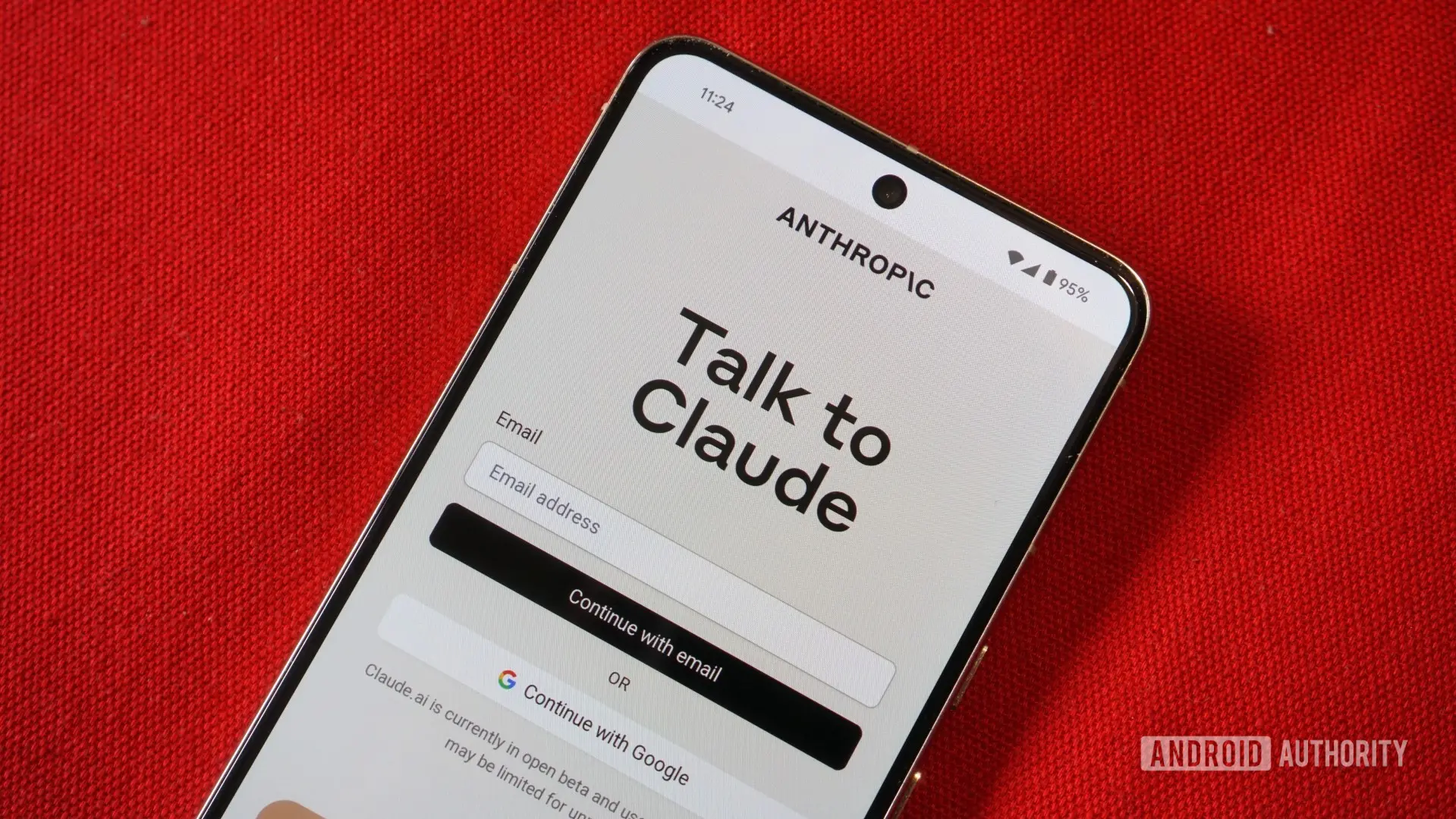
The artificial intelligence industry faced an unprecedented regulatory shock last week when the United States government issued an emergency national security directive that effectively forced Anthropic to withdraw its most advanced AI models — Fable 5 and Mythos 5 — from global availability. The dramatic freeze sent ripples through the tech sector and raised urgent questions about the balance between cutting-edge AI development and national security imperatives. Now, just days after the sudden shutdown, Anthropic has signaled that restoration of these flagship models may happen sooner than expected.
Speaking at a press conference in Seoul, Mr. Chris Ciauri, Anthropic’s Managing Director of International, delivered what many interpreted as a cautiously optimistic message. He stated that the company is “very confident that in the coming days, the models will become available again,” as reported by Korea JoongAng Daily. This statement came during an event that was originally intended to mark Anthropic’s strategic expansion into South Korea and the broader Asian market. Instead, the press conference was dominated by questions about the recent export controls, the company’s controversial Project Glasswing program, and the broader implications for global AI governance.
The US government’s national security directive specifically targeted Mythos 5, a model that has been heavily guarded due to its extraordinary capabilities. Unlike more consumer-focused AI models that excel at natural language processing, content generation, or code assistance, Mythos 5 was designed for a profoundly different purpose. It possesses the advanced ability to scan, identify, and fix severe vulnerabilities in highly complex codebases that had previously been considered unbreakable. In the hands of legitimate cybersecurity teams, this capability could revolutionize digital defense. However, the same power could be reversed, allowing a malicious actor to discover and exploit critical infrastructure flaws with devastating efficiency. This dual-use nature made Mythos 5 one of the most sensitive AI systems ever created, and Anthropic had implemented strict access controls to manage the risk.
To prevent misuse, Anthropic restricted access to Mythos 5 exclusively through a corporate cybersecurity initiative named “Project Glasswing.” This program, which has approximately 150 partner organizations, includes major technology companies such as Google, NVIDIA, Microsoft, and Apple. The idea was to create a trusted ecosystem where the model could be deployed for defensive cybersecurity operations under strict monitoring. However, the US government became alarmed by reports that Anthropic was planning to include South Korean telecommunications giant SK Telecom in Project Glasswing, thereby granting it access to Mythos 5. According to a report from Wired, US officials were concerned about what they alleged were SK Telecom’s ties to China, which raised fears that sensitive AI technology could inadvertently end up in the hands of a geopolitical rival. The emergency directive was issued shortly after a reported spat between Anthropic and US regulators over this inclusion.
Anthropic declined to comment on the Wired report, while the White House and SK Telecom did not respond to requests for comment. However, an SK Telecom representative told South Korea’s The Chosun Daily, “The anonymous insider’s remarks in foreign media lack verified facts, and our company has no ties to China.” This denial has done little to quell the controversy, as the episode underscores the deep tensions that now permeate the global AI supply chain. The United States has increasingly employed national security directives to control the flow of advanced AI technologies, especially those with dual-use potential. Earlier this year, similar actions were taken against other firms that attempted to share cutting-edge AI models with entities in countries perceived as security risks, including China.
Anthropic itself is a relatively young but influential player in the AI landscape. Founded in 2021 by former OpenAI researchers including Dario Amodei and Daniela Amodei, the company has positioned itself as a leader in AI safety and responsible development. Its flagship model, Claude, competes directly with systems from OpenAI and Google. Fable 5 and Mythos 5 represent the most advanced versions of Claude, with Mythos 5 being a specialized variant for cybersecurity. The company has always emphasized its commitment to safety, often implementing more restrictive usage policies than its competitors. This makes the current situation particularly ironic — a company built on safety principles has been forced to comply with a government shutdown that could undermine trust in its products.
The implications of the freeze extend beyond just Anthropic’s bottom line. Enterprise customers who had integrated Mythos 5 into their security operations were suddenly left without access, forcing them to scramble for alternatives. The disruption highlights the vulnerability of relying on a single, tightly controlled AI system for critical infrastructure protection. Security analysts note that if Mythos 5 had been used to monitor power grids, financial systems, or defense networks, the sudden outage could itself create vulnerabilities. Some experts have called for “AI resilience” planning, urging organizations to maintain fallback mechanisms.
The regulatory landscape for advanced AI is still evolving. In the United States, the Biden administration has issued executive orders requiring companies to report safety test results for certain high-risk AI models. However, the emergency directive against Anthropic appears to have been a more aggressive measure, possibly based on classified intelligence. This has sparked a debate about the appropriate balance between oversight and innovation. Some tech freedom advocates argue that the government overreached, especially since SK Telecom is a major partner of US companies and has no proven ties to China. They worry that such actions could harm the competitiveness of American AI firms in global markets. Conversely, national security hawks maintain that the risks are too great to allow even a hint of access to adversarial nations, and that restrictive measures are necessary to protect US interests.
As events unfold, the timeline for Anthropic’s models to return remains uncertain. Mr. Ciauri’s confidence suggests that the company has taken steps to satisfy US regulators, possibly by tightening the governance of Project Glasswing or by adding additional verification layers for international partners. It is unclear whether SK Telecom will still be included in the program or if Anthropic has been forced to exclude them. For paying customers currently locked out of Anthropic’s most capable systems, the focus now shifts to whether the company’s incoming regional guardrails and security patches will be enough to appease Washington and get the models back online soon enough.
The situation also raises broader questions about the future of AI globalization. If the US begins to use emergency directives more frequently to control AI exports, it could fragment the global AI ecosystem into blocs aligned with geopolitical alliances. South Korea, a key US ally, is now caught in the middle, with its companies facing scrutiny. This may accelerate efforts by nations like South Korea and Japan to develop their own domestic AI capabilities to reduce dependency on US-controlled technologies. Meanwhile, China continues to advance its AI models independently, often with less transparency about their safety and dual-use risks.
Anthropic has promised to provide a more detailed update to partners and customers in the coming days. Until then, the industry watches closely, understanding that the outcome of this episode will set a precedent for how governments and AI companies negotiate the treacherous waters of national security and technological progress. The story of Mythos 5 is not just about one model or one company; it is a test case for the entire AI governance framework that will shape the next decade of innovation. The decision of whether to allow Mythos 5 back online will be made not just in boardrooms and labs, but in the corridors of power where security and freedom must find an uneasy balance. For Anthropic, the hope is that this balance can be restored quickly, but the path forward remains fraught with complexity.
As global leaders convene for the upcoming AI Safety Summit in the fall, the Anthropic incident is expected to feature prominently in discussions. Delegates from various nations will likely call for clearer international rules regarding the export of dual-use AI systems. For now, the immediate priority is to determine when Fable 5 and Mythos 5 will once again be available to the users who depend on them for research, cybersecurity, and enterprise operations. The coming days will reveal whether Anthropic’s confidence is well-placed or whether the emergency freeze marks a new era of heightened restrictions on the world’s most powerful artificial intelligence.
Source: Android Authority News