

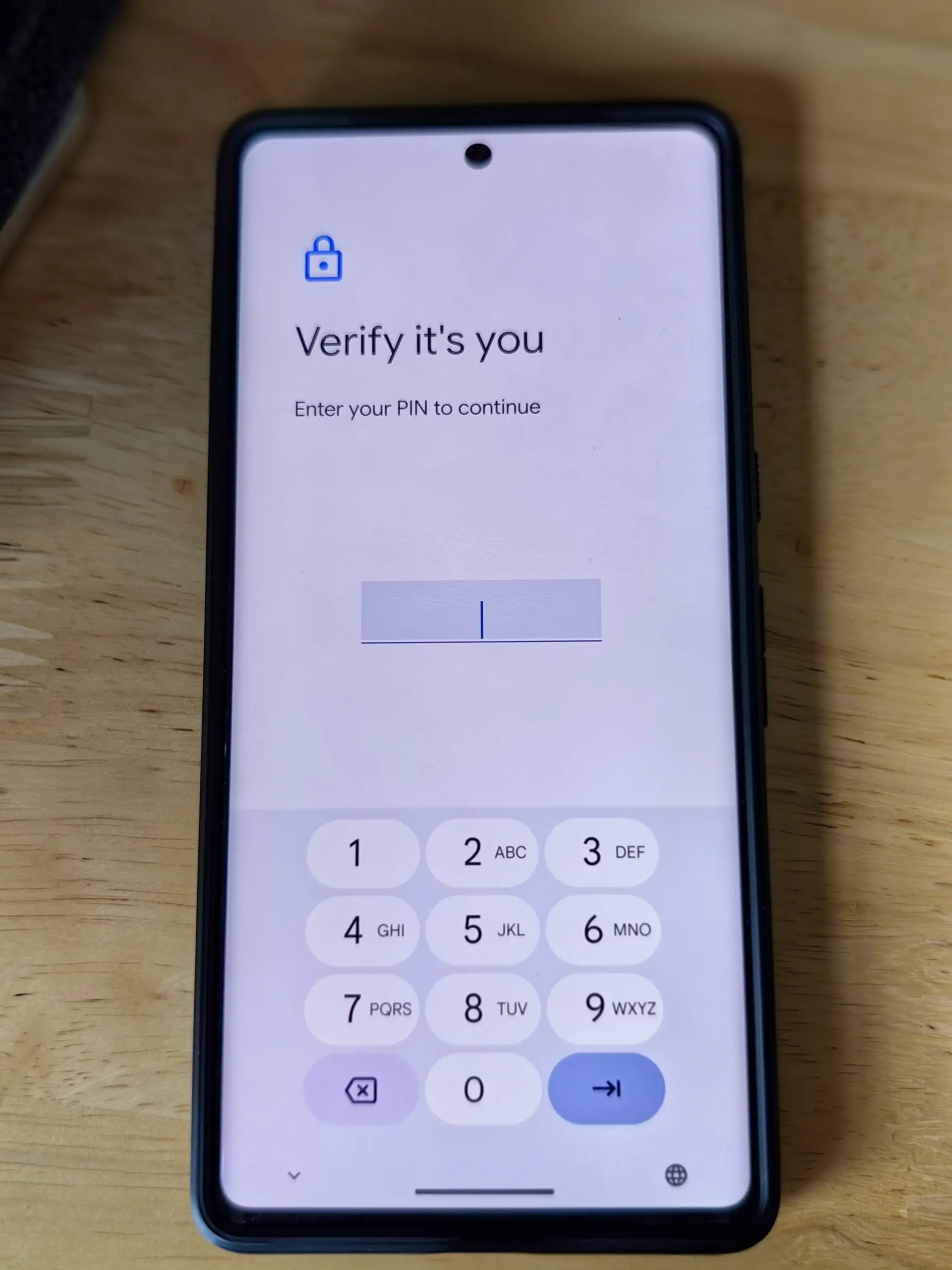
Google has significantly enhanced lock screen security in Android 17, introducing aggressive rate limits that make brute-force PIN and password guessing nearly impossible. The changes, first previewed at The Android Show: I/O Edition in May, are now fully detailed by Google’s Mishaal Rahman. Instead of allowing hundreds of attempts over time, Android 17 permits only 20 total failed guesses before permanently blocking further attempts. This shift from previous versions represents a fundamental change in how Android protects device access.
The New Rate Limits
Under Android 16, the system allowed up to 10 incorrect PIN or password attempts in the first minute, 20 within six minutes, 50 within 25 minutes, 110 over 24 hours, and as many as 1,800 guesses across five years. Attackers could exploit this leniency by trying common combinations, especially if they knew personal details like a user’s birthday or anniversary. Android 17 slashes these numbers drastically. Now, devices allow only six guesses in the first minute, seven within six minutes, eight within 25 minutes, 12 over 24 hours, and just 19 guesses across five years. After the 20th incorrect attempt, no further guesses are permitted, effectively locking out anyone who fails repeatedly.
How It Works
The new lock screen protections are implemented through a stricter default rate-limiting algorithm. Each failed attempt increments a counter that resets only after a successful unlock. The lockout durations escalate rapidly after small numbers of failures. For example, after just three wrong PINs, the user may face a 30-second delay. After six attempts, the delay jumps to several minutes. By the 12th failure, the device may lock out for hours. This exponential backoff discourages rapid guessing and makes automated tools ineffective. The system is designed to be transparent: users see clear messages like “Try again in 30 minutes” instead of cryptic seconds countdowns.
Why This Change Matters
Lock screen security is one of the most critical layers of device protection. A stolen or lost phone could expose sensitive data, financial accounts, and personal information. While biometrics like fingerprint and face unlock offer convenience, they often fall back to PIN or password if biometrics fail repeatedly. Android 17’s tighter limits ensure that even if an attacker knows common PIN patterns (like 1234, 0000, or dates), they cannot exhaustively try all possibilities. The new cap of 20 failed attempts means that guessing a 4-digit PIN (10,000 combinations) is mathematically infeasible. This is especially important for users who choose weak PINs, as the system now compensates for human nature.
Historically, Android’s lock screen security lagged behind iOS, which has long enforced escalating delays and eventually wiping the device after 10 failed attempts. With Android 17, Google closes that gap. Enterprise users and IT administrators will benefit from knowing that devices are harder to crack, reducing the risk of data breaches. The update also protects against “shoulder surfing” attacks where someone observes the PIN entry, then tries variations later when the device is unattended.
Duplication Exemption and User Experience
Recognizing that legitimate users may accidentally repeat the same wrong PIN (especially when distracted or in a hurry), Android 17 includes a duplication exemption. If the user enters the same incorrect PIN multiple times, the system ignores the duplicate attempts and does not count them toward the failed-attempt limit. A dedicated message explains why the attempt wasn’t counted, reducing confusion. This feature prevents users from being locked out due to simple repetition while still blocking attackers who try different combinations.
Additionally, the lock screen interface during lockouts has been redesigned for clarity. Instead of showing large countdown numbers in seconds, Android 17 displays human-readable time units. For example, “Try again in 30 minutes” is much easier to understand than “Try again in 1800 seconds.” This reduces user frustration and helps them know exactly when they can try unlocking again.
Finally, Android 17 adds a recovery shortcut on the lock screen that helps users quickly find account recovery options from another device. If a user legitimately forgets their PIN, they can tap this shortcut to initiate account recovery via their Google account without needing to cobble together workarounds. This ensures that the security improvements do not unduly punish forgetful owners.
Background and Context
The shift to stricter lock screen limits began with Android 16 QPR2, a quarterly platform release that laid the groundwork for Android 17. Google has been gradually improving device security across multiple fronts, including cryptographically signed updates, hardware-backed keystores, and now lock screen rate limiting. These changes reflect a growing awareness that mobile devices are prime targets for theft and data extraction.
It’s worth noting that the new rate limits apply to all lock screen methods that use PIN, password, or pattern. Biometric unlock is unaffected because it relies on a different authorization mechanism. However, if biometrics fail and the system falls back to PIN entry, the new limits kick in. This means that users who rely solely on biometrics may not encounter these limits unless they use the fallback method.
The implementation is done at the system level, so it should work consistently across all devices running Android 17, provided the manufacturer hasn’t altered the stock security behavior. Google has indicated that these protections are part of the Android Common Kernel and the default system UI, so even custom ROMs may inherit them.
For users who frequently forget their PIN, the best practice remains to use a strong but memorable passcode, and to rely on biometrics for everyday unlocking. Android 17’s duplication exemption provides a safety net, but it cannot prevent lockout if a user enters 20 different incorrect PINs. In such cases, the recovery shortcut becomes essential.
Overall, Android 17’s lock screen improvements represent a significant step forward in mobile security. By drastically reducing the number of allowed guesses, implementing intelligent duplicate detection, and improving user feedback, Google has addressed one of the weakest links in device protection. While rate limiting will not stop determined attackers who obtain the PIN through other means (like skimming or spyware), it effectively neutralizes brute-force guessing. As mobile threats continue to evolve, such foundational security measures are critical.
Source: Android Authority News